The United States and Iran on Monday both claimed authority over the Strait of Hormuz following a weekend of military exchanges across the Middle East, raising fresh concerns over regional stability and the prospects for diplomacy.
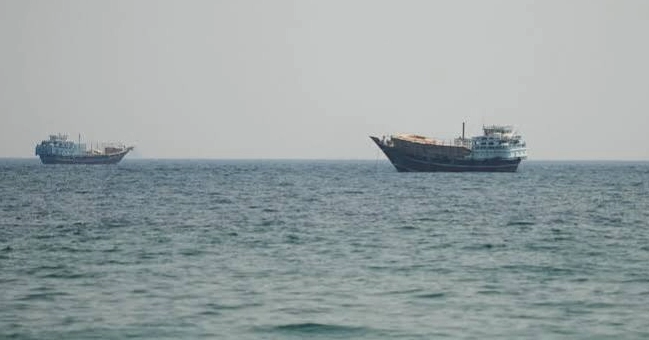
The latest escalation began after Iran targeted a container ship in the strategic waterway off Oman on Sunday. The incident once again highlighted the Strait of Hormuz's critical role in global energy trade, with the passage historically handling about one-fifth of the world's seaborne crude oil and natural gas exports. Since the conflict began, repeated attacks on commercial shipping have disrupted maritime traffic and heightened concerns over the security of the route.
The two countries are approaching the midpoint of a 60-day interim arrangement intended to pave the way for negotiations on a lasting settlement. Instead, the agreement has been overshadowed by repeated confrontations centred on the strait, fuelling fears that full-scale hostilities could resume.
UN Secretary-General António Guterres warned that a return to all-out conflict would have devastating consequences.
The US military's Central Command said its forces struck dozens of targets across Iran on Monday, including air defence systems, radar installations, missile and drone facilities and small naval vessels. It stressed that the Strait of Hormuz remains an international waterway and rejected Tehran's claim of exclusive control.
European Union foreign policy chief Kaja Kallas also called for ensuring freedom of navigation through the strait.
Iran's Islamic Revolutionary Guard Corps dismissed the US position, insisting the waterway falls within Iran's territory and warning against what it described as foreign interference.
The conflict spilled into neighbouring countries, with missile warning sirens sounding in Bahrain, home to the US Navy's Fifth Fleet, while Kuwait reported intercepting incoming projectiles. Jordan's military said it shot down four Iranian missiles without any casualties or damage.
Inside Iran, authorities reported strikes in Hormozgan, Khuzestan and Markazi provinces that left at least two people dead, according to state media. Iranian outlets also reported attacks in Sistan and Baluchestan province.
Sunday's Iranian attacks also affected Bahrain, Kuwait, Qatar, Jordan and Oman. Omani authorities, whose territorial waters form part of the Strait of Hormuz, summoned an Iranian diplomat in protest over the attack.
Separately, a drone strike targeted a base of an Iranian Kurdish opposition group in Iraq's Kurdistan region, although no immediate claims of responsibility were made.
The US military said it had carried out around 140 strikes on Iranian military infrastructure on Sunday, significantly expanding its operations compared with previous attacks. President Donald Trump later said the US had inflicted heavy damage during the operation.
Iran responded by targeting countries hosting US military forces while reiterating that it should have sole authority over the Strait of Hormuz and could potentially impose charges on ships using the passage.
Although Tehran declared the strait closed, Washington maintained that shipping continued through the waterway with US military support helping vessels follow safer routes near Oman's coast.
The disruption has shaken global energy markets, although oil prices have retreated from wartime peaks of around $120 a barrel.
Iranian Foreign Ministry spokesperson Esmail Baghaei accused the United States of undermining the interim agreement and worsening instability in the region. He also said Tehran would not permit International Atomic Energy Agency inspectors to visit nuclear sites bombed by the US in 2025.
Despite the renewed violence, diplomatic efforts are continuing. Pakistan, Qatar and Egypt remain engaged in mediation, with Pakistan urging both sides to reduce tensions during talks with Iran's foreign minister.
Meanwhile, Iran's new Supreme Leader Ayatollah Mojtaba Khamenei, in his first public statement since the funeral of his father Ayatollah Ali Khamenei, vowed that Iran would avenge his father's killing.