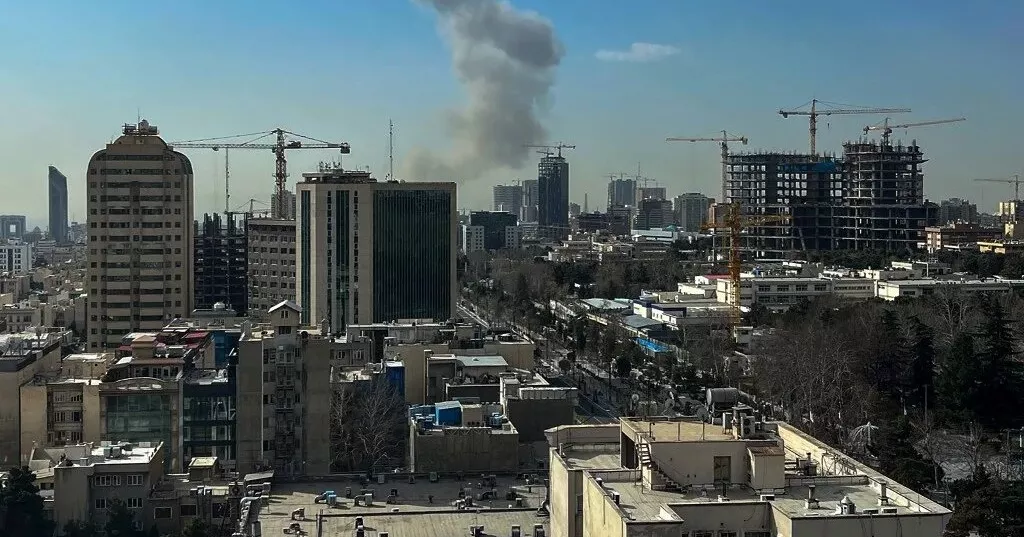
Global leaders have voiced deep concern following military strikes by Israel and the United States on Iran, and Tehran’s subsequent retaliation, warning of the risk of a wider regional conflict across the Middle East.
The United Nations Human Rights Chief, Volker Türk, called for “restraint” and urged all parties to “see reason, to de-escalate, and for a return to the negotiating table.”
“I deplore the military strikes across Iran this morning by Israel and the United States of America, and the subsequent retaliatory strikes by Iran,” he said, stressing that civilians ultimately bear the brunt of armed conflict. He reminded those involved that protecting civilians is “paramount” under international law.
At least 51 students killed as US-Israel strikes on Iran escalate into regional crisis
The European Union’s top diplomat, Kaja Kallas, described the latest developments as “perilous.” In a statement on X, she noted that the European Union has imposed strong sanctions on Iran and supported diplomatic solutions, including on the nuclear issue. She added that she had spoken to Israel’s and other regional foreign ministers, underscoring that the protection of civilians and adherence to international humanitarian law remain a priority.
A spokesperson for the Government of the United Kingdom said London does not want to see “further escalation into a wider regional conflict.” The statement emphasised that the immediate priority is the safety of UK nationals in the region, adding that Britain stands ready to protect its interests.
Tehran hits back across region after US and Israel attack Iran
Prime Minister Keir Starmer chaired a meeting of the government’s emergency Cobra committee and is expected to hold a series of calls with allies.
The BBC reported that the UK was not involved in the US-Israeli strikes.
Germany said it had been informed of the attack in advance, with Chancellor Friedrich Merz consulting relevant security ministers.
In Rome, the office of Italian Prime Minister Giorgia Meloni said she had held a conference call with ministers and intelligence chiefs and would consult allies and regional leaders to support efforts aimed at easing tensions.
Australian Prime Minister Anthony Albanese said his country supported the US in acting to prevent Iran from obtaining a nuclear weapon and from continuing to threaten international peace and security.
Meanwhile, Russia condemned the US-Israeli strikes, calling them a “reckless move.” The Russian foreign ministry said it was “condemnable” that the attacks were being carried out under what it described as the guise of renewed negotiations, referring to recent US-Iran nuclear talks.
Moscow also urged the international community to assess what it termed “irresponsible actions aimed at undermining peace, stability, and security” in the region.
As diplomatic activity intensifies, world leaders continue to call for restraint, warning that any further escalation could destabilise an already volatile Middle East.