The head of the World Health Organization on Saturday sought to ease public anxiety in Tenerife, where passengers from a cruise ship linked to a hantavirus outbreak are set to be evacuated. He emphasized that the situation should not be compared to the COVID-19 pandemic.
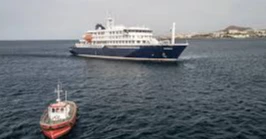
The Dutch-registered cruise ship MV Hondius, carrying more than 140 passengers and crew members, is traveling toward Spain’s Canary Islands and is expected to reach Tenerife early Sunday.
WHO Director-General Tedros Adhanom Ghebreyesus arrived in Tenerife alongside Spain’s Health Minister Monica Garcia and Interior Minister Fernando Grande-Marlaska to oversee preparations for the safe evacuation of passengers and selected crew members.
In a public message to Tenerife residents, Tedros acknowledged lingering fears from the COVID-19 era but stressed that the current outbreak does not pose a similar threat. He said the public health risk from hantavirus remains low and reiterated that health experts are closely monitoring the situation.
Authorities and the cruise operator, Oceanwide Expeditions, confirmed that no one currently aboard the ship is showing symptoms of the virus.
Hantavirus is a potentially deadly disease commonly spread through exposure to contaminated rodent droppings. Human-to-human transmission is considered rare, although the Andes strain detected in this outbreak may occasionally spread between people. Symptoms can appear anywhere from one to eight weeks after exposure.
So far, three people linked to the outbreak have died, while five former passengers have tested positive after leaving the ship.
Concerns Grow Among Tenerife Residents
Some residents of Tenerife have expressed unease about the ship’s arrival. Local resident Simon Vidal questioned why the vessel was being brought to the Canary Islands instead of another location.
Others voiced mixed feelings, balancing concern with sympathy for passengers. Venezuelan immigrant Samantha Aguero said people feel uncertain about the safety measures in place but also recognize the need for compassion toward those onboard.
Strict Safety Measures Planned for Evacuation
Spanish Health Minister Monica Garcia said passengers and selected crew members would leave the ship under strict health protocols. The vessel will stay offshore rather than dock directly, and passengers will be transported to land in small boats.
Before anyone disembarks, health officials will screen them for symptoms, and evacuation flights will already be prepared in Tenerife. People from more than 20 countries are currently aboard the ship.
WHO epidemic expert Maria Van Kerkhove said evacuation flights are expected to be completed by Sunday and Monday.
The United States and the United Kingdom have agreed to send aircraft to repatriate their citizens. U.S. passengers will reportedly undergo quarantine at a medical facility in Nebraska.
Spanish nationals onboard will be transferred to a medical center and placed under quarantine. According to Oceanwide Expeditions, there are 13 Spanish passengers and one Spanish crew member aboard.
Passengers will not be allowed to take most of their belongings with them. They may carry only a small bag containing essentials such as documents, a phone, and a charger.
Some crew members, along with the body of a passenger who died onboard, will remain on the ship, which will later sail to the Netherlands for full disinfection.
Emergency Medical Plane on Standby
Dutch officials said Spain has activated the European Union’s civil protection system to prepare a specialized medical evacuation aircraft in case someone aboard becomes seriously ill. Any infected person needing urgent treatment would be flown to mainland Europe.
The Dutch government is coordinating with Spanish authorities and the cruise company to arrange the return of Dutch passengers and crew once health officials approve. Those without symptoms will complete six weeks of home quarantine under medical supervision.
Because the ship sails under the Dutch flag, the Netherlands may also temporarily host passengers from other countries during quarantine.
Global Efforts Underway to Trace Former Passengers
Health agencies around the world are now monitoring more than two dozen passengers who left the ship before the outbreak was identified. Officials are also attempting to trace anyone who may have had contact with them.
On April 24, nearly two weeks after the first onboard death, more than two dozen people from at least 12 countries disembarked without contact tracing procedures in place.
Authorities did not officially confirm hantavirus infection in a passenger until May 2.
Dutch public health officials are also monitoring passengers from a flight briefly boarded by a Dutch traveler from the ship who later died from hantavirus. Three passengers from that flight who developed symptoms have since tested negative, according to Dutch health authorities.