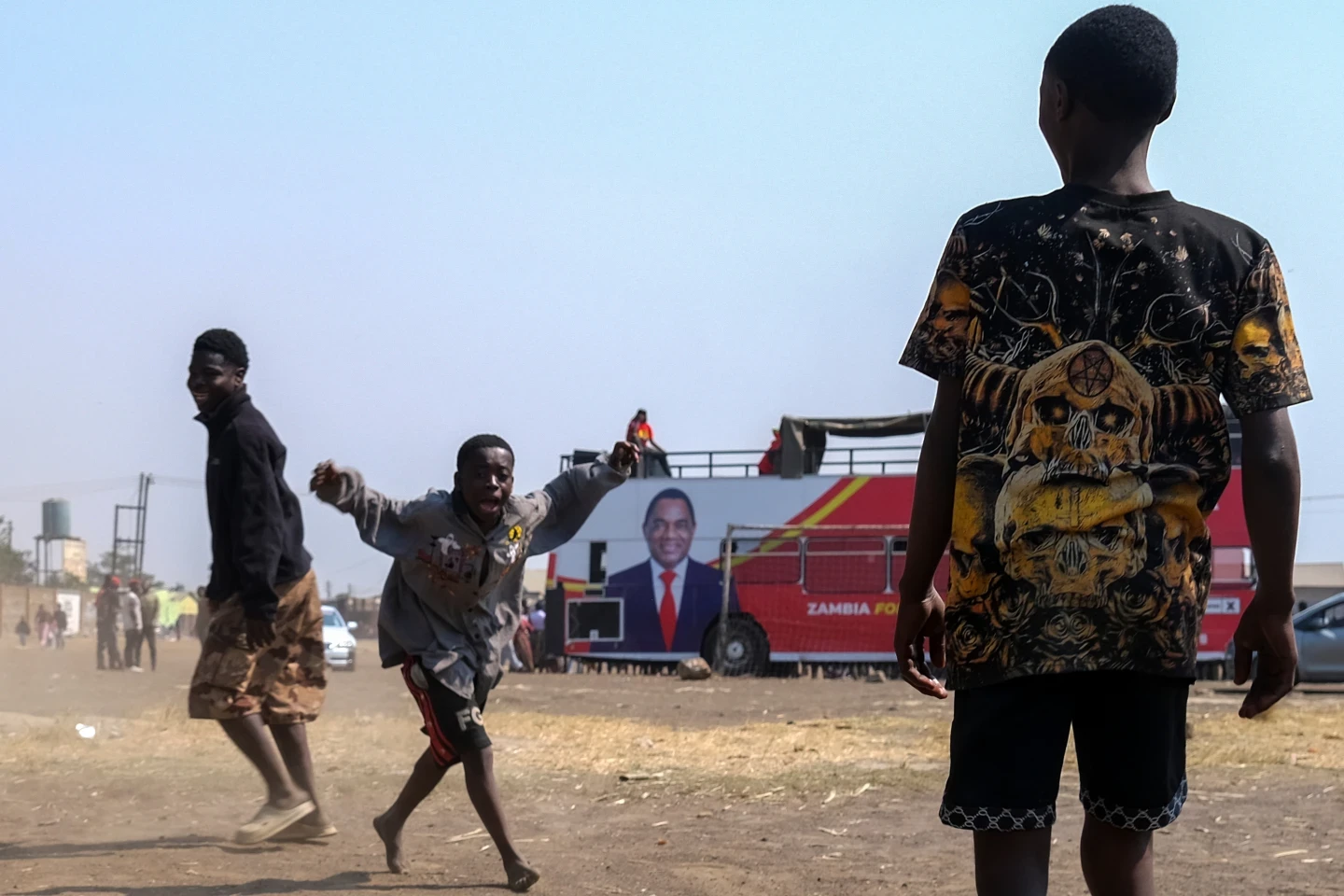
Zambia goes to the polls Thursday in an election that will determine whether President Hakainde Hichilema secures a second five-year term, with voters weighing his economic reforms against persistent concerns over the high cost of living.The southern African country, one of the world's leading copper producers, defaulted on sovereign debt in 2020 amid the COVID-19 pandemic. Since taking office in 2021, Hichilema's government has restructured more than $12 billion in debt owed to foreign governments and private creditors, while reducing inflation and helping stabilize the national currency.
Hichilema's long-term economic strategy includes increasing annual copper production to 3 million metric tons by 2031, more than three times current output. If achieved, the target could place Zambia ahead of the United States and China among major copper-producing nations.
Main challenger
Hichilema, 64, won the presidency in 2021 after losing five previous elections dating back to 2006. A former financial services executive and prominent cattle rancher, he has headed the United Party for National Development since 2006.
He faces 13 other presidential candidates, with analysts identifying opposition leader Brian Mundubile as his strongest challenger. The 55-year-old lawyer heads the Tonse Alliance, an opposition coalition he took charge of in January following internal disputes.
Key election issues
Although inflation has fallen and the kwacha has strengthened, many Zambians continue to struggle with expensive food and energy. Economist Trevor Hambayi said the country's improved economic indicators had yet to translate into significant benefits for ordinary citizens.
Hichilema has pledged to expand schools, healthcare facilities and roads and create more employment. His government has also faced criticism over alleged restrictions on political dissent.
The Tonse Alliance on Tuesday accused the government of ordering a raid on its offices in which vehicles and communications equipment were seized, calling the action politically motivated. Authorities have not accepted the allegation.
Dispute over former president's remains
Political tensions between Hichilema and his predecessor, the late Edgar Lungu, have continued after Lungu's death in South Africa in June 2025.
Lungu and Hichilema had a long-running political rivalry. In 2017, Hichilema was detained for four months on treason charges after Lungu accused his motorcade of failing to give way to the presidential convoy.
After Lungu's death, his family and the government became embroiled in a dispute over his burial. The government sought a state funeral, while Lungu's family opposed a ceremony presided over by Hichilema. South Africa's Supreme Court of Appeal eventually ruled in favor of the family, although burial arrangements remain unsettled.
Interest from China and US
China remains Zambia's largest foreign investor, with major interests in copper and cobalt, minerals considered essential for electronics, electric vehicles and other advanced technologies.
The United States has also increased its interest in Zambia's critical minerals. Zambia has alleged that Washington linked access to the minerals with a proposed $2 billion health agreement, a claim rejected by the US.
How voting works
About 8 million Zambians are registered to vote in Thursday's election, which will also elect members of Parliament and local government representatives.
A presidential candidate must secure more than 50% of the vote to win outright. If no candidate reaches that threshold, a second-round runoff will be held.