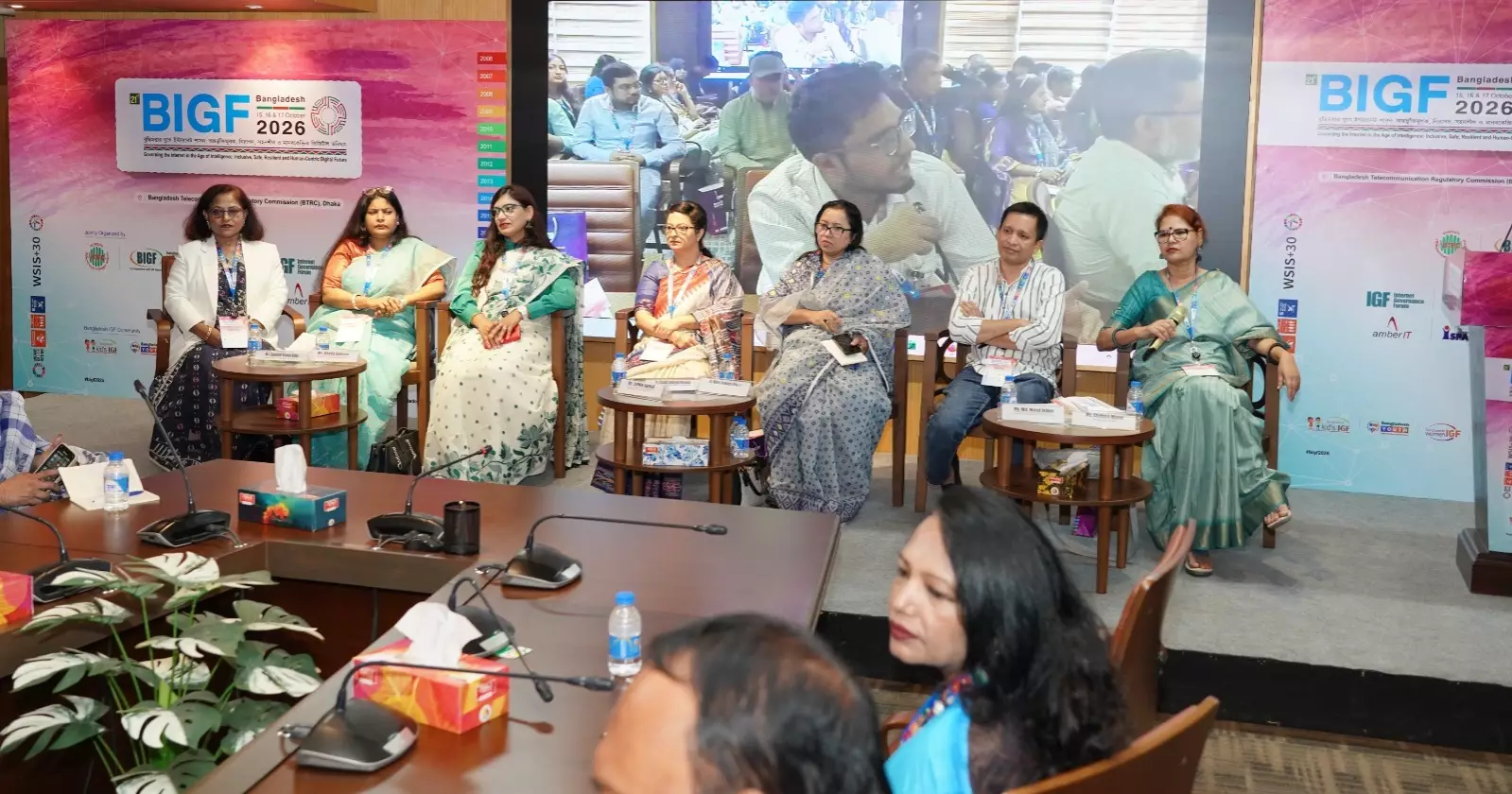
The 21st Bangladesh Internet Governance Forum (BIGF) 2026 concluded on Saturday following three days of discussions on strengthening internet governance and building a safe, inclusive and human-centered digital future.
The sessions began on Thursday and followed the theme “Governing the Internet in the Age of Intelligence: An Inclusive, Safe, Resilient and Human-Centric Digital Future.”
Discussions covered internet governance, artificial intelligence (AI), cybersecurity, digital infrastructure, data protection, and people's rights online.
BIGF Secretary General Mohammad Abdul Haque Anu welcomed participants at the opening ceremony. Major General Md Emdad Ul Bari (Retd), Chairman of the Bangladesh Telecommunication Regulatory Commission (BTRC), attended as chief guest. Anja Gengo, a digital policy and regulatory expert at the United Nations Internet Governance Forum Secretariat, joined online as a distinguished guest.
Speaking at the opening session, AHM Bazlur Rahman, a member of the Multistakeholder Consultation Group of the United Nations Group on the Information Society (UNGIS) and Responsible Artificial Intelligence Ambassador for Bangladesh, highlighted the growing risks of cyberattacks, misuse of personal data, misleading information and technology-facilitated gender-based violence.
Brigadier General Mohammad Khalilur Rahman (Retd), former Director General of BTRC’s Systems and Services Division, described how the digital divide is changing. Expanding internet coverage was once the principal objective, he said, but meaningful access now also depends on digital skills, network quality, actual use and people’s ability to benefit from technology.
Although networks have reached many parts of the country, he noted, people do not have equal opportunities to use the internet.
A dedicated session introduced newcomers to internet governance and fellowship opportunities, exploring ways for young people to participate in national discussions and engage in international forums.
The second day included a session on “AI Policy and Strategy, Emerging Technologies and Human-Centric Governance,” featuring Md Asaduzzaman, Joint District and Sessions Judge and Additional Chief Judicial Magistrate, Gazipur.
Professor Dr Lafifa Jamal of the Department of Robotics and Mechatronics Engineering at the University of Dhaka delivered a keynote address on preventing gender-based violence in the age of AI.
Drawing on statistics on violence against women, she discussed online risks associated with limited awareness of technology, including the inadvertent disclosure of personal information to AI tools and the use of shared mobile phones.
Hiren Pandit, Program Coordinator at the Bangladesh NGOs Network for Radio and Communication (BNNRC), also addressed the risks of technology-facilitated gender-based violence and highlighted some interventions of BNNRC.
Nurul Islam, Capacity Development and Management Expert at Nagorikata: Civic Engagement Fund (CEF), spoke about youth empowerment and the opportunities and challenges young people face in the age of AI. He emphasized the need to strengthen digital skills and promote responsible technology use.
Nilufar Chowdhury, MP, mentioned the challenges she also faced during the last couple of years regarding online harassment in the age of AI. She emphasized the need to strengthen digital skills, promote responsible technology use, and make all accountable.
On the final day, BIGF convened a session with youth leaders to raise awareness of AI use among children and young people.