
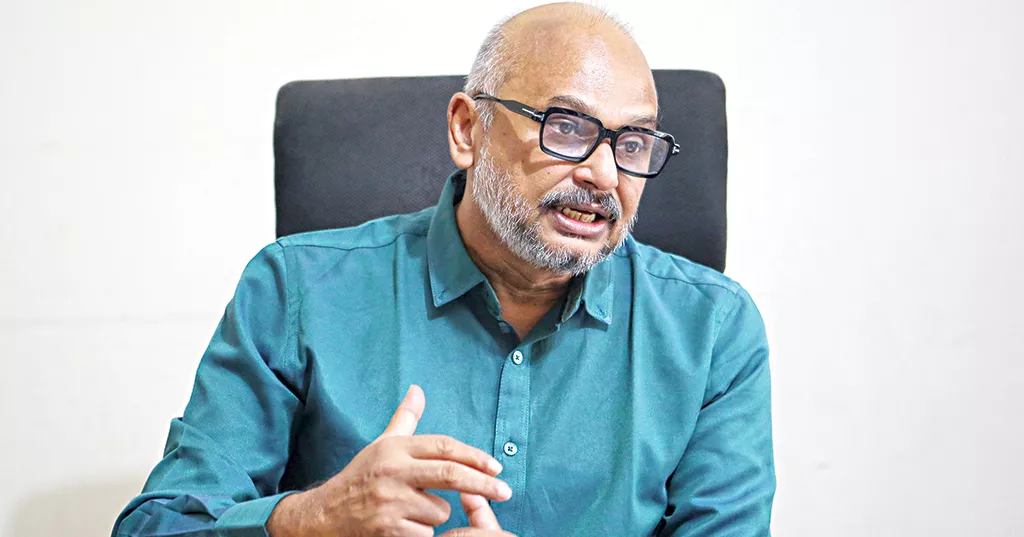
Adviser to the Prime Minister Dr. Rashed Al Mahmud Titumir on Thursday said to establish an accountable, transparent and implementation-oriented development process the government’s proposed Five-Year strategic economic framework would be a milestone in the country’s planning history.
“This is a different and timely initiative. In Bangladesh’s recent history, such an inclusive advisory committee for economic strategy formulation has never been formed before,” he said while Speaking at a press briefing after the second meeting of the Advisory Council on formulation of the strategic economic framework at the NEC Conference Room.
He said the government is determined to move away from the ineffective planning culture of the past, where development plans often remained only on paper.
State Minister for Planning Md. Zonayed Abdur Rahim Saki attended as the Special Guest, while Planning Adviser to the Interim Government Dr. Wahiduddin Mahmud presided over the meeting.
Planning Secretary SM Shakil Akhter and GED Member of the Planning Commission Dr M Monzur Hossain were also present.
The meeting included economists, business leaders, academics, and civil society representatives who reviewed the draft framework.
Titumir noted that participants appreciated the realistic and participatory nature of the strategy.
“They said previous plans effectively became dead documents from the very next day of their approval because the strategies and targets were never implemented,” he said.
Titumir alleged that project selection under the previous administration was influenced by patronage and inflated expenditures, which imposed a significant debt burden. He noted that the current government is already reviewing many such projects.
The proposed framework introduces structural reforms aimed at public accountability, including separate chapters on monitoring, evaluation, and inter-ministerial coordination.
The adviser specifically addressed the “June syndrome” in public spending, where development work is rushed at the end of the fiscal year. He said continuous monitoring mechanisms would be introduced to prevent waste and poor-quality implementation.
He added that the government wants to institutionalise transparency, ensuring researchers and citizens have easier access to official data to verify government claims.
The new framework, set for implementation next fiscal year, will also change the "programming process" for project selection to ensure they reflect economic rationale rather than patronage.
Titumir said the framework aligns with the vision of building a democratic welfare state based on equality and justice. It aims to help Bangladesh become a trillion-dollar economy by 2034 through sector-based strategies and measurable indicators.
In preparing the draft, ministries were instructed to submit a 180-day action plan, plans for the next fiscal year, and a five-year sectoral strategy. These were combined with recommendations from diverse stakeholders.
The draft will now be sent to the National Steering Committee and the National Economic Council for final approval.
Responding to questions, Titumir said the government is working to strengthen the Planning Commission to ensure it functions independently. He also mentioned plans to introduce project dashboards at local levels for real-time monitoring by citizens and to make BBS data more accessible to the public.