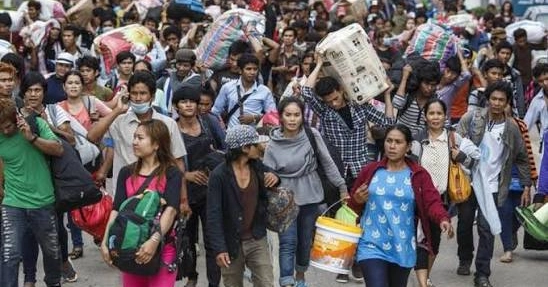
Bangladesh and Malaysia should establish a ‘binding bilateral labor agreement’ governing migrant-worker recruitment that provides meaningful and enforceable protections for workers, Migrant Welfare Network (MWN) and Fortify Rights said on Wednesday.
Previous bilateral memorandums of understanding (MoUs) have included safeguards for Bangladeshi migrant workers, yet workers continue to report excessive recruitment fees, debt bondage, wage theft, passport confiscation, unsafe working conditions, and other abuses.
Unlike a non-binding MoU, a bilateral labor agreement should establish binding obligations between the two governments and provide a stronger basis for ensuring that worker protections are implemented and enforced, said the rights body.
Any bilateral labour agreement must include safeguards against excessive recruitment fees, debt bondage, wage theft, passport confiscation, unsafe working conditions, and other abuses.
“Migrant workers make an enormous contribution to Bangladesh’s economy, sending billions of dollars home to their families every year, but too many are still exposed to exploitation and abuse,” said Abdullah al Mamun, President of Migrant Welfare Network. “Recruitment should resume only if the abuses workers face in the past are not repeated.”
“Before restarting formal migrant flows, Malaysia and Bangladesh must first put effective protections in place to safeguard migrant workers’ rights,” said John Quinley, Director at Fortify Rights. “The Malaysian and Bangladeshi governments must ensure that workers have access to effective remedies when rights are violated.”
Malaysia stopped accepting new migrant workers from multiple countries in 2024.
However, after the BNP took office in February this year, senior Bangladeshi officials have made concerted efforts to resume the recruitment of Bangladeshi workers, making at least three high-level visits to Malaysia, including Prime Minister Tarique Rahman’s official visit in June.
Previously, in December 2021, Bangladesh and Malaysia signed an MoU governing the employment of Bangladeshi migrant workers in Malaysia, replacing earlier MoUs signed in 2003, 2012 and 2016 which had been repeatedly suspended over allegations of labor abuse and corruption.
The 2021 agreement reportedly included protections requiring employers to cover airfare, immigration-related expenses, housing, and health and medical insurance; to provide workers with a weekly day of rest and overtime pay for work exceeding eight hours per day; and to provide compensation for workplace injuries.
The agreement also provided for annual leave under Malaysian law, as well as compensation and other benefits in the event of a permanent workplace injury or death.
According to the Malaysian Ministry of Home Affairs, more than 800,000 Bangladeshis currently hold active work permits in Malaysia, positioning Bangladesh as the largest source of migrant labor in the country.
Migrant workers in Malaysia are routinely employed in labor-intensive and hazardous sectors, including construction, manufacturing, and plantation work.
Remittances from migrant workers are critical for Bangladesh’s economy and an important contributor to the country’s foreign-exchange reserves.
Between July 2025 and April 2026, Bangladesh reportedly received US$29.33 billion in remittances, an increase of 19.5% compared with the same period the previous year.
In April 2026, migrant workers and other Bangladeshis abroad reportedly sent home US$3.13 billion, marking the fifth consecutive month in which remittances exceeded US$3 billion.
“Previous MoUs have failed to protect labour rights and exposed massive corruption, leading to their repeated suspension,” said John Quinley, Director at Fortify Rights. “What Bangladesh and Malaysia need is not another flawed MOU, but a legally binding bilateral labor agreement to avoid a repeat of such labor abuses and corruption.”