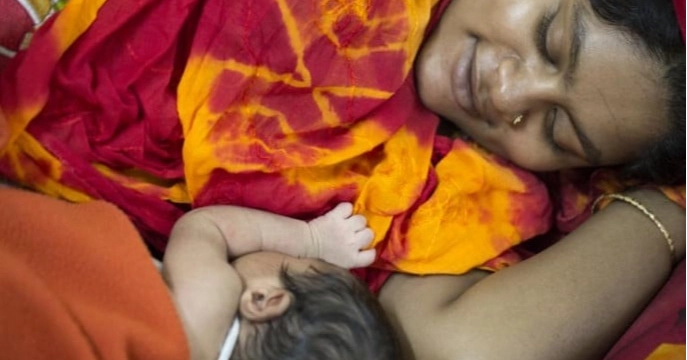
Every child has the right to the best possible start in life, and every mother deserves the support she needs to breastfeed successfully, said the World Health Organization (WHO) and UNICEF on Tuesday, calling for stronger action to protect, promote and support breastfeeding in Bangladesh.
In a joint statement, UNICEF Representative ad interim to Bangladesh Gillian Mellsop and WHO Representative to Bangladesh Dr Ahmed Jamsheed Mohamed said the two UN agencies remain committed to working closely with the Bangladesh government and partners to turn this vision into reality.
“Together, we will continue to strengthen health systems, empower families, and create an enabling environment where every mother can breastfeed and every child can survive, grow and thrive,” they said.
The UN agencies said breastfeeding provides every child with the healthiest and most sustainable start in life, supplying all the nutrients an infant needs during the first six months.
It also protects children against infectious diseases, strengthens the immune system, and supports healthy growth and brain development, they said.
For mothers, breastfeeding reduces the risk of non-communicable diseases, including breast and ovarian cancers and type 2 diabetes, while contributing to healthier families, stronger communities and more resilient societies.
Bangladesh faces a slowdown in progress on breastfeeding, according to new findings from the Bangladesh Multiple Indicator Cluster Survey (MICS) 2025.
The proportion of infants under six months who are exclusively breastfed declined from 62.6 percent in 2019 to 56.6 percent in 2025. Early initiation of breastfeeding within one hour of birth also fell sharply, from 46.6 percent to 30.4 percent during the same period.
“These findings underscore the urgent need to strengthen support for mothers and families to ensure that every child benefits from the best possible start in life,” the statement said.
The UN agencies noted that behind these figures are mothers who need greater support.
“While breastfeeding is a natural act, it is not always easy,” they said, adding that many mothers still lack the counselling, encouragement and practical support they need during pregnancy, childbirth and the postnatal period.
Many women return to work without adequate maternity protection or access to breastfeeding-friendly workplaces, while families continue to be exposed to inappropriate marketing of breast-milk substitutes, according to the statement.
“These barriers are often even greater in emergency and humanitarian settings,” it said.
The WHO and UNICEF said strong health systems, skilled health workers, effective community support, the Baby-Friendly Hospital Initiative, maternity protection, breastfeeding-friendly workplaces and full implementation of the International Code of Marketing of Breast-milk Substitutes have all been proven to improve breastfeeding outcomes.
They said every US$1 invested in breastfeeding generates an estimated US$59 in economic returns through lower healthcare costs, improved cognitive development, higher educational attainment and increased lifetime earnings.
“The challenge is not to reinvent solutions, but to scale up and sustain those that already work, ensuring that every mother receives the support she needs and every child can benefit from breastfeeding,” they said.
The UN agencies called on the government, private sector, development partners, health professionals, employers and communities to strengthen proven measures to support breastfeeding.
They stressed the need to ensure that every health worker has the knowledge and skills to protect, promote and support breastfeeding.
The Baby-Friendly Hospital Initiative should be expanded across public and private health facilities, backed by strong accountability mechanisms and community engagement, they said.
Working mothers also need stronger maternity protection, including paid leave, breastfeeding breaks and breastfeeding-friendly workplaces, according to the statement.
The agencies called for full enforcement of the International Code of Marketing of Breast-milk Substitutes, including measures to prevent inappropriate marketing through digital and social media.
Breastfeeding support should also be integrated into health, nutrition and social protection programmes so that every mother, particularly those in vulnerable situations, receives the support she needs.
The WHO and UNICEF also stressed the need for stronger data, monitoring and research to track progress and guide evidence-based action.
“Protecting, promoting and supporting breastfeeding is one of the smartest investments Bangladesh can make in its children,” they said, adding that “It saves lives, improves health and nutrition, strengthens learning and human capital, and contributes to sustainable development.”