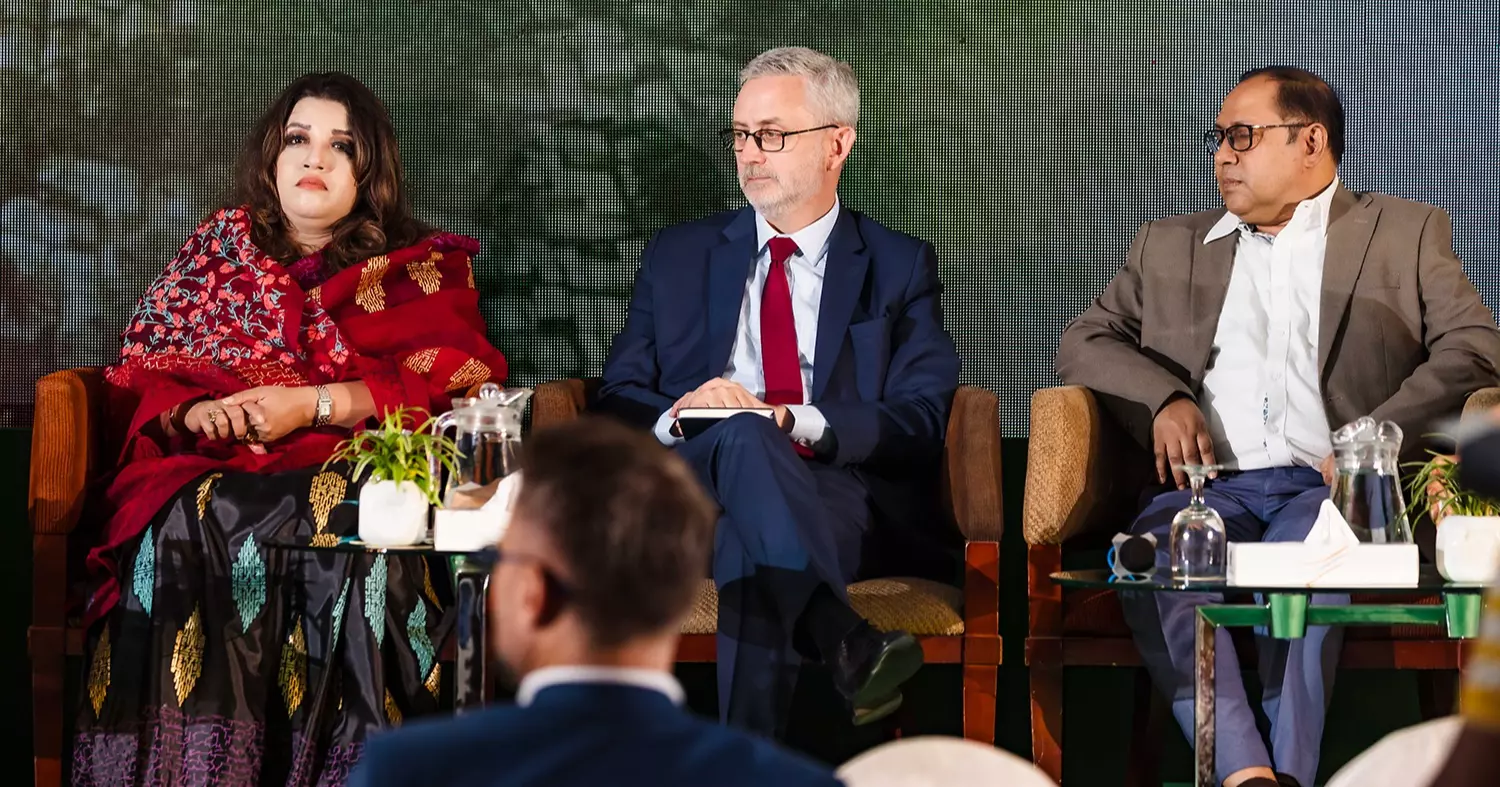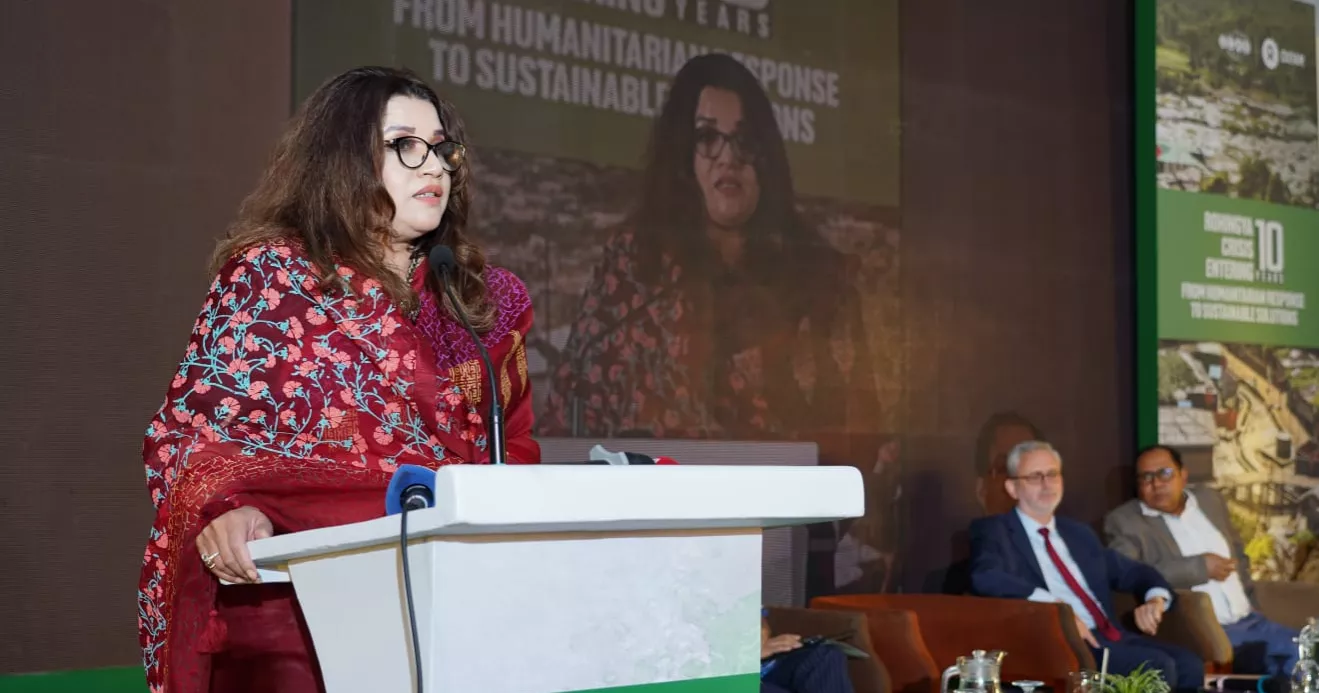
Urging the international community to shoulder the Rohingya responsibility together, State Minister for Foreign Affairs Shama Obaed Islam on Sunday said Bangladesh’s humanitarian generosity must not become an excuse for international inaction.
“Bangladesh can provide shelter. Bangladesh can provide humanitarian assistance. Bangladesh can help preserve dignity, but Bangladesh cannot resolve the crisis that Bangladesh did not create,” she said.
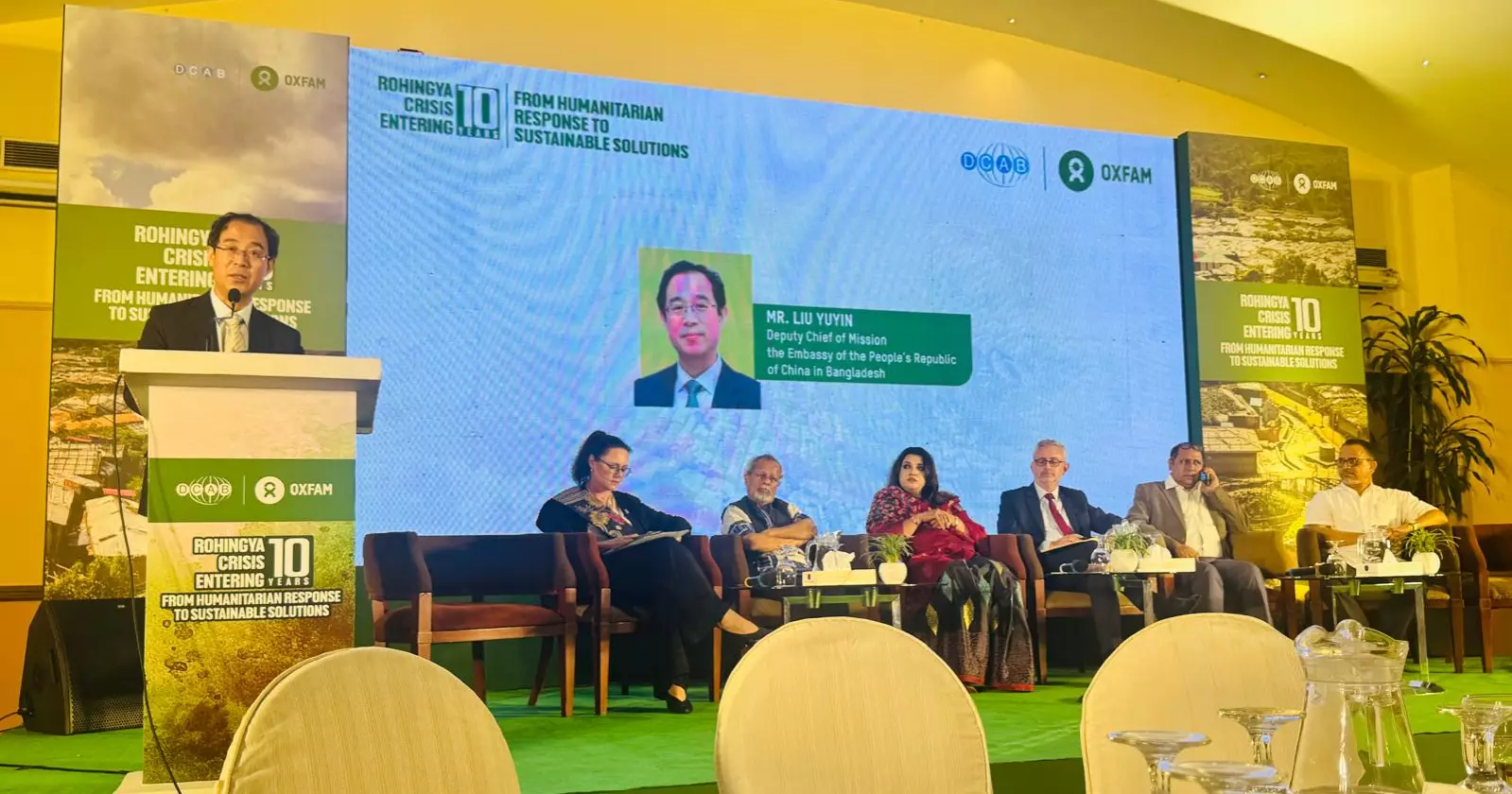
The State Minister made the remarks while addressing a dialogue titled “Rohingya Crisis Entering 10 Years: From Humanitarian Response to Sustainable Solutions”, as the chief guest jointly organised by the Diplomatic Correspondents Association, Bangladesh (DCAB) and Oxfam in Bangladesh.
She said resolving the protracted Rohingya crisis is a political and moral responsibility that the international community must collectively shoulder, stressing that Bangladesh cannot be left alone to bear the burden.
“Bangladesh will continue to stand with them, but Bangladesh should not have to stand alone,” she said.
“That is not merely a humanitarian imperative. It is a political responsibility. It is a moral responsibility, and it is a responsibility that the international community must shoulder together,” Shama said.
Calling the approaching decade of the Rohingya crisis a moment for “reflection”, “reckoning” and, most importantly, “renewed action”, Shama warned against allowing another decade to pass without a sustainable solution.
“For a government, it is a policy cycle. For an institution, it is a planning horizon. But for a child growing up in a refugee camp, 10 years is a childhood. For a young person, it is an education lost. For a family, it is a decade without a home, and for an entire community, it is a generation living in uncertainty,” she said.
“We must not allow 10 years to become 20,” she added.
Since the massive influx in 2017, Shama said, Bangladesh has kept its borders and hearts open and is now sheltering more than 1.2 million forcibly displaced Rohingyas despite its own development challenges, limited land and high population density.
She said hosting such a large displaced population has put enormous pressure on Bangladesh’s infrastructure, environment, public services and host communities, but the country continued to provide food, shelter, healthcare, education and protection as a humanitarian and moral responsibility.
Referring to declining international funding, the State Minister said humanitarian needs remained immense despite reductions in the 2026 Joint Response Plan.
Food, nutrition, water, sanitation and hygiene (WASH), education and protection are “not luxuries” but lifelines, she said, warning that any major funding gap would have consequences for the Rohingyas, host communities, camp stability and ultimately regional stability.
“We therefore urge our international partners: do not let humanitarian fatigue become humanitarian abandonment,” she said.
Shama also highlighted the extraordinary burden shouldered by the people of Cox’s Bazar, saying their livelihoods, environment and public services have come under severe pressure over the years.
Support for host communities, she said, must therefore be treated as an essential component of the humanitarian response rather than an optional addition.
Foreign Secretary Asad Alam Siam, European Union Ambassador and Head of Delegation to Bangladesh Michael Miller, Refugee Relief and Repatriation Commissioner Mohammed Mizanur Rahman, Chinese Deputy Chief of Mission Liu Yuyin, IOM Bangladesh Chief of Mission Dr Laura Tomm-Bonde, Centre for Alternatives Executive Director Professor Imtiaz Ahmed and Cox’s Bazar Civil Society President Abu Murshed Chowdhury, among others, addressed the dialogue.