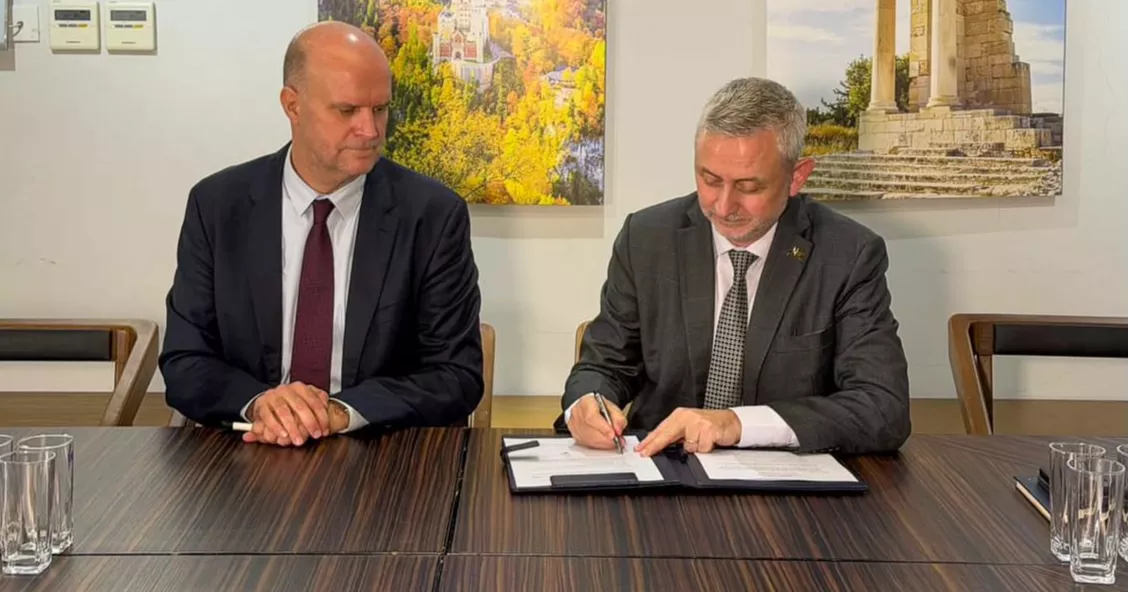
Ambassador and Head of the European Union Delegation to Bangladesh Michael Miller on Thursday said the European Union (EU) is committed to supporting Rohingyas and the communities hosting them in Bangladesh.
"As needs remain protracted, we need to transform the response," he said as the European Union (EU) and UNHCR, the UN Refugee Agency, announced a renewal of their partnership with a futher EUR 14 million development grant.
The grant will help sustain lifesaving assistance and strengthen protection for the 1.2 million Rohingya refugees in Cox’s Bazar and support the livelihoods of the host community.
UNHCR works alongside the Government of Bangladesh, humanitarian partners and donors to strengthen refugee protection as part of the 2025–2026 Joint Response Plan (JRP) for the Rohingya humanitarian crisis.
The Plan calls for USD 710 million this year to meet the most critical needs of 1.2 million Rohingya refugees, including new arrivals, and to ensure they can live in dignity until they can return home voluntarily, in safety and with full rights, said the UN Refugee Agency.
The new funding, which complements EU humanitarian funding and an earlier multi-year development policy contribution from the EU, will provide Rohingya refugees and nearly 70,000 members of the Bangladeshi host community with essential support to enhance resilience and self-reliance, including skills development initiatives and access to clean cooking gas.
With a focus on space for more education, skills development and to generate income, the European Union will help Bangladeshi host communities in Cox’s Bazar and, for the Rohingya, will expand options for education, lead to the learning of practical,
portable skills and improve living conditions, said Ambassador Miller.
"This is about preserving dignity, strengthening resilience and giving refugees the tools to rebuild their lives – preparing them for voluntary, safe and dignified return to Myanmar when conditions allow," he said.
“Reliable, steadfast support is fundamental to the well-being of families who have experienced immense hardship for the past nine years,” said Ivo Freijsen, UNHCR Representative in Bangladesh.
“We are grateful to the European Union for standing with the Rohingya in Bangladesh, ensuring that refugees can access vital protection services, meet their basic needs, and maintain hope for a safer and more dignified future.”
Overcrowded living conditions, limited resources, and prolonged displacement leave refugees highly vulnerable.
Comprehensive protection services within the camps, including safe shelters, welllit camp environments, effective community based protection mechanisms, and accessible reporting channels, are critical to safeguarding refugees’ rights and dignity.
This is particularly important for women and children, who face heightened risks of gender-based violence, trafficking, and exploitation, said UNHCR.
Provision of liquid petroleum gas (LPG) protects women and children from the risks of foraging for firewood, while also reducing the household smoke that damages refugee health, and eases pressure on the surrounding forests.
At the same time, expanding livelihood opportunities and skills development is crucial to reduce dependency on aid and help restore a sense of agency and purpose among refugees.
The contribution comes on the eve of World Refugee Day, observed annually on 20 June, which is an opportunity to honour the resilience and strength of people forced to flee their homes because of violence and persecution, reiterate support for those living in displacement and also recognise the contribution of host communities.
The European Union is a key global supporter of humanitarian and development programmes, with a focus on resilience-building and sustainable solutions.
Generous international support remains vital to ensuring access to essential services.