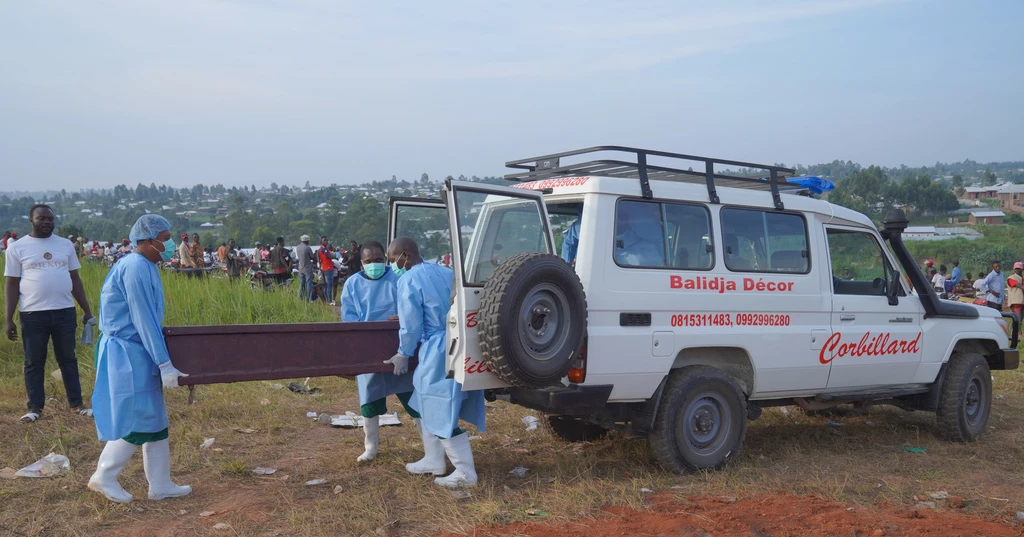
At least 317 people died of Ebola in eastern Congo in the past week, marking one of the highest weekly death tolls since the outbreak began, according to government data released Monday, as health workers struggle to contain the disease’s unprecedented spread.
Data from the Health Ministry showed that, as of Saturday, the outbreak had recorded 5,514 cases and 2,642 deaths, including 317 deaths over the previous seven days.
However, Congolese health experts believe the actual scale of the outbreak could be up to three times larger because the virus had been spreading for weeks before it was officially confirmed.
The outbreak is considered the fastest-growing Ebola outbreak in history, with many patients dying outside treatment centers. At this stage, it has recorded seven times more deaths than the 2014-2016 Ebola outbreak in West Africa, which remains the deadliest on record, killing more than 11,000 people.
Most of the newly reported cases in Ituri province, the current epicenter, are still being detected among people who were not previously listed as monitored contacts.
Nearly half of those infected have died, with the overall fatality rate standing at 47.9%. The rate is considerably higher in hard-to-reach areas such as North Kivu province, where 68.6% of patients have died, according to government figures.
Frontline workers to receive vaccine used in past outbreaks
One of the major challenges in tackling the outbreak has been the absence of approved vaccines or treatments specifically targeting the Bundibugyo virus, the rare Ebola strain responsible for the current outbreak.
Congo received more than 16,000 doses of the Ervebo vaccine on Friday. The vaccine was effective in previous Ebola outbreaks caused by a different and more common strain. The World Health Organization says it will also be used in clinical trials for a vaccine targeting the Bundibugyo virus.
The WHO has said it remains unclear whether Ervebo can protect against the Bundibugyo strain, although initial laboratory and animal studies indicate that it could provide some protection.
Authorities have yet to announce when the vaccine will be administered to frontline health workers. Residents in Ituri, however, said they were hopeful that the arrival of the doses would help slow the outbreak.
“I am very pleased that these vaccines have finally arrived,” said local resident Héritier Ramazani. “We are fed up with recording new cases of Ebola every day.”
The outbreak is occurring under extremely difficult conditions, including threats from rebels and significant population movements.
Medical teams in Ituri and other affected provinces are also facing work stoppages by unpaid responders, resentment among communities already traumatized by years of conflict, poor road conditions and misinformation claiming that Ebola does not exist.
Health experts believe the virus may have been spreading in the mining town of Mongbwalu as early as February, several months before authorities officially declared the outbreak on May 15.