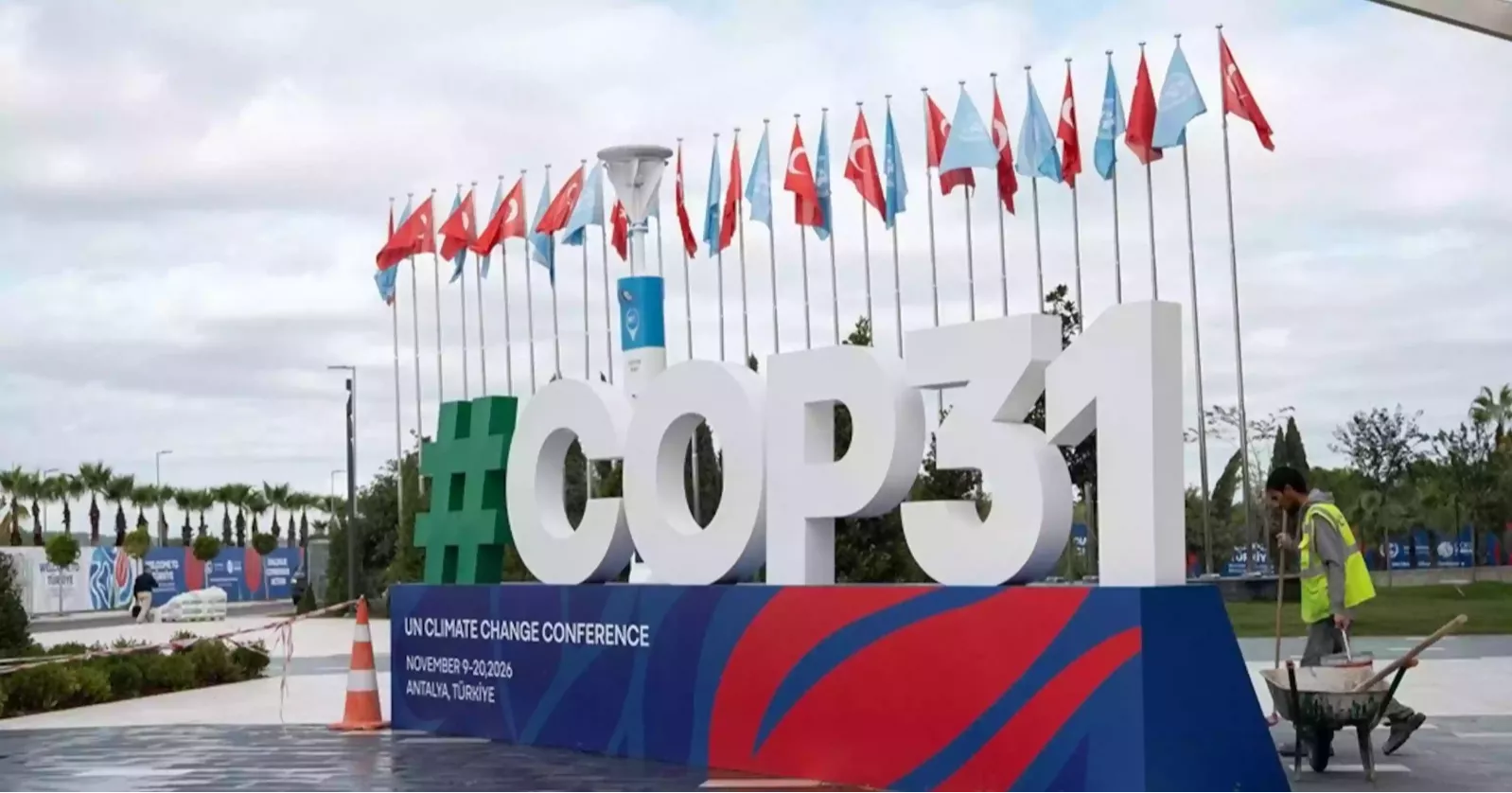
As climate-vulnerable Bangladesh seeks grants, technology transfer and financial support to tackle the growing impacts of climate change at COP31 in Antalya, the biggest challenge remains turning international promises into tangible assistance.
With adaptation costs rising and the country facing mounting threats from cyclones, floods, salinity and rising sea levels, the summit has once again put the question of climate justice and equitable financing at the centre of Bangladesh's diplomatic agenda.
But whether this year's negotiations will deliver real financial commitments rather than another round of pledges remains uncertain.
As the global climate negotiations continue, a key question remains: will the longstanding demands of vulnerable countries like Bangladesh translate into concrete financial support, or will they remain confined to declarations and promises, as in previous climate summits?
Experts say Bangladesh's major priorities at COP31 should include securing grants instead of loan-based financing, ensuring easier access to adaptation funds, obtaining technological assistance and securing adequate funding to address climate-induced losses and damage.
They also stress the need for stronger diplomatic engagement and coordinated positions with other least developed countries (LDCs) and climate-vulnerable nations to strengthen Bangladesh's bargaining position.
Diplomatic engagement crucial to securing Bangladesh's demands
The effectiveness of Bangladesh's position at COP31 will largely depend on its diplomatic capacity and coordination with international alliances, experts say.
Professor Ainun Nishat said negotiations at COP summits primarily take place at the state level, with two separate spaces playing different roles.
The Blue Zone is where heads of state and government representatives discuss and negotiate the Paris Agreement and global climate policies, while the Green Zone provides a platform for civil society, NGOs and other organisations to present their demands and positions.
He said the main decision-making authority rests with government representatives. Therefore, diplomatic engagement by the head of government, environment minister, secretaries and relevant officials is crucial to advancing Bangladesh's interests.
He also stressed the importance of using bilateral meetings to raise issues relating to climate financing and the challenges faced by vulnerable countries.
Dr Atiq Rahman, meanwhile, said Bangladesh should not focus solely on its national interests but also highlight the collective demands of LDCs and other climate-vulnerable countries.
A united position in international negotiations could strengthen Bangladesh's efforts to secure its demands, he said.
Climate financing: Actual disbursement matters more than promises
Bangladesh needs substantial financial resources to address climate adaptation and climate-induced losses and damage. However, despite international pledges, significant challenges remain in securing actual disbursements, accessing funds on favourable terms and implementing projects.
M A Hasan of the Coast Foundation said international climate negotiations frequently feature announcements of large financial commitments, but their success cannot be measured merely by the amounts pledged.
He said it was important to determine who would provide the money, where it would come from, when it would be disbursed, under what conditions it would be provided, who would receive it and what tangible changes it would bring.
"Countries of the Global South are not asking for charity; they are demanding climate justice," he said.
Countries that have contributed the least to the climate crisis should not be forced to take on additional debt to protect their populations, he said, adding that financing arrangements that increase national debt or prioritise lenders' interests over people's needs are unacceptable.
The issue is particularly significant for Bangladesh, as taking on additional loans to address climate impacts could further increase economic pressure on the country.
Securing grant-based international climate assistance has therefore become a major priority.
International politics and financing challenges
Professor AKM Saiful Islam of the Institute of Water and Flood Management at Bangladesh University of Engineering and Technology (BUET) said international politics had emerged as a major obstacle to climate financing and emissions reduction.
He said the United States' withdrawal from the Paris Agreement, global conflicts and the positions of oil-rich countries had complicated international climate cooperation and financing.
According to him, key issues at this year's summit include adaptation financing, direct grants and technological support to address losses and damage, implementation of international climate finance targets and a just transition in the energy sector.
He also highlighted the challenge of delivering on the climate finance commitments of $300 billion annually by 2035 and a longer-term target of $1.3 trillion.
Experts say securing climate financing will remain difficult amid the prevailing global political and economic uncertainties.
Bangladesh will therefore need to intensify bilateral and multilateral diplomatic efforts while pressing developed countries to fulfil their responsibilities.
Just transition and Bangladesh's domestic initiatives
Alongside international financing, Bangladesh's domestic environmental and energy policies could also shape its position at COP31.
Dr Saimum Parvez said the Prime Minister's participation in the summit reflected Bangladesh's commitment to environmental protection and climate action.
He said ensuring a just transition in the energy sector was one of the country's key priorities at the summit.
The government wants to move from a fossil fuel-dependent economy towards one based on renewable energy while protecting the livelihoods and employment of existing workers and creating new green jobs, he said.
He said the government had undertaken major programmes, including planting 250 million trees and excavating and re-excavating 20,000 kilometres of canals over the next five years.
Other priorities include renewable energy development, waste management, methane emission reduction and the promotion of environmentally friendly industries.
Highlighting Bangladesh's experience in climate adaptation, he said the country had made considerable progress in disaster preparedness through early warning systems for cyclones and floods, active volunteer networks, salt-tolerant crops and floating agriculture.
These initiatives could serve as examples for other climate-vulnerable countries, he added.
Paris Agreement goals remain a major challenge
The Paris Agreement, adopted at COP21 in 2015, aims to keep the rise in global temperatures well below 2 degrees Celsius above pre-industrial levels while pursuing efforts to limit the increase to 1.5 degrees Celsius.
However, a decade after its adoption, progress towards achieving these targets has remained insufficient.
Dependence on fossil fuels, inadequate investment, disagreements between developed and developing countries and shortages in climate financing have further complicated the situation.
Floods, cyclones, wildfires, droughts and heatwaves are intensifying in different parts of the world. Meanwhile, conflicts, energy security concerns and geopolitical instability are making international climate cooperation increasingly difficult.
For Bangladesh, the situation is particularly concerning, as climate change continues to threaten coastal communities, agriculture, livelihoods, water resources and food security.
Consequently, effective international cooperation on adaptation and addressing losses and damage remains essential alongside efforts to limit global temperature rises.
What can Bangladesh expect from COP31?
Bangladesh's demands at climate summits are not new. At previous conferences, the country repeatedly highlighted adaptation, loss and damage, technology transfer and climate financing.
However, a significant gap remains between international commitments and actual financial support.
At last year's COP30 in Belem, Brazil, Bangladesh did not secure any significant country-specific financial commitment or major visible achievement, according to the report.
Against this backdrop, actual disbursement of funds, simplified access to financing and guarantees for implementation have become more important than fresh declarations or pledges at COP31.
Analysts say the success of the summit for Bangladesh will depend not merely on the announcements made but on how much grant-based financing is secured, how much technological assistance is delivered and how far such support improves the lives of people vulnerable to climate change.
The central question, therefore, is whether the international community's commitments will finally translate into tangible financial support or whether Bangladesh and other vulnerable countries will continue to shoulder additional debt while dealing with a crisis they have contributed little to creating.
For Bangladesh, the climate negotiations are not simply about securing financial assistance. They are also about climate justice, equitable rights and protecting future generations.
How effectively Bangladesh can advance these issues through diplomacy at COP31, and how far those efforts translate into concrete outcomes, remains to be seen.