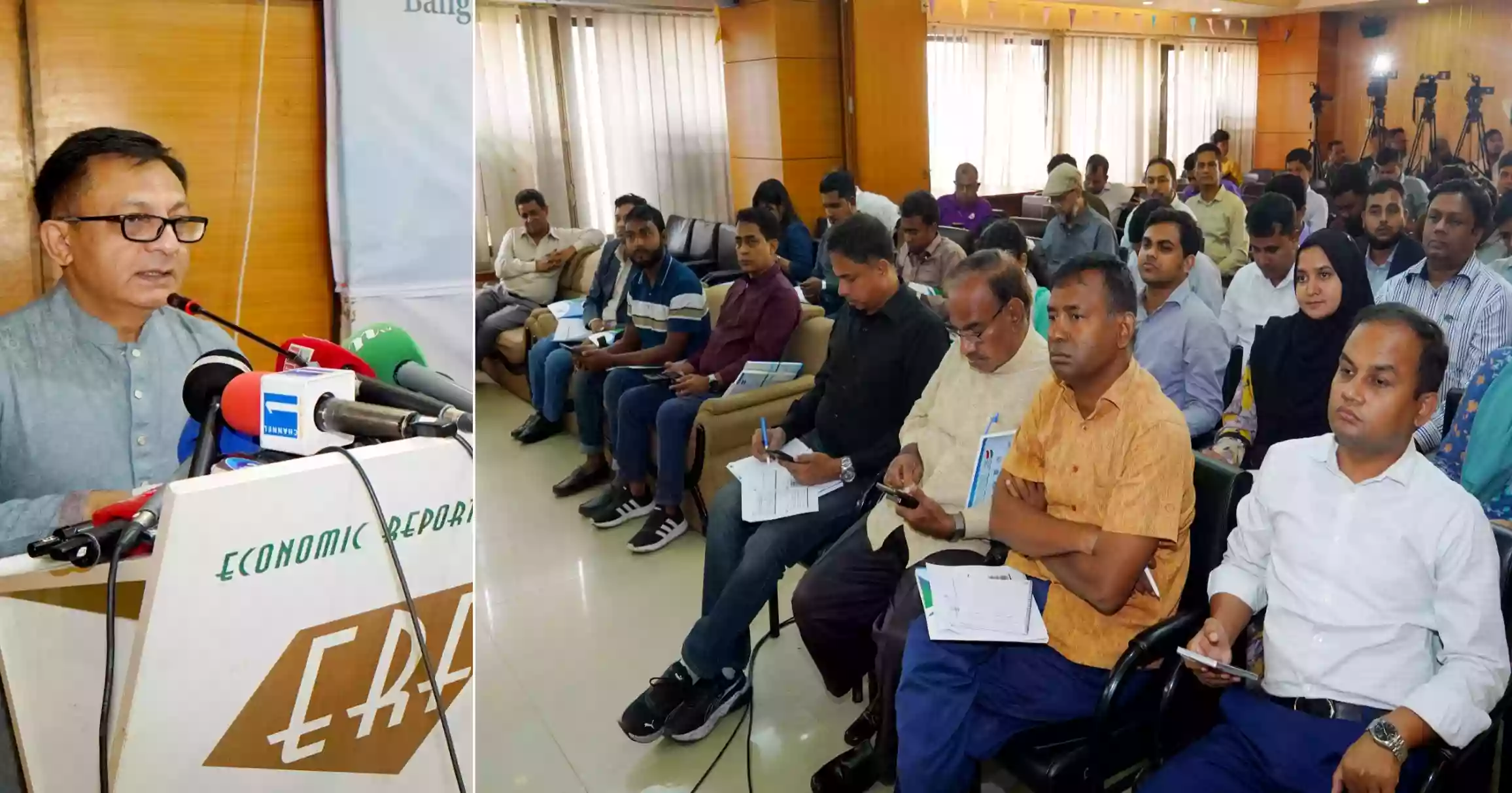
Commerce Minister Khandakar Abdul Muktadir Monday expressed hope that a decision on deferring Bangladesh's graduation from the least developed country (LDC) category by three years would come within this month.
"The government has prepared a time-bound action plan to make the best use of the additional time. We also aim to conclude free trade agreement (FTA) negotiations with the European Union (EU) before graduation," the minister said while addressing a seminar on the challenges and way forward of Bangladesh's LDC graduation at the Economic Reporters' Forum (ERF) conference room in the capital.
The ERF and the Bangladesh Foreign Trade Institute (BFTI) jointly organised the seminar.
Outlining the progress of the deferral process, the minister said Bangladesh has cleared the UN Committee for Development Policy (CDP) stage. "The UN Economic and Social Council (ECOSOC) has since spoken of extending the timeframe by three years."
He said the EU and other stakeholders have also agreed that Bangladesh should get the additional time.
"I am very optimistic that we will see a resolution of the matter next week or the week after," Muktadir said, expressing hope that a decision would come before the November 24 deadline.
Explaining why the three-year extension was sought, the minister said the country is not prepared to face post-graduation challenges.
Attempts were made to glorify graduation politically rather than focusing on economic and financial challenge
Not enough attention was paid to harnessing the benefits of graduation and building the capacity to tackle potential disadvantages, said the minister.
He said a time-bound action plan on how the additional time would be used has already been shared with the EU.
Highlighting initiatives to retain access to global markets for Bangladeshi goods and services, Muktadir said the government aims to conclude Comprehensive Economic Partnership Agreements (CEPAs) or FTAs with eight to 10 countries in 2026 and 2027.
He said a chief negotiator has been appointed for the FTA talks with the EU, and preparations are underway to begin the first round of technical negotiations, though no date has been fixed yet.
The goal, he said, is to finish the talks before Bangladesh's graduation.
Preparations to obtain GSP Plus facilities in the EU market will run in parallel, the minister said.
"However, I hope we will not have to opt for GSP Plus, as we will complete the FTA before that," he added.
The minister also said the process of joining the Regional Comprehensive Economic Partnership (RCEP) is underway.
He said in-principle approval for Bangladesh's inclusion has been received, and procedural work is now moving ahead.
To attract investment, the minister said, access to international markets must be complemented by uninterrupted energy supply, easier business procedures and transparent legal resolution of disputes.
He stressed the need to ensure both purchasing power at home to sell locally produced goods and access to foreign markets for exports.
Citing the delays in starting a business, he said it takes an average of 355 days to complete the process, from obtaining a trade licence, opening a bank account and securing preliminary clearances to collecting an import registration certificate and opening a letter of credit (LC) for machinery.
"Such a long time makes it hard for entrepreneurs to keep up their enthusiasm," he said.
To change this, the government plans to issue trade licences through a single online portal, the minister said. "Applicants will be able to obtain licences from anywhere in the country or abroad by submitting the required documents and paying fees, with the fees automatically reaching the concerned local government institutions."
The government is also taking steps to bring the services of the Registrar of Joint Stock Companies and Firms (RJSC) fully online and to extend the validity of various licences to three to five years, he said.
He also spoke of introducing joint inspections in place of separate inspections by different agencies.
Muktadir expressed the hope that these reforms would free entrepreneurs from the lengthy process of obtaining licences and permits by 2027.
Terming the energy crisis a major obstacle to fresh investment, the minister said work is underway to install new floating LNG terminals and drill gas wells to boost supply.
The government is also taking steps to increase solar power generation, he added.
He said Bangladesh comes under pressure whenever uncertainty arises in international supply, as it lacks adequate storage for LNG and essential commodities.
He underscored the need to build strategic reserves and storage capacity.
The government is moving ahead with the combined goal of boosting the confidence of local and foreign investors, facilitating business and ensuring access to global markets, Muktadir said.