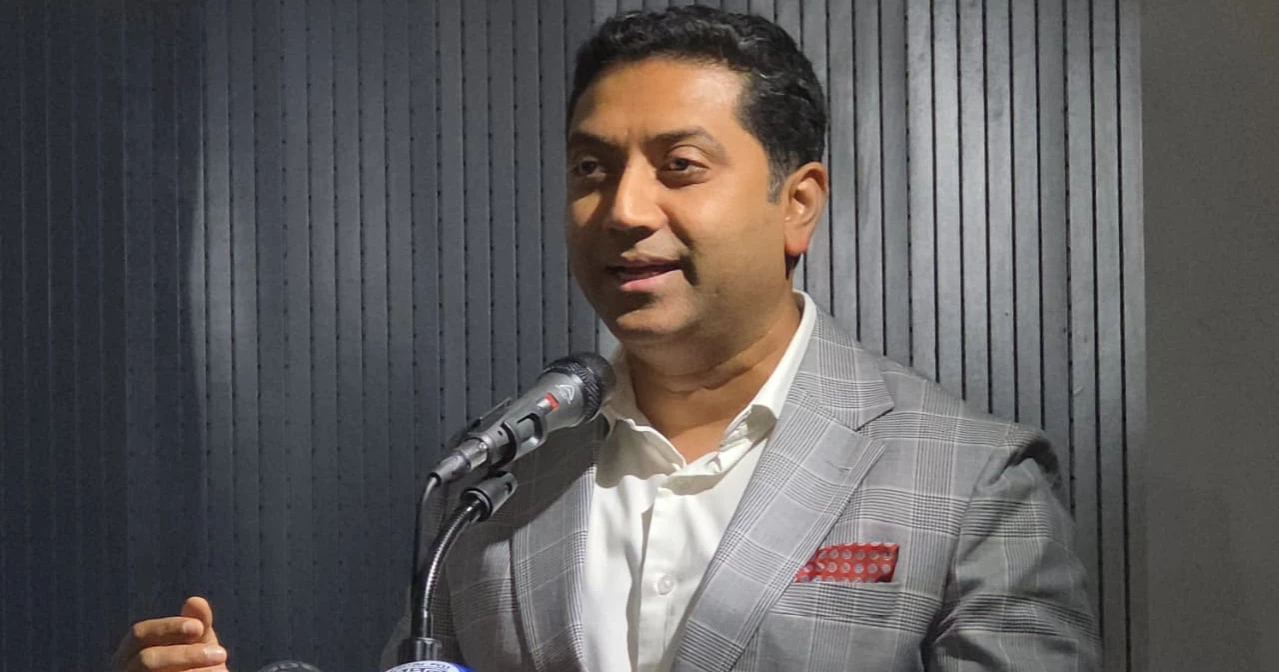
The government is working to integrate STEM education into primary-level learning to develop children's critical thinking, analytical abilities and problem-solving skills from an early age, State Minister for Primary and Mass Education Bobby Hajjaj said on Wednesday.
“Primary education should not remain confined to textbooks and examinations. It must foster children's natural curiosity, creativity, inquisitiveness and analytical thinking,” the state minister was speaking at a discussion titled 'STEM Education at the Primary Level: Prospects, Challenges and Future Perspectives', at the Bangladesh Parjatan Corporation building in Agargaon.
He said the initiative aims to equip children with the skills needed to adapt to a rapidly changing world shaped by artificial intelligence (AI), social media and digital technologies.
Bobby said the growing influence of AI and digital devices was changing the future workplace and the skills required to succeed in it. “Many conventional jobs and working methods are likely to undergo significant changes, while the demand for certain types of work may decline.”
To prepare the next generation for these changes, children must develop critical thinking, analytical ability, problem-solving skills and the capacity to learn new things from the primary level, he said.
He stressed that education should focus not merely on acquiring information but also on developing children's ability to analyse information and make informed decisions.
Highlighting the government's efforts to make classroom learning more enjoyable, Bobby said the aim was to ensure that children attend school not simply to fulfil attendance requirements but with enthusiasm and an interest in learning new things.
“As part of the initiative, work has already begun on designing more than 420 learning-based games for students from Class I to Class V, in line with the national curriculum. These class- and lesson-based games will make subjects such as Bangla, mathematics and science easier, more enjoyable and engaging for young learners”, he said.
The state minister also said the government was working to incorporate STEM education throughout the revised primary curriculum.
“Plans are also underway to introduce learning toys and educational materials aligned with different textbook chapters. For instance, appropriate toys and learning materials could be used to teach addition and subtraction in Class I and introduce the concepts of perimeter and area in Class III”, he said.
The National Curriculum and Textbook Board (NCTB) has begun identifying suitable toys and materials for different subjects and lessons to make learning easier for children, Bobby said.
He added that discussions would also be held with local manufacturers to encourage the production of quality educational materials suited to the national curriculum.
Speakers at the event called for stronger coordination and partnerships between government and non-government organisations to address existing inequalities in primary education and ensure quality, inclusive and relevant STEM education for all children.