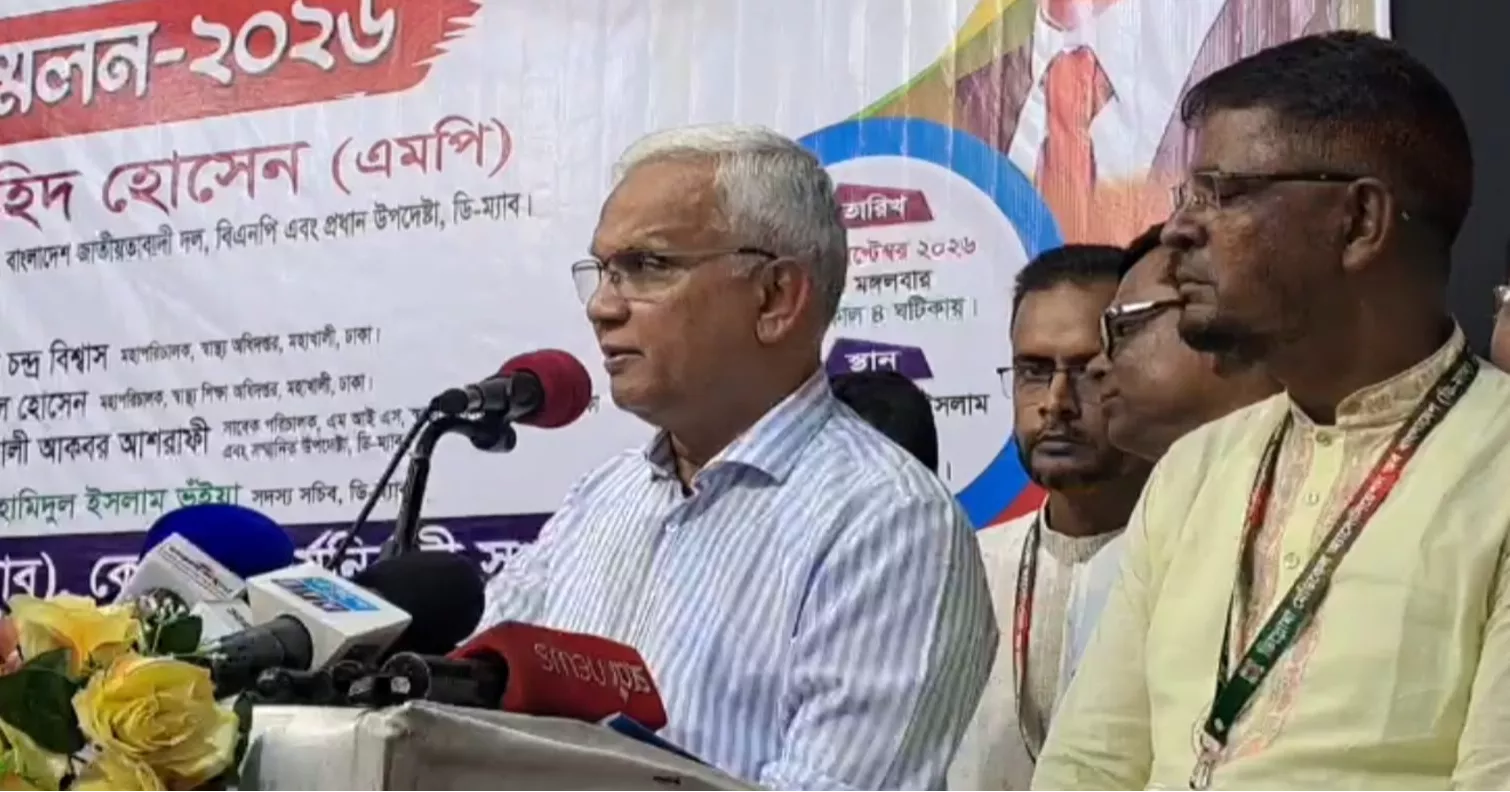
The government is working to reduce the financial burden of healthcare on ordinary people by strengthening public health services and ensuring adequate health workers at different levels, Social Welfare Minister Dr AZM Zahid Hossain said on Tuesday.
“If the government spends Tk 30 on healthcare, an ordinary person spends around Tk 70 from his or her own pocket,” he said, stressing the need to bring down such out-of-pocket expenditure.
The minister made these remarks at a discussion arranged by the Diploma Medical Association of Bangladesh (D-MAB) marking the platform's one year anniversary at the Jatiya Press Club in the capital.
He said the government allocated nearly Tk 69,000 crore for the health sector in the current budget but proper use of the allocation and sufficient manpower are both essential to improve healthcare access.
“If we want to reduce people's expenditure from their own pockets, we have to spend the money properly and also ensure that sufficient health workers are available at the village, union and upazila levels,” he said.
He also said strengthening primary and emergency healthcare would allow patients to receive timely treatment closer to home and potentially reduce the need for more expensive hospital-based care.
The minister said the government plans to expand healthcare capacity at the upazila level, including increasing the number of beds at upazila health complexes, which would require a large number of doctors, nurses, medical assistants, technologists and other health professionals.
Zahid also urged medical assistants to play a stronger role in disease prevention and public awareness particularly against dengue and measles.
“People should neither panic nor neglect dengue and they should not take unnecessary medicines,” Zahid said, urging health workers to provide proper guidance to patients.
He said the government also plans to recruit around one lakh health workers and assured D-MAB members that medical assistants would not be left out of the initiative.
Addressing the association's demands, Zahid said their calls for government recruitment, appropriate grading and career progression are legitimate and should be considered in line with their training and responsibilities.
He urged D-MAB to remain organised and combine its professional demands with greater responsibility toward public health.