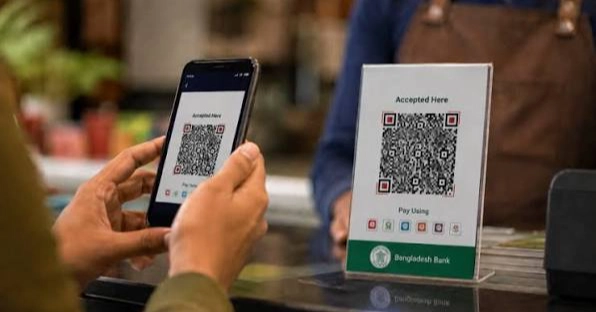
Two of the country's leading mobile operators, Grameenphone and Robi, have introduced Bangla QR-based payments at their retail outlets in separate events on Wednesday, in partnership with Mutual Trust Bank PLC (MTB), as Bangladesh Bank pushes for wider adoption of digital payments.
Bangladesh Bank Deputy Governor Habibur Rahman attended both launches as chief guest, inaugurating the service at the Grameenphone Experience Centre in Gulshan and at Robi's Walk-In Centre in Banani.
Under the arrangement, customers can scan a single merchant Bangla QR code displayed at the outlets using apps provided by participating banks, mobile financial service (MFS) providers or payment service providers (PSPs), with payments made directly from their accounts.
The national QR standard is designed to let customers pay at participating merchants without cash.
Grameenphone will initially offer the service at its Experience Centres in Gulshan and Bashundhara Residential Area in Dhaka, and at GEC Circle in Chattogram.
Robi, for its part, has extended Bangla QR acceptance to all its Walk-In Centres, including Cirkle centres, as well as its nationwide retail network.
The move aligns with Bangladesh Bank's "One Country, One QR" vision, which seeks a unified and interoperable digital payment ecosystem.
The central bank has set a target of facilitating 10 million digital transactions a day.
Speaking at the Grameenphone event, Habibur Rahman said connectivity and technological innovation were key drivers of economic growth and financial inclusion.
He expressed hope that other industry players would join the initiative to make financial services more accessible, encourage young people to adopt digital payments and speed up the transition to a cashless economy.
At the Robi programme, he said building a cashless and digitally connected economy required greater collaboration among financial institutions, businesses and technology-driven service providers.
"Interoperable payment solutions like Bangla QR can make digital transactions more accessible to people across the country," he said, urging more businesses to adopt such solutions.
Grameenphone CEO Yasir Azman said the partnership would allow customers to pay by scanning a code on their phones without carrying cash or waiting for change, and would help expand financial inclusion.
"Our ambition is to create a safer and smarter future for customers while contributing to the country's vision of becoming a trillion-dollar economy," he said.
Robi Chief Corporate and Regulatory Officer Shahed Alam said making digital payments available at familiar touchpoints would encourage more people to move to cashless transactions.
He added that the company's retail and supply chain ecosystem was also expected to be digitised, enabling faster payment collection and more efficient fund transfers among customers, retailers, distributors and the company.
MTB Managing Director and CEO Syed Mahbubur Rahman, who was present at both events, said the partnerships would widen the Bangla QR acceptance network.
"By combining MTB's payment capabilities with Robi's extensive customer reach, we are helping bring interoperable digital payments closer to everyday consumers," he said of the Robi tie-up.
At the Grameenphone event, he said combining MTB's payment expertise with the operator's retail network would make everyday transactions easier and support wider adoption of digital payments.