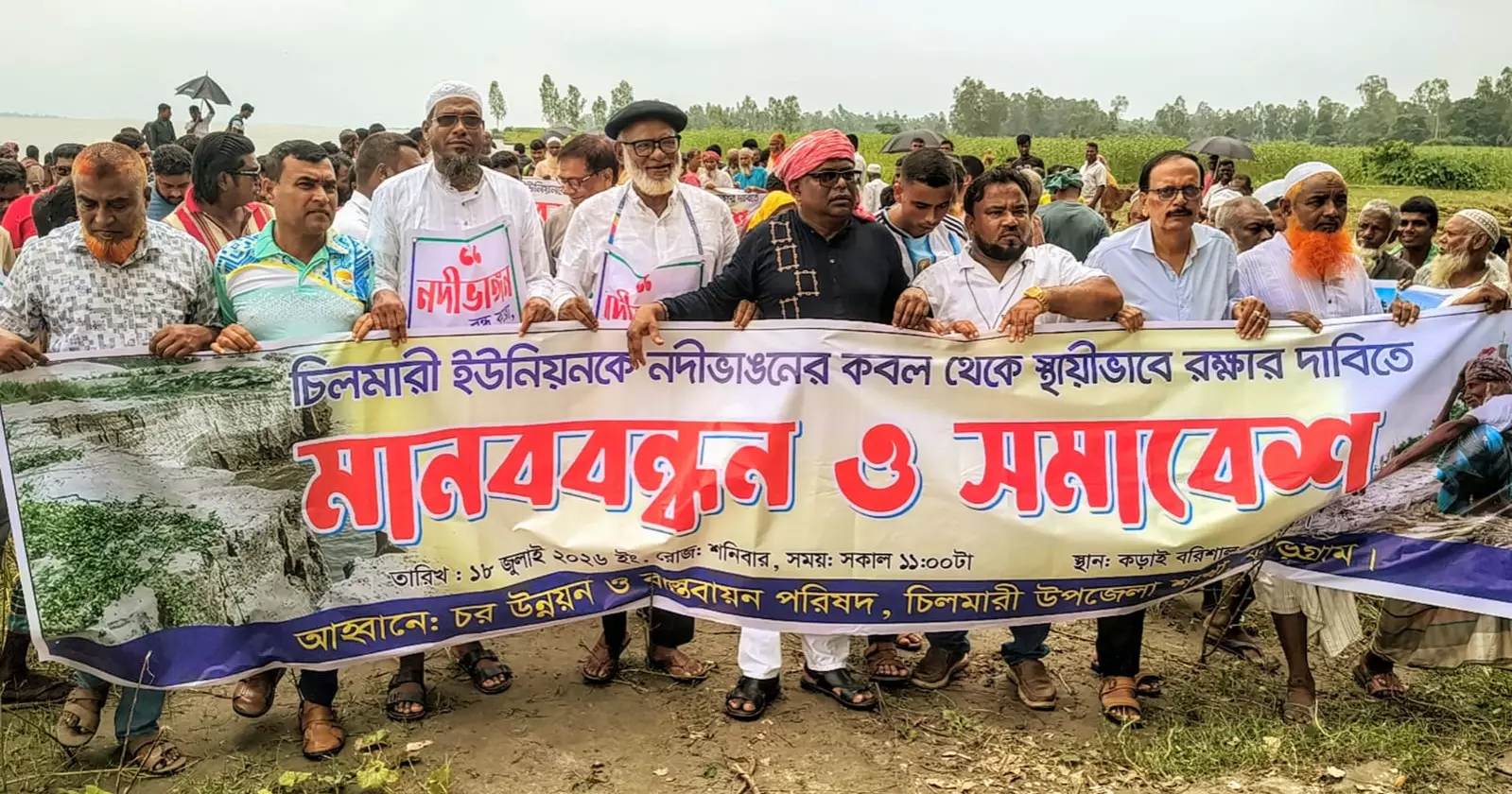
Hundreds of people affected by river erosion formed a human chain and held a rally in Kurigram's Chilmari upazila on Saturday, demanding urgent measures to protect the area from the continued erosion caused by the Brahmaputra River and calling for the establishment of a separate ministry for the country's char regions.
The programme, held at the erosion-hit Bishalpara area, drew more than a thousand participants, who also urged the government to rehabilitate affected families and take long-term steps to prevent further riverbank erosion.
The rally was chaired by Prof Shafiqul Islam Bebu, president of the Kurigram District Char Development and Implementation Council.
Among those who addressed the gathering were freedom fighter and Chilmari Upazila BNP Convener Abdul Bari Sarkar, Council Senior Vice-President Principal Khaza Sharif Uddin Ahmed Rintu, Chilmari unit President Assistant Professor Abu Hanifa, Member Secretary Assistant Professor Fazlul Haque, Sonali Otit Football Club Kurigram General Secretary Wazed Ali Jhinuk, Chilmari Union Parishad Chairman Aminul Islam Kazi, women's leader Shahnaz Sultana, and local erosion victims Asir Uddin and Shahjahan Ali.
Speakers said vast areas of Chilmari are being swallowed by the Brahmaputra every year, leaving thousands of families homeless after losing their houses, farmland, educational institutions and other infrastructure.
They urged the authorities to construct permanent embankments and implement effective erosion-control measures without delay.
In his address, Prof Bebu claimed that river erosion is currently occurring at at least 42 locations along the district's 16 rivers and that nearly 200,000 people have lost their homes over the past decade, forcing them to relocate.
He alleged that no government agency has comprehensive data on the actual number of people affected by river erosion.
"Floods and river erosion do not only destroy land and property; they also erase people's childhood memories, social ties and sense of belonging," he said, adding that many families still do not know where they will seek shelter or keep their children and livestock safe during floods.