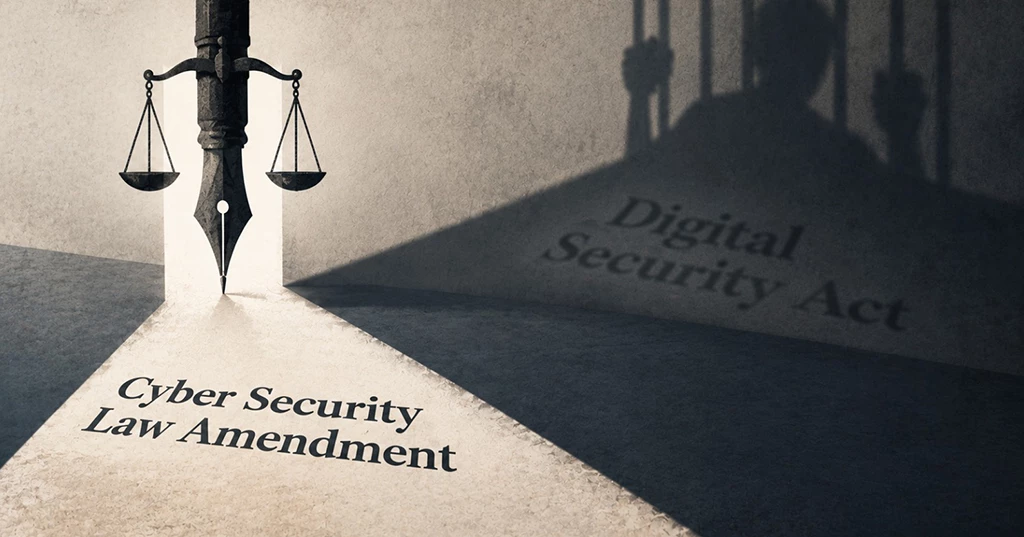
The Clooney Foundation for Justice and the Centre for Governance Studies, an independent think tank based in Dhaka, are calling on the Government of Bangladesh to revise proposed cyber security legislation that could expose journalists to lengthy prison sentences and reverse earlier free-speech reforms.
The proposed amendment reintroduces provisions similar to those under the Digital Security Act, which was previously used to silence journalists and restrict press freedom.
The interim government had repealed vague provisions on cyber defamation and misinformation, but the proposed law would bring them back.
A November 2025 report by the Centre for Governance Studies and the Clooney Foundation’s TrialWatch Programme examined 222 cases brought against 396 journalists under the Digital Security Act between 2018 and 2023.
Politicians and government officials brought 107 of these cases, raising concerns about the law’s use to target journalists.
Journalists were arrested and held in pre-trial detention more than half the time in cases where information was available.
Several journalists interviewed described arrests at unusual hours by plain-clothes officers, without being informed of the grounds for their arrest, and reported mistreatment.
Most cases analysed did not reach trial, making the legal process itself a form of punishment.
Journalist Ikhtiyar Uddin Azad, for instance, spent eight months in jail after posting about food shortages during the COVID-19 lockdown. He was eventually acquitted after nearly three years of legal proceedings.
The proposed amendments raise several significant concerns:
Up to 10 years in prison for spreading ‘rumours’ and disinformation: Journalists could face lengthy prison sentences for publishing or sharing information considered ‘unverified’ or ‘misleading’, even when reporting on matters of public interest. These vague provisions resemble those under the Digital Security Act, which our research found were routinely used against journalists.
Criminalisation of defamation and arrests without a warrant: Journalists could face up to five years in prison for online defamation, disparagement or bullying, increasing to 10 years where the person affected is a woman or child. The proposed law would also permit arrest without a warrant for defamatory speech, introducing a more severe provision than that contained in the Digital Security Act.
Wider criminal liability for editors and news organisations: Editors and news organisations could face prosecution for reporting they did not produce or directly oversee. Under the previous Digital Security Act, editors faced charges for stories in which they had no involvement, and this form of liability has been retained. The proposed legislation also provides for the closure of an entire media organisation following a conviction.
In a joint letter to Bangladesh’s Minister of Law, Justice and Parliamentary Affairs and other ministries, the Clooney Foundation and Centre for Governance Studies urge the government to remove the proposed criminal offences relating to ‘rumours’ and ‘disinformation’, end criminal penalties for defamation and protect good-faith expression about public figures and speech on matters of public interest.
The organisations welcome the Home Minister’s willingness to include journalist-specific safeguards in the law, including the proposal to require court approval before journalists can be arrested or have their devices seized.
CGS President Zillur Rahman said the Digital Security Act (DSA) taught Bangladesh a costly lesson.
“We conducted research on 222 cases filed against journalists under the law, of which only one resulted in a conviction. Yet nearly 400 journalists were subjected to criminal proceedings in these cases. Many were arrested, detained and silenced in the process. The proposed amendments to the new law now risk bringing back those provisions,” he said.
Zillur Rahman said the government now has an opportunity to ensure that the law protects citizens online without criminalising journalism.
The proposed provisions raise significant concerns in light of Bangladesh’s obligations under international human rights law.
The UN Human Rights Committee has stated that imprisonment is never an appropriate punishment for defamation, and numerous experts have called for the repeal of vague and overbroad ‘fake news’ laws. Restrictions on freedom of expression must be clearly defined, necessary and proportionate.
“Bangladesh has an opportunity to break with a history of using repressive cyber-crime laws to punish criticism and public-interest reporting. Laws must protect journalists and their right to report freely and not expose them to criminal charges for doing their job,” said Maneka Khanna, Senior Lawyer at the Clooney Foundation for Justice.
The organisations’ joint report, Press Freedom in Bangladesh: Lessons from the Digital Security Act, was published in November 2025 and is available in both English and Bengali.
Both organisations have offered to share their findings and work with government officials to help ensure that Bangladesh’s new cyber security law protects freedom of expression rather than restricting it.