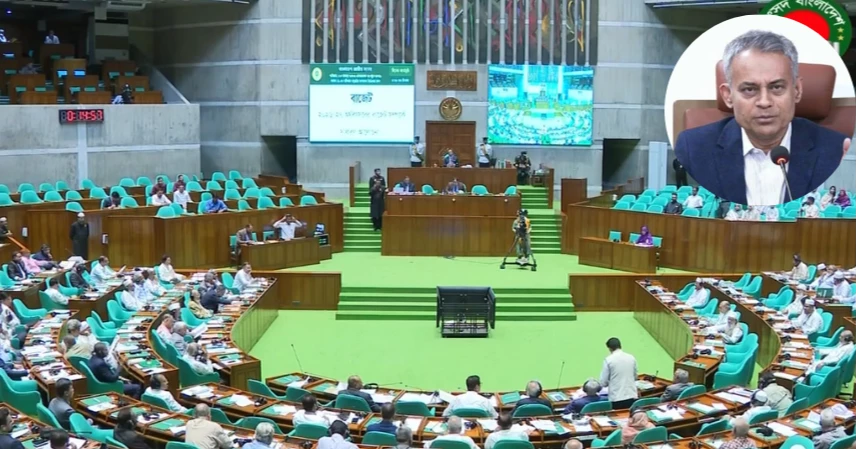
Road Transport and Bridges Minister Shaikh Rabiul Alam on Monday said there is little scope for waiving tolls on bridges under the Road Transport and Highways Division and the Bridges Division.
“Toll collection is governed by policy and revenue rules rather than ministerial discretion,” he said in Parliament.
Responding to a Rule 71 notice raised by reserved seat BNP MP Shacot Ara Akter in Parliament, the minister said the Ministry has limited authority to suspend toll collection or exempt users based on requests or recommendations from members of parliament.
Laldia Container Terminal concession signed transparently, won't be revised: Shipping Minister
"We have a policy for collecting bridge tolls. There is very little scope for the ministry to stop toll collection or waive tolls at the request or recommendation of MPs," he said.
Rabiul Alam acknowledged that many MPs had promised to abolish bridge tolls during election campaigns.
"Most of us who were elected as members of parliament promised before the election that bridge tolls would be waived, perhaps to build public support," he said.
However, he explained that while the ministry constructs and manages bridges, toll collection is a revenue matter regulated by the finance authorities.
"The Ministry cannot abolish revenue collection, nor can any member of parliament do so. Without revenue collection, even this Parliament would not be able to function due to a lack of funds," he said.
The minister said the demands raised by MPs who had made such commitments to voters could be discussed with the Finance Division to determine whether any concessions could be considered, but stressed that such a move would require a policy decision.
Addressing demands for additional stoppages of intercity trains, Rabiul Alam said many MPs had also pledged to ensure intercity train services stopped at stations in their constituencies.
He said intercity train stoppages are determined under established policy guidelines.
"If trains are made to stop everywhere, they will cease to be intercity services and effectively become local trains," he said.
On demands for four lane roads in different constituencies, the minister said road expansion decisions are based on technical assessments rather than election commitments.
He said traffic volume, passenger numbers and freight movement are taken into account before determining whether a road should be two lane or four lane.
"We believe two lane roads are sufficient at the district level. As for national highways where there is demand for four lane roads, those projects are already under planning," he added.