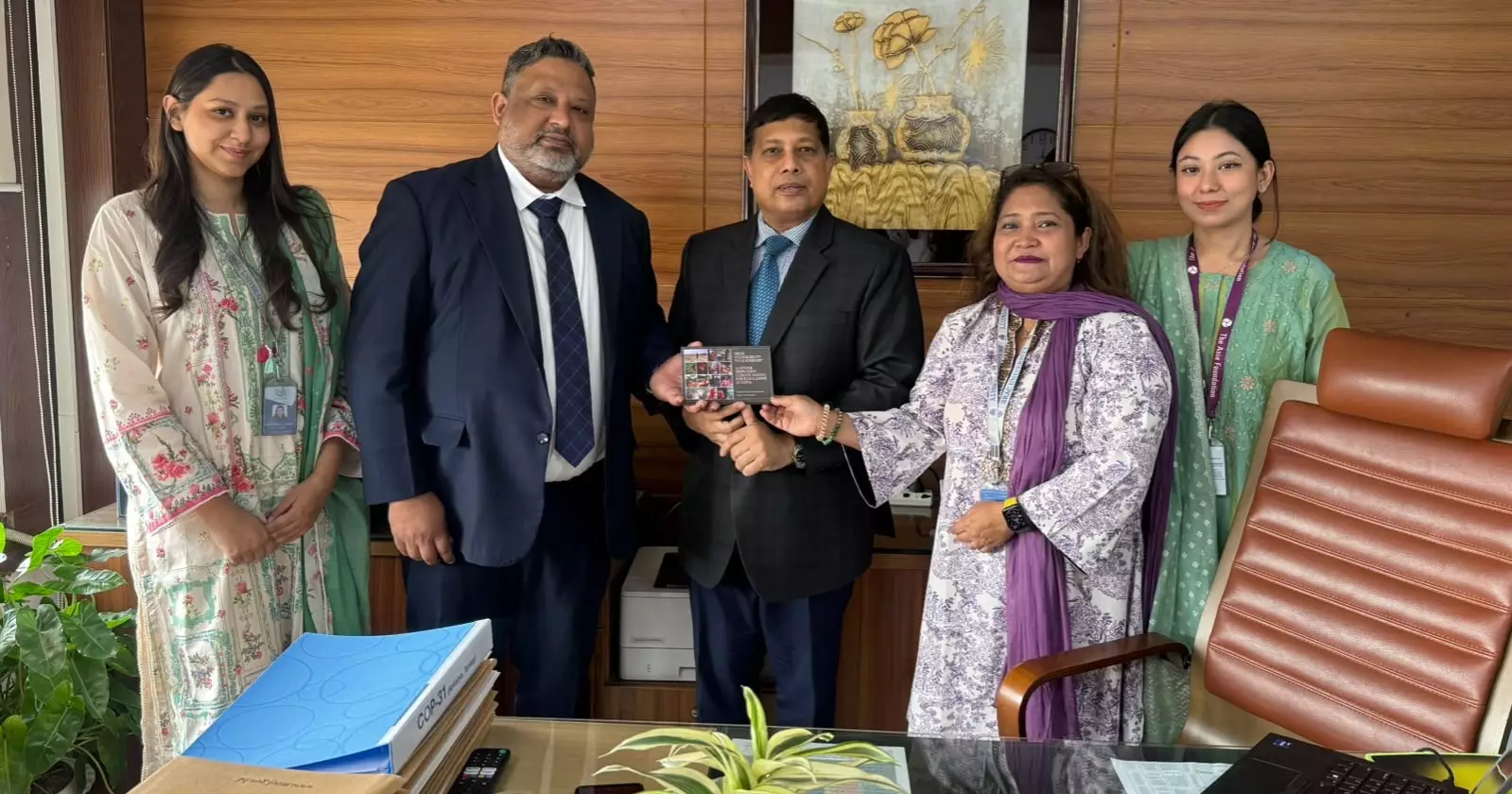
The Green Voices project presented a set of evidence-based policy recommendations to the Ministry of Environment, Forest and Climate Change (MoEFCC) to support Bangladesh’s preparations for the 31st United Nations Climate Change Conference (COP31).
The recommendations were presented to Mohammad Navid Safiullah, Additional Secretary and Head of the Climate Change Wing at MoEFCC, on 18 October 2026.
Developed in collaboration with BRAC University’s Centre for Climate Change and Environmental Research (C3ER), the recommendations aim to complement the Government of Bangladesh’s COP31 Position Paper by identifying practical measures to translate national climate priorities into effective, inclusive and measurable action.
Drawing on national policy analysis, climate finance assessments and field-based evidence, the recommendations address ten interconnected priorities, including climate adaptation, climate finance, Loss and Damage, women's and young people's participation, capacity development and technology transfer. Particular attention is given to strengthening implementation and ensuring that climate policies and investments respond to the needs of communities most vulnerable to climate change.
On climate adaptation, the recommendations emphasise strengthening the implementation of Bangladesh’s National Adaptation Plan (NAP) through clearer institutional responsibilities, financing arrangements and monitoring systems. They also highlight the importance of inclusive indicators and disaggregated data to assess how adaptation interventions benefit different population groups.
On climate finance, the recommendations call for more accessible, predictable and transparent financing, particularly for locally identified adaptation priorities. They highlight opportunities to improve access to international climate finance mechanisms while strengthening national and local capacities to develop, implement and monitor climate investments.
The recommendations also address Loss and Damage, emphasising the need for stronger evidence and documentation of climate-related impacts, including displacement, livelihood disruption and non-economic losses. Alongside these priorities, they underscore the importance of women's leadership, meaningful youth participation, and access to appropriate technologies and technical capacities to support locally led climate action.
During the meeting, Safiullah welcomed the initiative and acknowledged the relevance of practical, evidence-based recommendations to Bangladesh's preparations for COP31. The discussion provided an opportunity to exchange views on national climate priorities and explore how research and field-level perspectives could contribute to ongoing policy processes and implementation efforts.
The engagement builds on Green Voices' broader efforts to connect evidence, local experiences and national policy discussions. Through research, policy dialogues, capacity development and innovation, the project promotes greater participation and leadership of women and young people in climate decision-making, while bringing the perspectives of climate-vulnerable communities into policy discussions.
Green Voices: Empowering Women and Youth for Climate Action in Bangladesh is a consortium initiative supported by the Embassy of the Kingdom of the Netherlands, working with partners Bonhishikha and The Earth Society. The project also supports the Women's Climate Resilience and Adaptation Alliance (SheRAA), a network advancing women's leadership and participation in climate policy and decision-making.
As a research collaborator under Green Voices, BRAC University's C3ER contributes technical expertise in climate policy analysis and evidence generation, helping connect national policy priorities with practical implementation needs.
Through this collaboration, Green Voices seeks to contribute to Bangladesh's climate policy processes by bringing together research, practical recommendations and the perspectives of communities facing the impacts of climate change, ahead of COP31 and beyond.