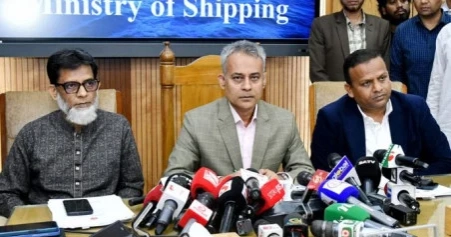
Shipping Minister Shaikh Rabiul Alam on Sunday said the government is formulating a National Port Strategy to serve the country's broader interests, boost economic growth and expand international trade.
He stressed the need for better coordination, greater efficiency and effective management of the country's sea, river and land ports, which play a vital role in Bangladesh's import-export activities and overall economy.
The minister was speaking at a seminar organised by the Ministry of Shipping at a hotel in the capital. State Minister for Shipping Md Razib Ahsan also attended the event.
Shaikh Rabiul Alam said the strategy should reflect the views of all relevant ministries, authorities, agencies, businesspeople, importers, exporters and experts, with national economic interests given priority.
As the economy and trade continue to grow, he said, strengthening port capacity, improving operational systems and ensuring better coordination among the authorities have become increasingly important.
The Japan International Cooperation Agency (JICA) is supporting the formulation of the strategy.
The minister expressed hope that the initiative would produce an effective strategy document by drawing on the knowledge and experience of both local and international experts.
Noting that the country's ports are managed by separate authorities, he said input from all stakeholders was essential to ensure balanced and practical decisions. Giving priority to the interests of any single group at the expense of others could undermine the strategy's objectives, he added.
He also highlighted opportunities to bring international investment and expertise into Bangladesh's port sector. Initiatives have already been taken to involve foreign companies in container handling and terminal management at different ports across the country.
However, he said, a proper balance between port operations, investment, trade and national interests was essential to make such initiatives effective.
Referring to the growing engagement with leading international container terminal operators, the minister said Bangladesh could improve port efficiency by drawing on global experience, supported by integrated policies and long-term planning.
He said more efficient port management would benefit the wider economy by improving transport links, strengthening supply chains, expanding trade and creating opportunities for businesses and entrepreneurs.
He also stressed the need for better coordination in port development, terminal operations, container handling, cargo unloading, transport connectivity, customs procedures and related services.
At the same time, he said, port users should have access to business-friendly services that meet international standards, helping Bangladesh's ports become more competitive and better equipped to handle international trade.
The minister thanked the local and international participants involved in the initiative.
He underscored the importance of identifying existing limitations, finding practical solutions, improving management efficiency, strengthening coordination among stakeholders and developing long-term plans for the sector.