Denmark, Norway, and Sweden, three longstanding friends of Bangladesh, have reaffirmed their commitment to working closely with Bangladesh as it embarks on its next chapter, supporting its aspirations to become greener, more innovative, trusted, and prosperous through a stronger and more sustainable partnership that unlocks new avenues for cooperation across key sectors.
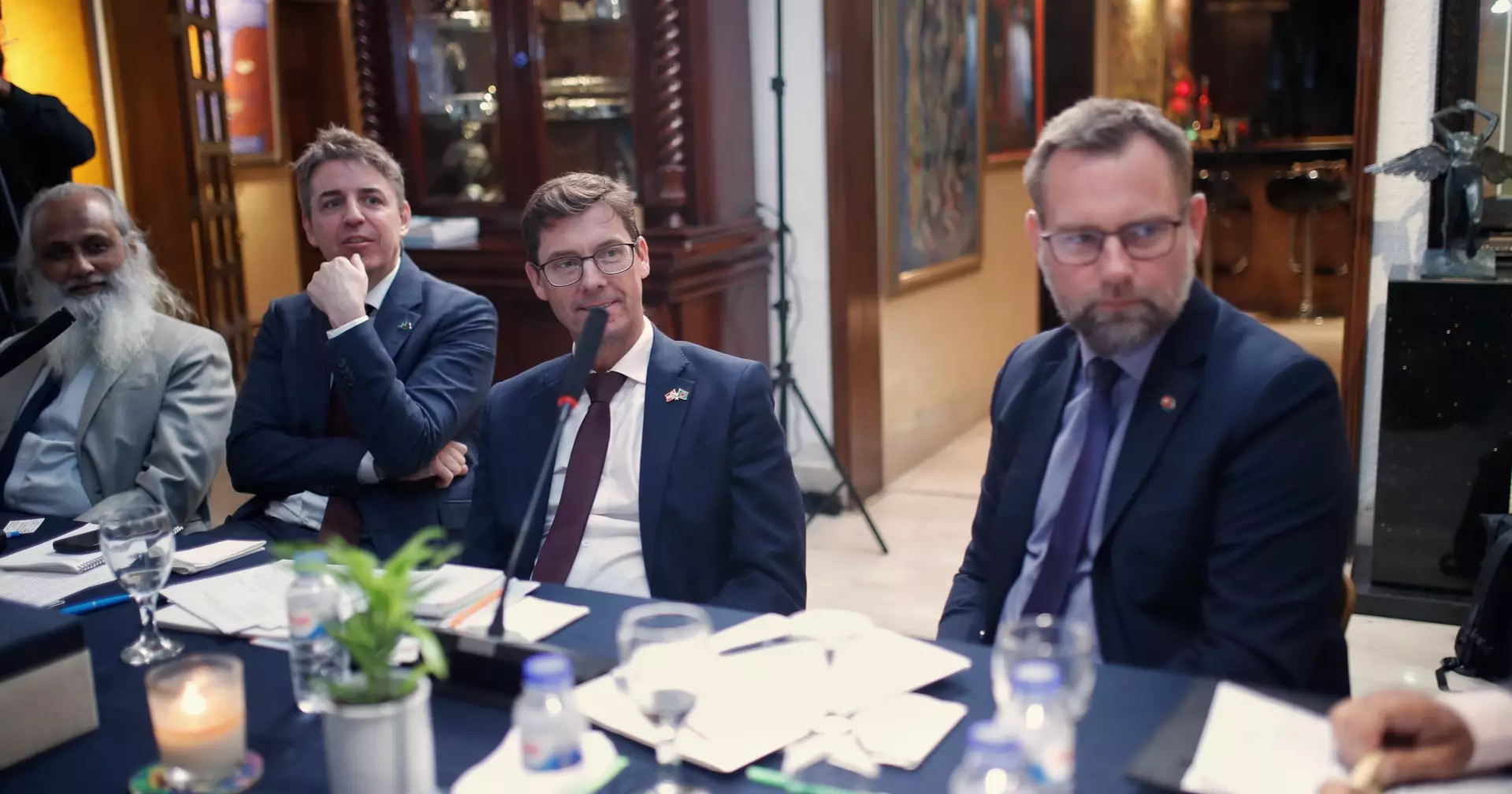
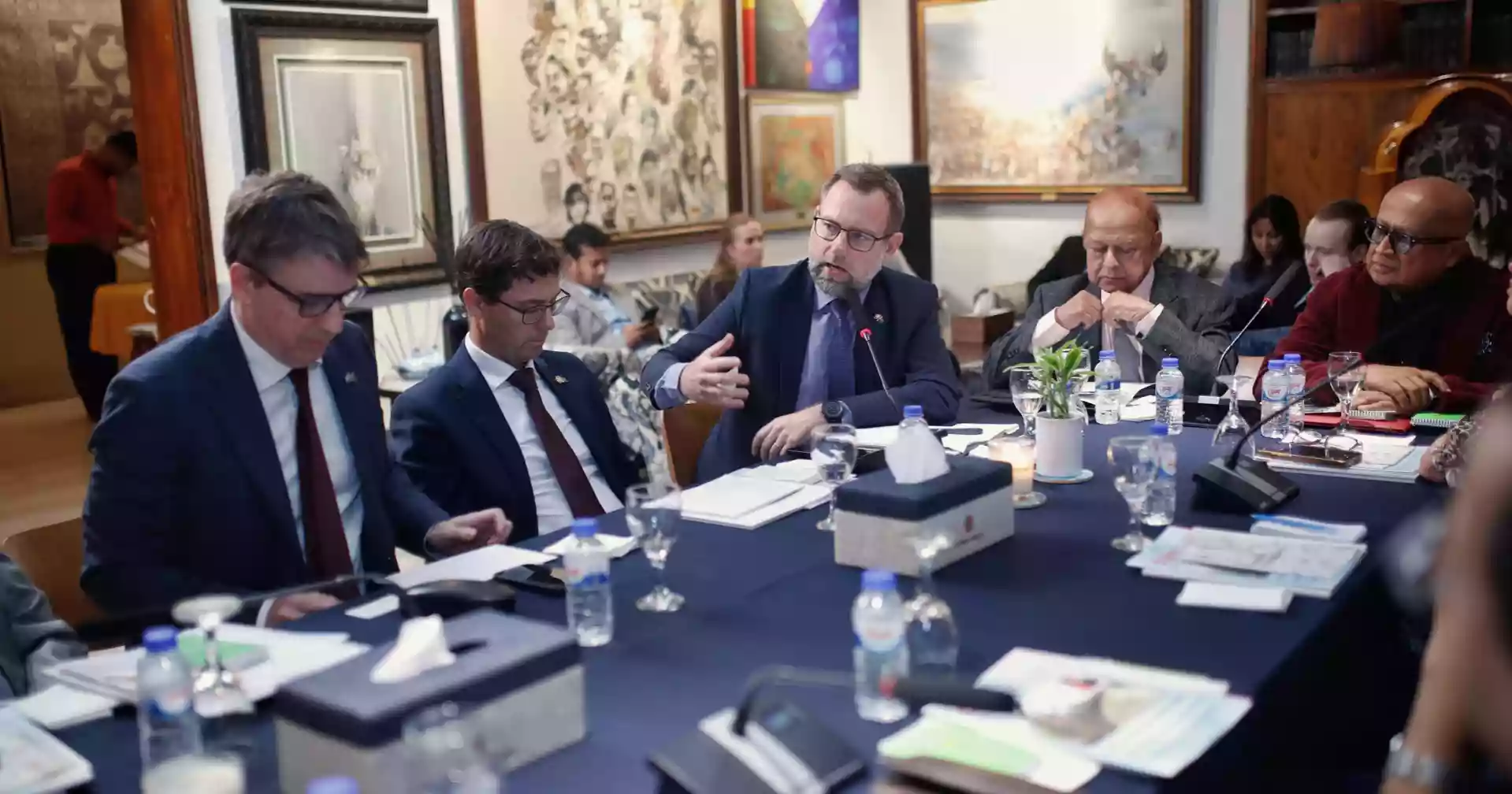
Danish Ambassador to Bangladesh Christian Brix Møller, Norwegian Ambassador to Bangladesh Håkon Arald Gulbrandsen, and Swedish Ambassador to Bangladesh Nicolas Weeks came together at a symposium on Monday to share their perspectives, emphasising the importance of achieving sustainable prosperity through joint efforts and strengthened collaboration.
Issues such as trust, strong institutions, green growth, workers’ rights, trade, investment, technology, gradual reconciliation, and long-term post-transition stability featured in the discussion as key pillars of a partnership aimed at achieving sustainable prosperity.
Trust is “the Nordic gold” and the Nordic countries - Denmark, Norway and Sweden - want to share it with Bangladesh. This idea of trust remains the Nordic region's greatest asset.
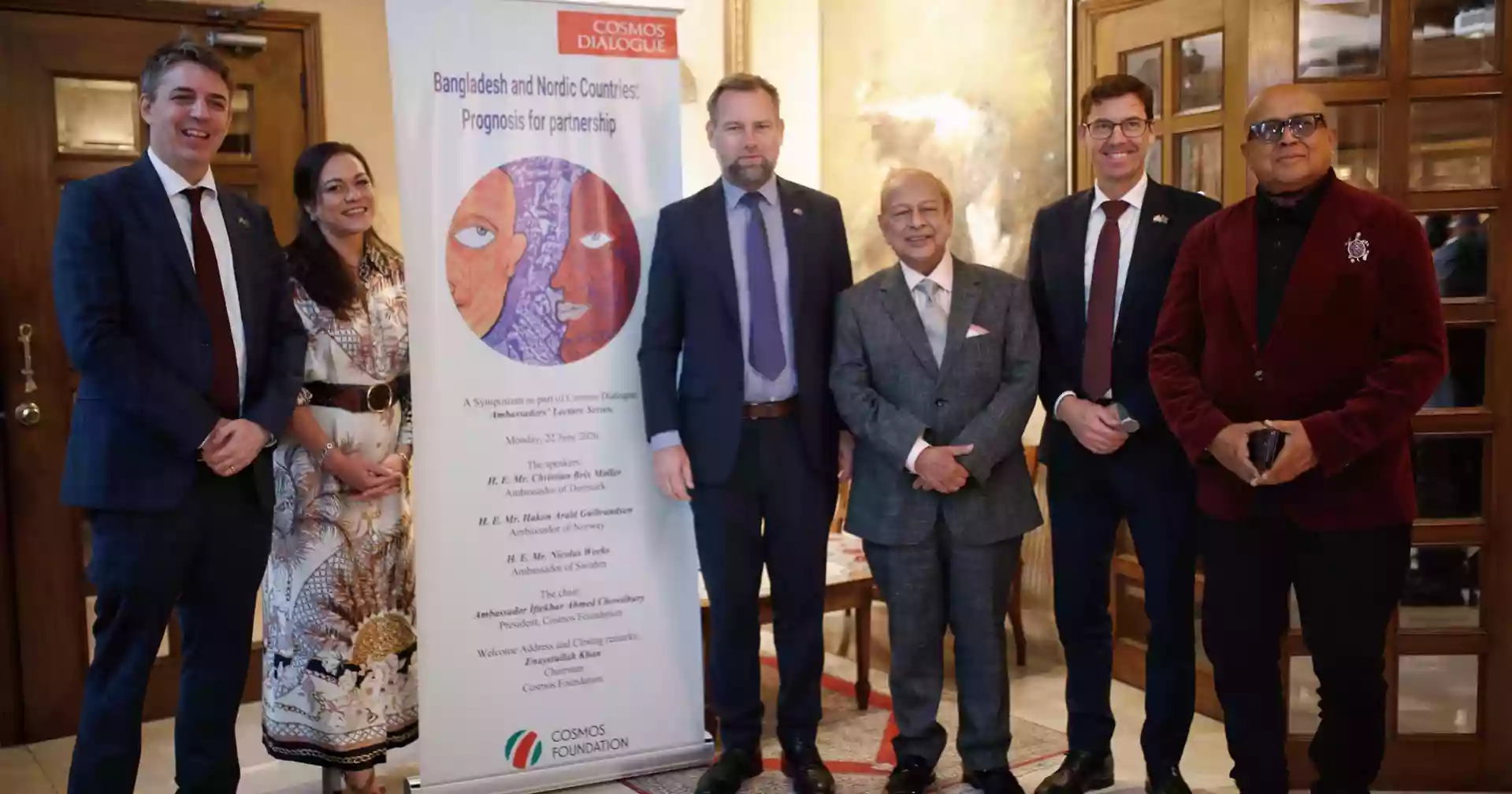
Cosmos Foundation, the philanthropic arm of the Cosmos Group, hosted the symposium titled “Bangladesh and Nordic Countries: Prognosis for Partnership” as part of its ongoing Ambassadors’ Lecture Series.
The symposium was chaired and conducted by renowned scholar and Cosmos Foundation President Dr Iftekhar Ahmed Chowdhury. Cosmos Foundation Chairman Enayetullah Khan delivered the welcome remarks, while Catherine Grace Gardner Khan made the formal announcement of the event with her brief remarks.
Enayetullah Khan said the Nordic countries offer enormous expertise in green technology, digital governance, innovation, sustainable urban planning, renewable energy, and the circular economy.
“Together we possess complementary strengths that can create shared prosperity,” he said.
Looking ahead, Khan suggested five priority areas - green energy partnerships; sustainable textile and circular fashion; digital transformation and smart governance; climate adaptation and blue economy initiatives; and innovative and knowledge partnerships - for future Bangladesh-Nordic cooperation.
“Such initiatives would not only strengthen bilateral cooperation but also contribute to addressing global challenges of climate change, sustainable development, and inclusive growth,” he said.
Dr Iftekhar said the Bangladesh-Nordic narrative has moved from a donor-recipient hierarchy to a peer-to-peer alliance.
“As Bangladesh builds on its smart knowledge vision, the Nordics can provide the hardware of sustainability and good governance. In return, Bangladesh can open a dynamic market and a frontline perspective on climate survival,” he said, adding: “Let us seize this moment to build a partnership that is not transactional, but transformational.”