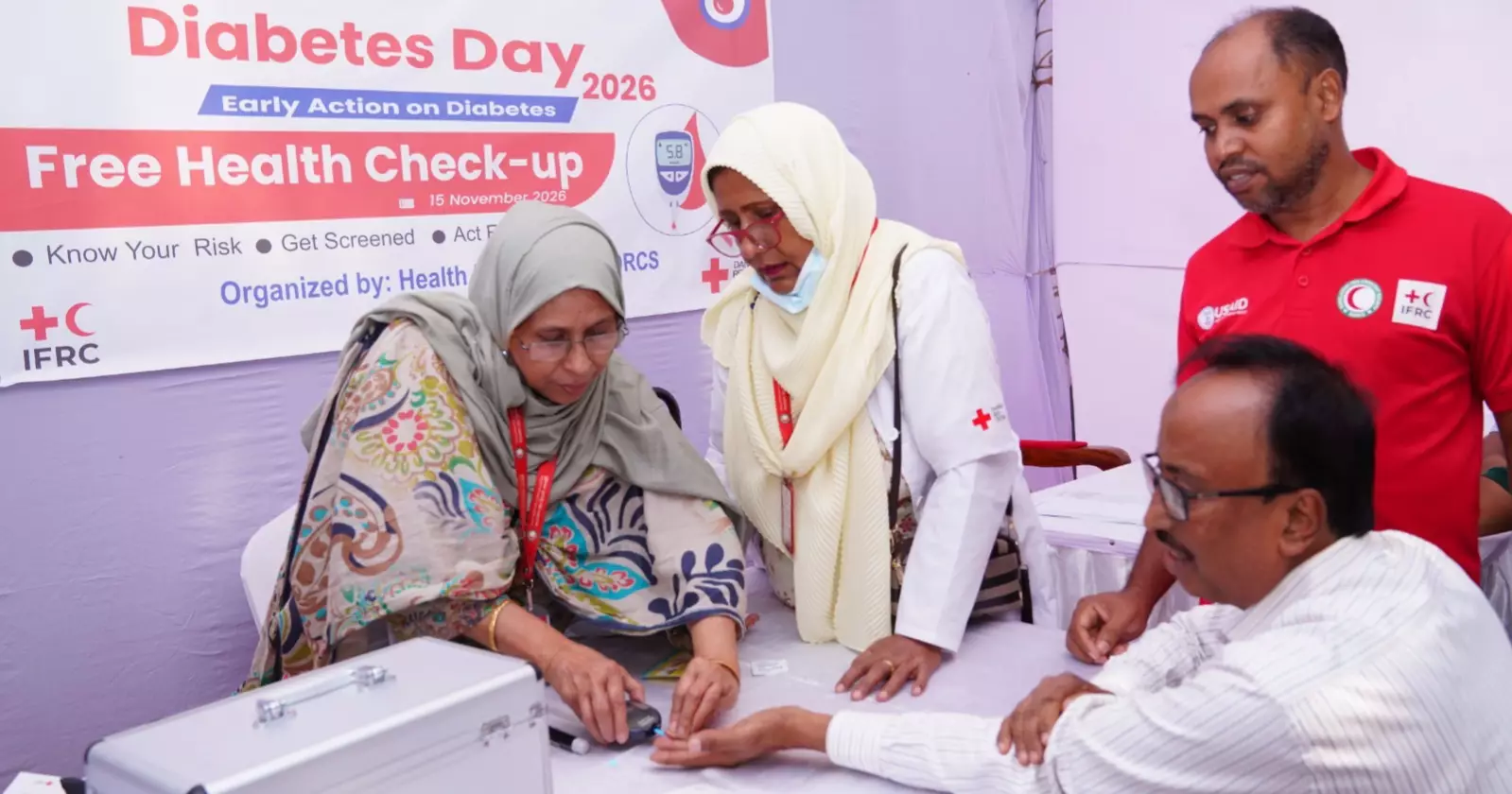
The Bangladesh Red Crescent Society (BDRCS) on Sunday organised a day-long free healthcare and health screening programme on the occasion of World Diabetes Day.
The programme was organised by the Health Department at the Society’s National Headquarters with technical support from the Danish Red Cross.
A total of 143 people received healthcare services from two doctors, including 121 men and 22 women. Among them, 21 individuals were newly identified as potential cases of non-communicable diseases (NCDs) through preliminary screening.
The services included free medical consultations, necessary medicines and various basic health screenings to identify potential NCD risks. The tests included Random Blood Sugar (RBS), uric acid, total cholesterol, haemoglobin and Body Mass Index (BMI) measurements. Health cards were also provided to the service recipients.
The programme was formally inaugurated by BDRCS Chairman Barrister Md. Abdus Salam. Also present were Deputy Secretary General Md. Ehsan-E-Elahi, Director of Health Department Professor Brigadier General (Retd.) Dr. S. M. Humayun Kabir, and Director of Human Resources and Administration A. S. M. Mamunur Rahman Khalili.
Speaking on the occasion, BDRCS Chairman Barrister Md. Abdus Salam said, “Raising awareness and ensuring timely health check-ups are essential to addressing the growing risks of diabetes and other non-communicable diseases. In many cases, these diseases do not show visible symptoms during their early stages. Therefore, regular health check-ups are important rather than waiting for symptoms to appear. The Bangladesh Red Crescent Society remains committed to bringing essential healthcare services closer to the people. We will continue working to sustain and expand such free healthcare initiatives for the benefit of the general public.”
The Deputy Secretary General and the Director of the Health Department also emphasised the importance of regular health check-ups and early detection in preventing and controlling non-communicable diseases. They noted that many people living with NCDs may not experience visible symptoms for a long time, making regular health screening essential even in the absence of apparent health concerns.
The Health Department of the Bangladesh Red Crescent Society stated that such healthcare initiatives will continue in the future to raise public awareness about non-communicable diseases and expand opportunities for early detection.