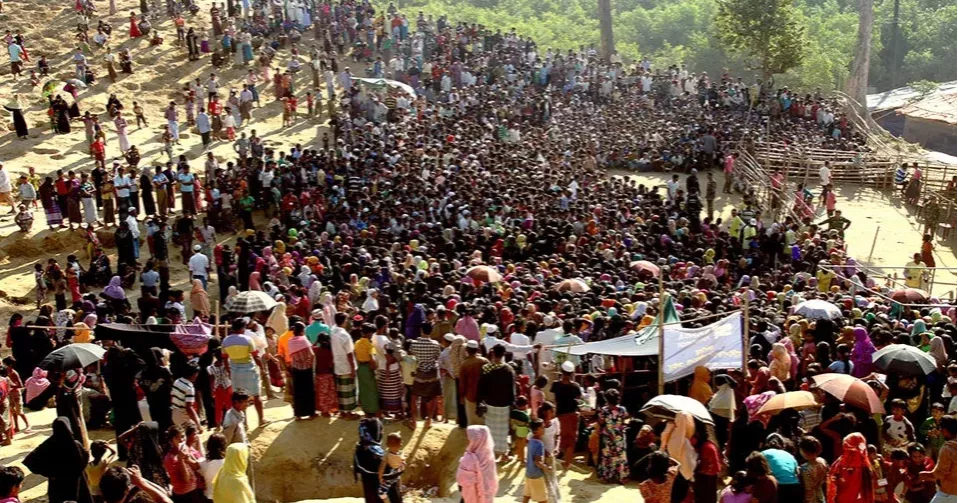
The Rohingya crisis is set to enter its 10th year with not a single Rohingya refugee having been repatriated to Myanmar through an official process, as Bangladesh reiterated that the only sustainable solution lies in their safe, dignified and voluntary return to their homeland in Rakhine.
“The Rohingya crisis requires genuinely coordinated international architecture. No single actor can resolve this crisis,” a senior government official told UNB.
In August 2017, Myanmar security forces launched a sweeping campaign of killings, rape and arson against Rohingyas in northern Rakhine State, forcing more than 700,000 people to flee across the border into Bangladesh.
Bangladesh is now hosting more than 1.3 million Rohingyas, primarily in Cox’s Bazar, with a smaller number relocated to Bhasan Char.
Bangladesh has repeatedly stressed that resolving the protracted Rohingya crisis is both a political and moral responsibility of the international community, warning that the country cannot be left to shoulder the burden alone.
Dhaka has urged Myanmar to expedite the verification of displaced Rohingyas in line with agreed bilateral instruments, including by taking into account children born in the refugee camps as well as those who arrived after 2017 following renewed displacement from Rakhine.
Myanmar’s military-backed government recently said more than 300,000 Rohingya refugees currently living in Bangladesh are former residents of western Rakhine State and that it would accept their return once security conditions improve.
Bangladesh has already conveyed its concerns to Myanmar over the statement, particularly its reference to the Rohingyas as “Bengalis.”
Dhaka has maintained that the Rohingyas have their own distinct ethnic identity, which was recognised by Myanmar authorities until recent years.
Bangladesh also pointed out that several elements of the statement issued by Myanmar’s Foreign Ministry were based on erroneous statistics, including figures relating to the displaced Rohingya population.
Urging the international community to share responsibility for resolving the crisis, State Minister for Foreign Affairs Shama Obaed Islam said on Sunday that Bangladesh’s humanitarian generosity must not become a pretext for international inaction.
“Bangladesh can provide shelter. Bangladesh can provide humanitarian assistance. Bangladesh can help preserve dignity, but Bangladesh cannot resolve the crisis that Bangladesh did not create,” she said.