Law, Justice and Parliamentary Affairs Minister Md Asaduzzaman on Sunday said the Rohingya crisis is not a bilateral issue between Bangladesh and Myanmar, stressing that its resolution requires Myanmar’s initiative and the involvement of the international community.
“The issue originates in Myanmar. Myanmar must solve it, and the international community must be involved in the process. This is our clear position,” he said.
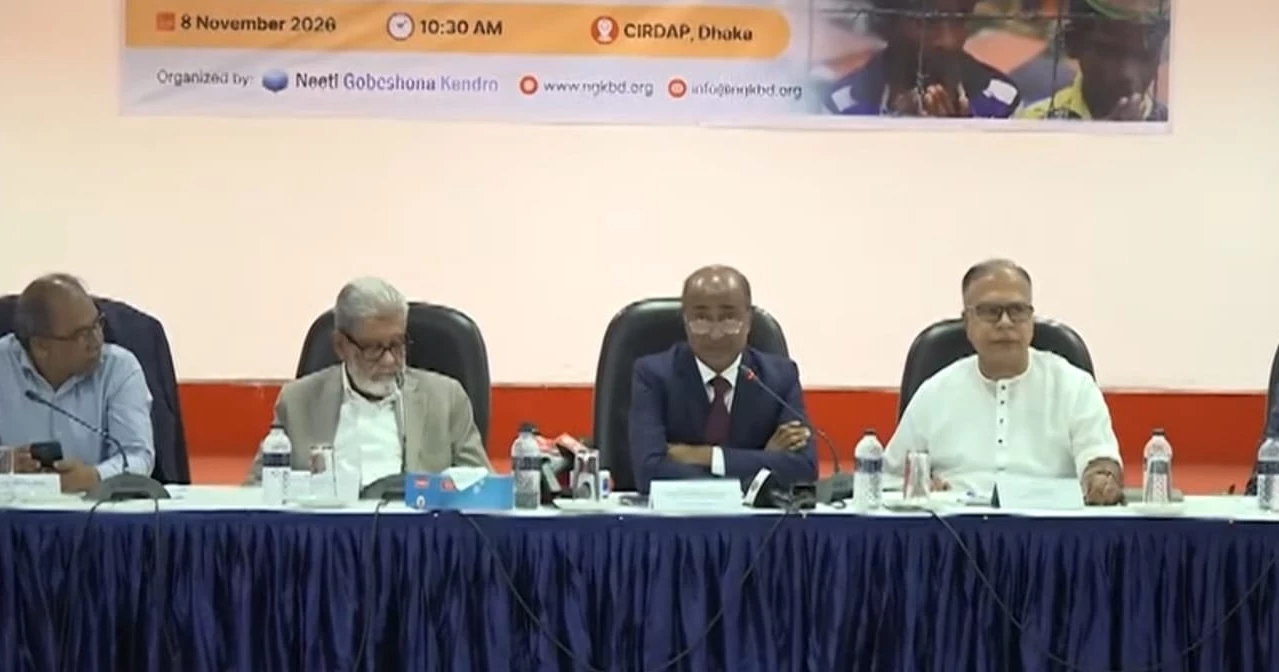
The minister made the remarks at a discussion titled “A Sustainable Approach to the Resolution of the Rohingya Crisis: Outline of a National Strategy and External Contribution”, arranged by Neeti Gobeshona Kendro at the CIRDAP auditorium in the capital.
Recalling his recent visit to the UN General Assembly, he said the Rohingya crisis remained a major issue on the international agenda, with the UNHCR and other relevant stakeholders expressing concerns over it.
Asaduzzaman said any repatriation arrangement must ensure the safe, voluntary, dignified, and sustainable return of Rohingyas, alongside guarantees of their citizenship, education, security, and human rights.
He said Bangladesh had conveyed its position to the UNHCR during a meeting on the sidelines of the UNGA, making it clear that Rohingyas should not be sent back forcibly or under international pressure.
“Rohingyas will return to their own homeland. Their security must be ensured, and they must be guaranteed citizenship, human rights, dignity, and access to education, just like any other citizen, without fear or hesitation. The international community must be involved in ensuring these rights,” the minister said.
He said the crisis was not merely a humanitarian concern but also had implications for Bangladesh’s national security and internal law and order.
“A poor country like Bangladesh is struggling to accommodate 1.2 million Rohingya refugees, while 82 to 90 children are born in the camps every day,” Asaduzzaman said.
He warned that the continued situation could lead to a population explosion in the camps, even without another influx of refugees.
The minister said a National Strategy Formulation Committee on Rohingya Affairs had been formed under the leadership of the Prime Minister to address the crisis and pursue a coordinated approach at the international level.
Responding to a North South University teacher’s proposal to grant Rohingyas legal status, educational opportunities, and access to employment, he said the demands were logical.
However, Asaduzzaman, said the government was examining the extent to which Bangladesh could accommodate such arrangements, taking into account the country’s economic and social realities as well as security concerns.