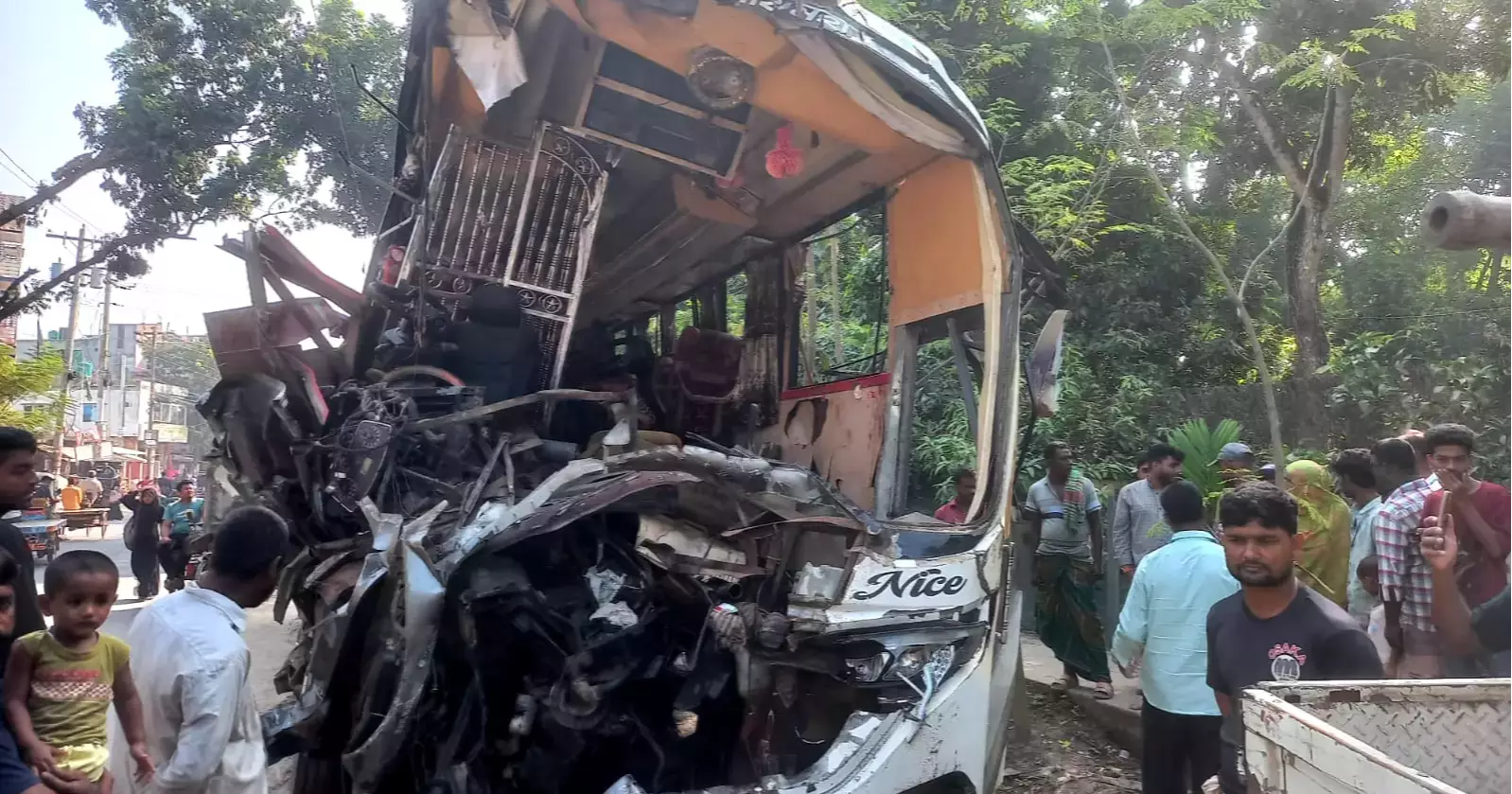
Speakers at a programme marking the World Day of Remembrance for Road Traffic Victims on Sunday called for a separate and comprehensive Road Safety Act, saying existing transport laws are inadequate to address the country’s growing road safety challenges.
They also stressed the need for a centralised, reliable database to establish the actual number of road crashes and fatalities in Bangladesh, alongside coordinated and effective measures to prevent road deaths.
The calls came at a youth march and candlelight vigil organised by the Health and Nutrition Sector of Dhaka Ahsania Mission at Shyamoli Children Playground in the capital.
Steps Towards Development (STEPS) also joined the programme, which was held to pay tribute to those killed or injured in road crashes and express solidarity with their families, according to a press release.
The World Day of Remembrance for Road Traffic Victims is observed on the third Sunday of November every year to honour crash victims, support their families and raise awareness about road safety.
According to the World Health Organization (WHO), around 31,578 people die in road crashes in Bangladesh every year. In contrast, the Bangladesh Road Transport Authority (BRTA) reports an annual average of around 5,000 fatalities.
Statistics from various non-governmental organisations also point to significantly higher numbers of crashes and deaths than those reflected in official records, underscoring the need for a centralised database to establish the true scale of the problem.
BRTA data show that Bangladesh recorded 5,856 road crashes in 2025, claiming 5,480 lives. At least 2,943 people were killed in 3,039 crashes during the first six months of 2026.
This translates into an average of 12 to 15 deaths on the country’s roads every day.
The organisers said road fatalities should not be viewed merely as isolated accidents but as a serious public health and safety crisis, with each death taking a toll on families, livelihoods and communities.
They noted that the loss of a family’s breadwinner could push the entire household into financial hardship, while people left permanently disabled often face lifelong challenges, along with their family members.
The participants said that although the Road Transport Act, 2018 and the Road Transport Rules, 2022 play an important role in maintaining discipline and regulating the transport sector, they do not adequately address the broader dimensions of road safety.
Road safety, they said, involves not only vehicle and traffic regulation but also road design and infrastructure, speed management, pedestrian protection, vehicle safety standards, driver competency, law enforcement and post-crash emergency medical care.
They stressed that a separate and comprehensive Road Safety Act is needed to bring these key areas under an integrated legal framework.
The programme also featured tributes to road crash victims and prayers for the speedy recovery of those injured.
The organisers said the annual observance should go beyond remembrance and mourning and translate into concrete action to prevent road deaths and ensure safer roads for all.