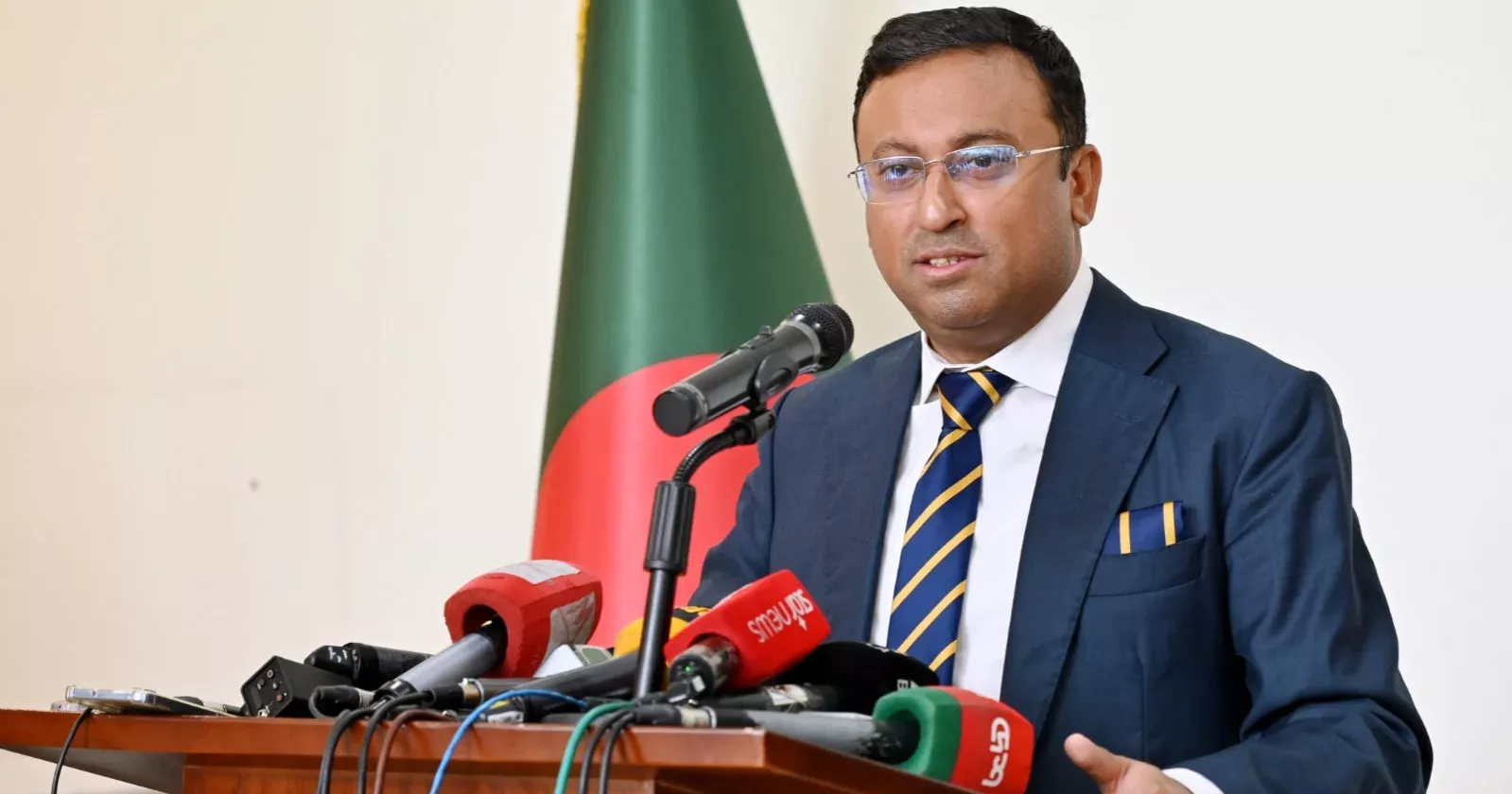
State Minister for Foreign Affairs Humaiun Kobir on Thursday said sincerity at the political and official levels of Bangladesh and India is essential to finding an amicable resolution to the long-standing water-sharing issues between the two countries.
“If there is sincerity between both countries - at the senior official level, leadership level, and among the water negotiators working from both sides... we have formed a water committee," he told reporters while responding to a question after attending a seminar.
Kobir expressed optimism that the water issues issue could be resolved positively if the leadership of both countries demonstrates the willingness to cooperate.
“If the leadership possesses the mindset to come forward and cooperate, we will certainly achieve an amicable and positive resolution on this issue,” he said.
The state minister said meaningful progress would be possible if there is sincerity between the two countries at all relevant levels, including senior officials, political leadership and water negotiators.
Asked about the broader approach to resolving water-related issues, Kobir said diplomacy and dialogue remain the way forward.
“It is only through discussion, dialogue, and diplomacy that these matters will have to be resolved,” he said.
He also said Bangladesh is taking international law into consideration while dealing with the issues.
“The positions of international law are also being taken into consideration. So, this is where we stand right now,” the state minister said.
Bangladesh and India share 54 transboundary rivers, including the Ganges, Teesta, Brahmaputra, Surma-Kushiyara and Feni, making water management and equitable sharing a key component of bilateral relations.
The Joint Rivers Commission (JRC) serves as the principal bilateral mechanism for discussing shared-river issues.
He said discussions and dialogues on the issues are continuing, with both sides looking into the matters through their respective mechanisms.
“Discussions and dialogues are ongoing and will continue here. From our standpoint, regional cooperation needs to be enhanced,” he told reporters.
The Ganges Water Sharing Treaty, signed in 1996. Bangladesh has been seeking a new arrangement that safeguards its interests, including adequate water flows during the dry season.
The seminar was organised to understand water diplomacy on multilateral platforms and identify potential opportunities for Bangladesh to strengthen its efforts and cooperate with other like-minded countries.
The speakers discussed opportunities for inclusive governance and public-private partnerships in transboundary water management; and amplify youth voices in water justice and explore avenues for integrating youth leadership and participation into transboundary water governance and decision-making processes.