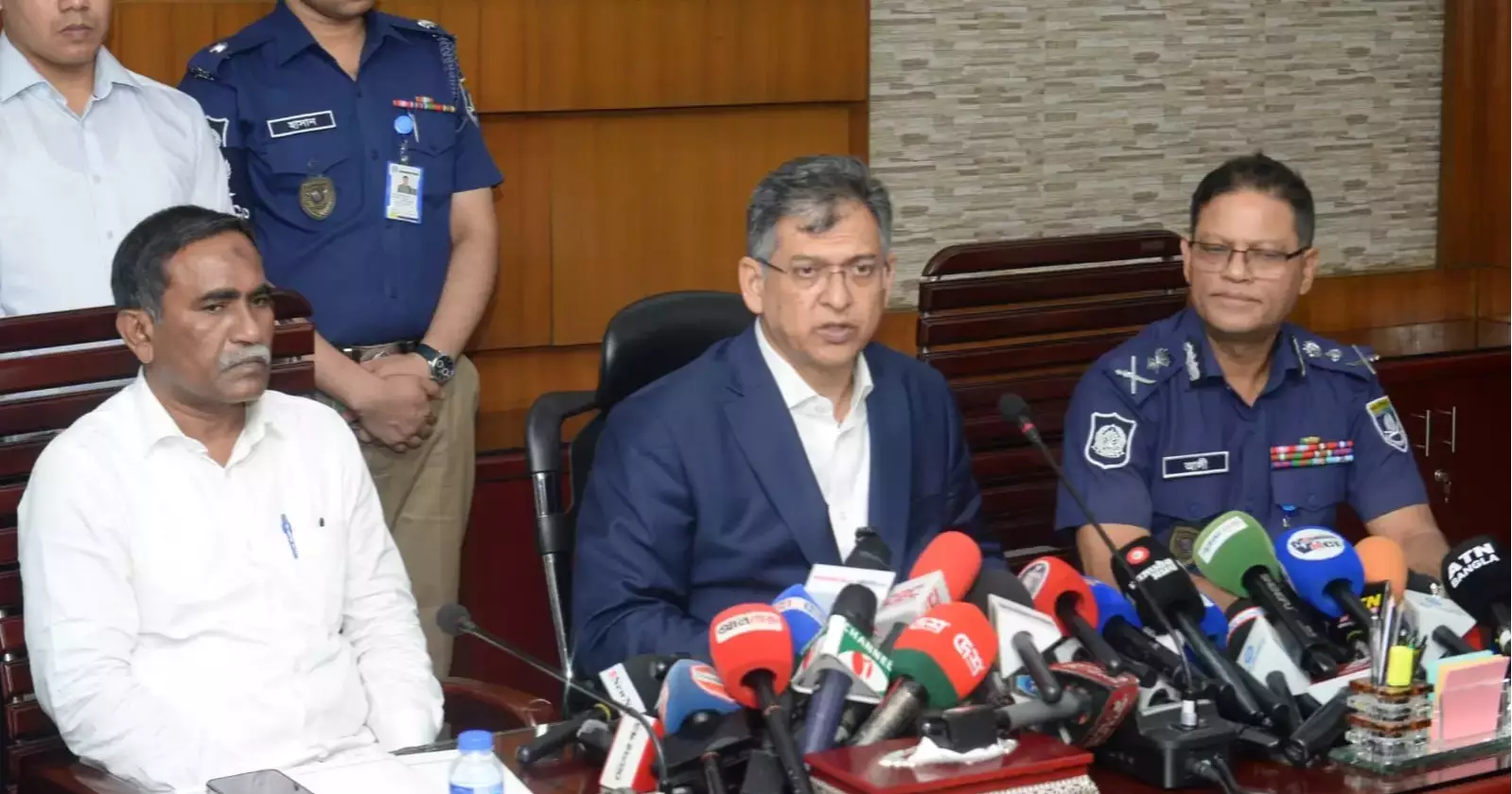
A specialised cyber police unit with a proposed strength of 4,592 personnel is being formed to combat cybercrime, Home Minister Salahuddin Ahmed said on Thursday.
“The total manpower of the unit has so far been set at 4,592 in the organisational structure,” he said, adding that the required personnel will initially be drawn from the existing workforce and the full strength will later be achieved through recruitment.
The minister came up with the remarks while speaking at an event held at Police Headquarters in the evening to announce the formation of the Cyber Police Unit.
The unit will have provisions for recruiting specialists, including cybersecurity experts, financial data analysts, crypto analysts, malware analysts and dark web analysts, he said.
Salahuddin said the unit will be headed by an additional inspector general (IGP) of police, while several deputy inspectors general (DIGs) and additional DIGs will work at divisional and headquarters levels.
At the district level, officers with the rank of superintendent of police (SP) will be responsible for the unit's activities, while sub-inspectors, assistant sub-inspectors and constables will be assigned to it at police stations, he said.
The new unit will be equipped with modern cyber-related technology and developed as a technology- and expertise-driven organisation, the minister said.
He said cyber-related activities and the use of artificial intelligence have increased significantly in recent times, creating a need to expand the use of forensic and digital technologies alongside conventional methods to combat crime.
Salahuddin said the need for forensic and digital laboratories is increasing in almost all areas, including drug-related crimes, gambling, terrorism, money laundering, financial crimes, social security and cybercrime.
He said cybercrime had previously been tackled in a fragmented manner, resulting in a lack of coordination. “The new unit will bring these activities under an organised structure,” he said.
The unit will have provisions for recruiting specialists in addition to regular police personnel, the minister said.
The proposed positions include system analysts, financial data analysts, cybersecurity experts, emergency response consultants, network administrators, disaster recovery experts, content developers, crypto analysts, malware analysts, dark web analysts, communication experts and social media analysts.
Salahuddin said such specialists could be recruited on a contractual basis, with their salary and benefits structured differently from those of regular police personnel.
Police officers who already have expertise in the field or are interested in receiving relevant training will also be included in the unit, he said.
Arrangements have also been made for suitable police officers to receive advanced training at home and abroad, the minister said, adding that a group of senior officers have already been selected for overseas training.
Incentives will also be provided to specialists who contribute to the unit, he added.
Cyber Security Act being modernised
The Cyber Security Act is also being modernised, Salahuddin said.
He said discussions have been held several times with journalists, editors and relevant experts regarding amendments to the law, and their opinions will continue to be sought.
Efforts are being made to define cyber-related offences more specifically in the new law while also considering the need to maintain religious and social harmony, the minister said.
The amendment process will also take into account safeguards against harassment of innocent people or those not involved in an offence through misuse of the law, he said. “This is a very sensitive law, so we are taking time. We will bring the bill after discussing it with everyone,” he said.
Existing cyber activities to come under one umbrella
Asked whether the existing cybercrime units of police and relevant activities of the Criminal Investigation Department (CID) will come under the new structure, the minister said the activities are being reorganised.
“We are bringing the previously unorganised process under an umbrella leadership. We are going to give it an organised form,” he said.