Bangladesh plans to institutionalise internal auditing across government ministries and divisions, with permanent audit units and stronger oversight proposed to help prevent financial losses, improve accountability and protect public service delivery.
The proposed reforms include establishing internal audit units or directorates in three phases over three years, subject to administrative approval, replacing a system that relies on temporarily assigned officials and faces capacity constraints.
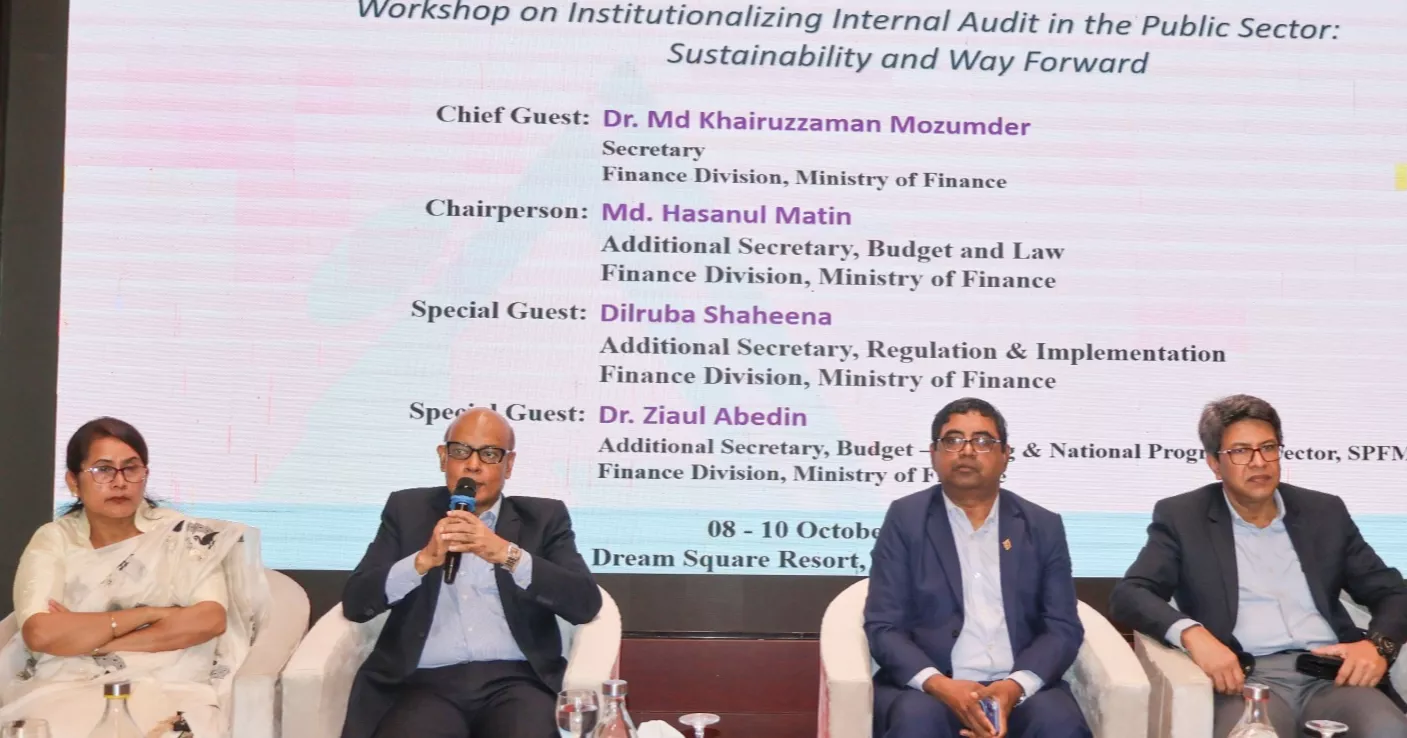
The plans were discussed at a three-day workshop titled “Workshop on Institutionalising Internal Audit in the Public Sector: Sustainability and Way Forward”, running from October 8 to 10 at a hotel in Gazipur.
The workshop was organised by the Internal Audit and Audit Follow-up Scheme under the Strengthening Public Financial Management Programme to Enable Service Delivery (SPFMS) of the Finance Division.
Finance Secretary Dr Md Khairuzzaman Mozumder attended the inaugural session as the chief guest and unveiled the revised 2026 Model Risk-Based Internal Audit Charter and Manual, which provides an updated framework for internal auditing in government.
Additional Secretary of the Finance Division Mohammad Azad Sallal delivered the key presentation on the Sustainability Plan for Internal Audit in the Public Sector.
In his speech, Khairuzzaman said the current government attaches great importance to institutionalising internal audit in the public sector.
Introducing internal audit across ministries is a landmark step towards ensuring transparency and accountability in public fund management, he said.
“Implementing internal audit comes with challenges, but we must work together to overcome them. Our task is to turn this initiative into an effective and sustainable system that strengthens public financial management,” the secretary said.
The revised 2026 Model Risk-Based Internal Audit Charter and Manual, based on the Global Internal Audit Standards 2024, clarifies auditors’ mandates, responsibilities and reporting arrangements.
It provides an institutional basis for objectively examining government operations and advising management on protecting public resources, strengthening controls and addressing weaknesses.
Under the framework, auditors will report functionally to the relevant internal audit committee and administratively to the secretary or principal accounting officer.
The arrangement is designed to strengthen professional independence and ensure that audit findings receive scrutiny beyond officials responsible for daily operations.
For citizens, the significance of the reforms extends to the quality of healthcare, primary education, roads and public infrastructure. Risk-based internal auditing examines financial, procurement, operational and information technology vulnerabilities that could lead to resource wastage, project delays or disruptions to public services.