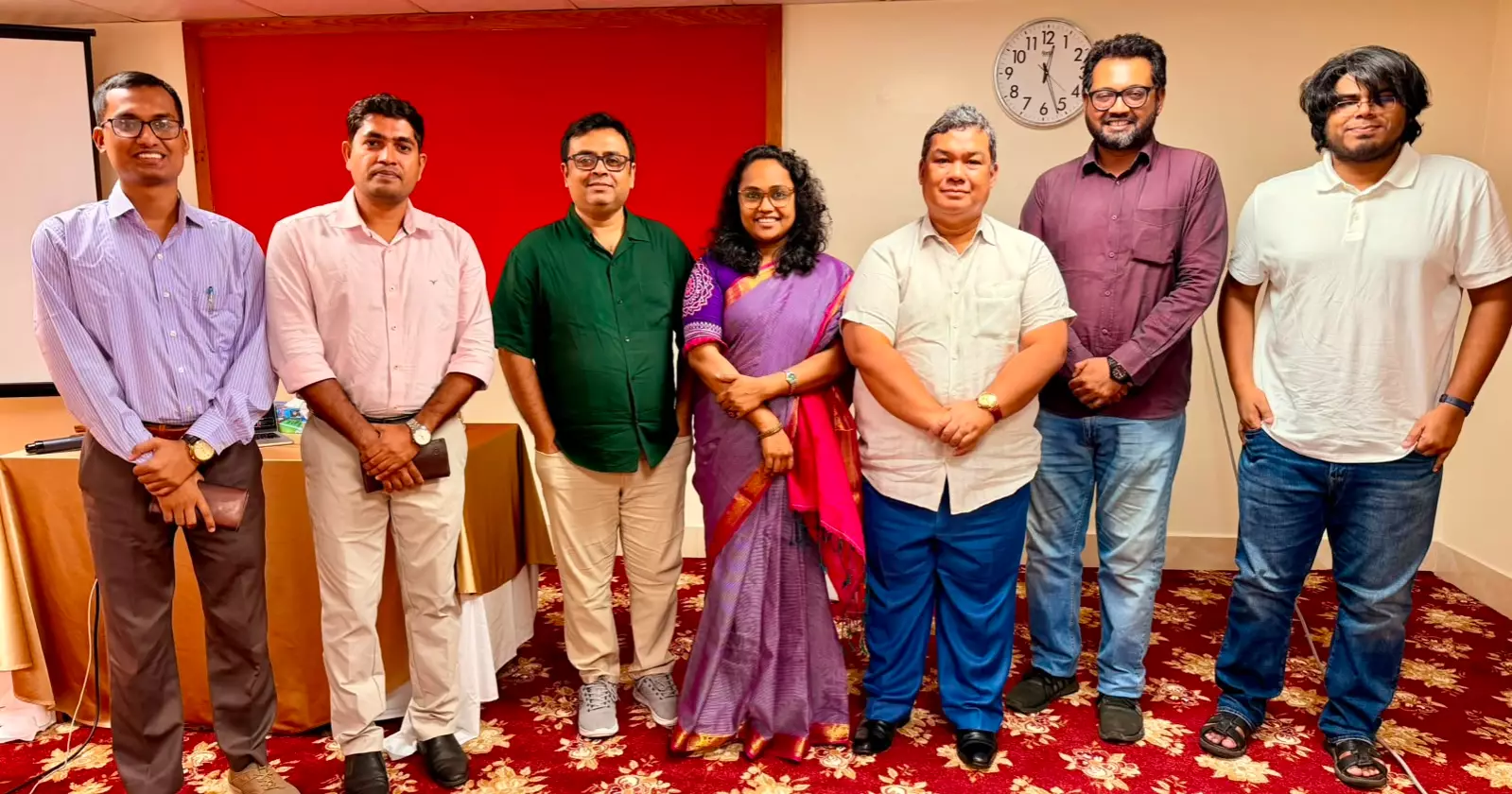
Three universities in Bangladesh are preparing to introduce investigative journalism courses for female students following the completion of a two-part co-design process.
The participating universities are State University of Bangladesh, Comilla University and Daffodil International University.
The first AGILE: Investigative Reporting for Female Students Workshop was held on July 17-18, followed by the second part on August 14-15 at CCULB in Purbachal, Dhaka.
The workshops focused on developing, refining and finalising course outlines and lesson plans, with the initiative now moving towards implementation.
Rokeya Collective and CJEN Bangladesh organised the workshops with support from Fojo Media Institute.
Participants in the second workshop were Abdur Razzak Sohel of Comilla University, Bikkromaditto of State University of Bangladesh, and Aftab Hossain and Meherabul Haque of Daffodil International University.
The first workshop focused on the need for investigative journalism education, course structure and content, verification, gender, ethics and journalist safety.
Investigative journalist and Editor-in-Chief of Netra News Tasneem Khalil led a session on the fundamentals of investigative journalism, covering sourcing, information gathering and verification techniques.
Zyma Islam, senior reporter at The Daily Star, conducted a session titled "Navigating Gender, Power, Ethics and Safety in Investigative Journalism for Female Students."
The session explored gender and power dynamics in investigative reporting, ethical challenges, and personal and professional safety considerations for female journalism students.
The second workshop focused on translating the course framework into implementation-ready plans.
Participants presented final course outlines proposed for their respective universities, covering learning objectives, session structures, assessment methods, learning resources and approaches tailored to each institution.
The presentations were followed by feedback from panel members and fellow participants. Discussions focused on implementation opportunities and challenges, institutional capacity, budgets, timelines and the long-term sustainability of the courses.
A special session on the practical process of investigative reporting was led by Parvez Reza, Input and Planning Editor at Channel One.
Titled "Writing an Investigative Story: From Conceptualization to Publication and Beyond," the session covered the investigative reporting process from developing story ideas and conducting research to field reporting, interviews, writing, digital tools and publication. It also explored ways to assess the impact of an investigative story after publication.
On the second day, participants presented lesson plans for two sessions from their proposed courses, covering learning objectives, content, classroom activities, teaching methods, student engagement and well-being, assessment and learning resources.
Jasmin Moli, senior reporter at bdnews24.com, joined as a guest panelist and provided feedback on the lesson plans and teaching approaches.
The workshop also featured an online session with Dr Lulu Brenda Harris of the Center for Innovation and Technology (CITE), Zimbabwe, focusing on investigative story ideas, pitch preparation and assessment, and mentoring students through investigative reporting projects.
The workshop was facilitated by Professor Jude William Genilo, chairman of CJEN Bangladesh, and Jesmin Papri, project coordinator of Rokeya Collective.
At the concluding session, participants presented their next steps for implementing the courses, including planned activities, budgets and timelines.
The completion of the two-part co-design process marks the transition from curriculum development to implementation.
The initiative aims to equip female students with the skills, confidence and critical thinking needed to identify, research and pursue meaningful investigative stories. It also seeks to strengthen practical investigative journalism education and create greater opportunities for women to participate in investigative journalism in Bangladesh.
The workshop is part of AGILE, a global initiative supported by the European Union for 2025-2028. The consortium includes Internews Europe, Fojo Media Institute, CFI Développement Médias, Thomson Media and ARTICLE 19. Fojo Media Institute leads Workstream 5 on the future of journalism.