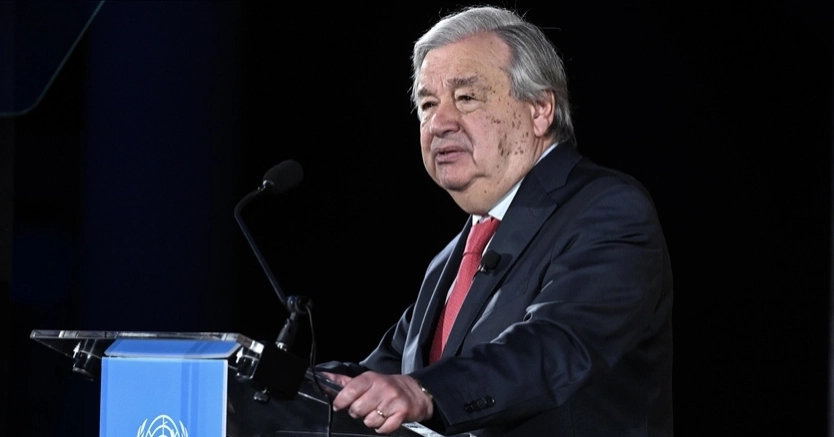
UN Secretary-General António Guterres will honour six Bangladeshi peacekeepers among 68 in total posthumously with the Dag Hammarskjöld Medal at the UN Headquarters in New York on June 5.
The Bangladeshi fallen peacekeepers are Md Jahangir Alam, Md Sobuj Mia, Md Masud Rana, Md Mominul Islam, Shamim Reza and Santo Mondol.
They were all killed in a drone strike on 13 December 2025 while serving in the United Nations Interim Security Force for Abyei (UNISFA).
Bangladesh is the fourth largest contributor of uniformed personnel to UN Peacekeeping, an official told UNB.
It currently deploys more than 4,000 military and police personnel, including 277 women, to the UN operations in Abyei, the Central African Republic, Cyprus, the Democratic Republic of the Congo, Lebanon, Libya, South Sudan, and Western Sahara.
The International Day of United Nations Peacekeepers was observed around the world on Friday to pay tribute to all women and men serving in UN peacekeeping, and to honour the memory of those who have lost their lives in the cause of peace.
The UN Headquarters will, however, observe the day on June 5.
Secretary-General Antonio Guterres will lay a wreath to honour the nearly 4,500 peacekeepers who have lost their lives since 1948 and preside over a ceremony at which the Dag Hammarskjöld Medal will be awarded posthumously to 68 military, police, and civilian peacekeepers, who paid the ultimate price in the line of duty, including 59 who perished last year.
Today, more than 50,000 civilian, military and police peacekeepers serve under the UN flag in some of the world’s most complex environments, where conflicts are increasingly fragmented, protracted, and shaped by emerging threats, including the misuse of digital tools and the spread of harmful information.
A total of 118 countries currently contribute uniformed personnel to 11 peacekeeping missions.
The General Assembly established the day back in 2002 and selected May 29 as it was the day in 1948 when the Security Council established the first UN Peacekeeping operation, the United Nations Truce Supervision Organization in the Middle East.
This year’s theme for the Day is “Invest in Peace.”
At a time when UN Peacekeeping operations face reduced resources, the theme underscores that peacekeeping remains one of the most effective tools the international community has to respond to conflict, supporting political solutions, preventing escalation, protecting civilians, monitoring ceasefires, enabling humanitarian assistance, clearing landmines, and more.
In his message, António Guterres said: “On this International Day, we honour peacekeepers past and present and reaffirm our shared responsibility to respect and strengthen their work."
"We pay tribute to nearly 4,500 peacekeepers who have lost their lives since 1948, including 59 last year. No one should die serving the cause of peace. Attacks on peacekeepers are grave violations of international humanitarian law, and Member States must uphold their obligations to ensure the safety and security of UN personnel at all times,” he said.
The Secretary-General also said “in an era of rising tensions”, peacekeeping is a proven and cost-effective way to restore stability and hope. “But it requires steady political backing – and reliable financial support.”
During a special ceremony, the Secretary-General will also award the “Captain Mbaye Diagne Medal for Exceptional Courage” to Corporal Matias Reyes of Uruguay for his actions in Goma, in eastern Democratic Republic of the Congo during the height of the crisis in early 2025, and to the late Sergii Prykodko of Ukraine who served as a private contractor in the UN Mission in South Sudan (UNMISS) and was killed during a mission to extract besieged soldiers in March last year.
The Secretary-General will also present awards to the 2025 Military Gender Advocate of the Year, Major Abhilasha Barak of India, who serves in the UN Interim Force in Lebanon (UNIFIL), and to the UN Woman Police Officer of the Year, Stephanie Königs of Germany, who served in UNMISS.
“At a time of rising conflict and shrinking resources, United Nations peacekeepers continue to protect civilians, prevent violence from escalating, and keep hope alive in some of the world’s most difficult environments. Investing in peacekeeping means investing in stability, prevention and the possibility of peace itself,” said Jean-Pierre Lacroix, Under-Secretary-General for Peace Operations.