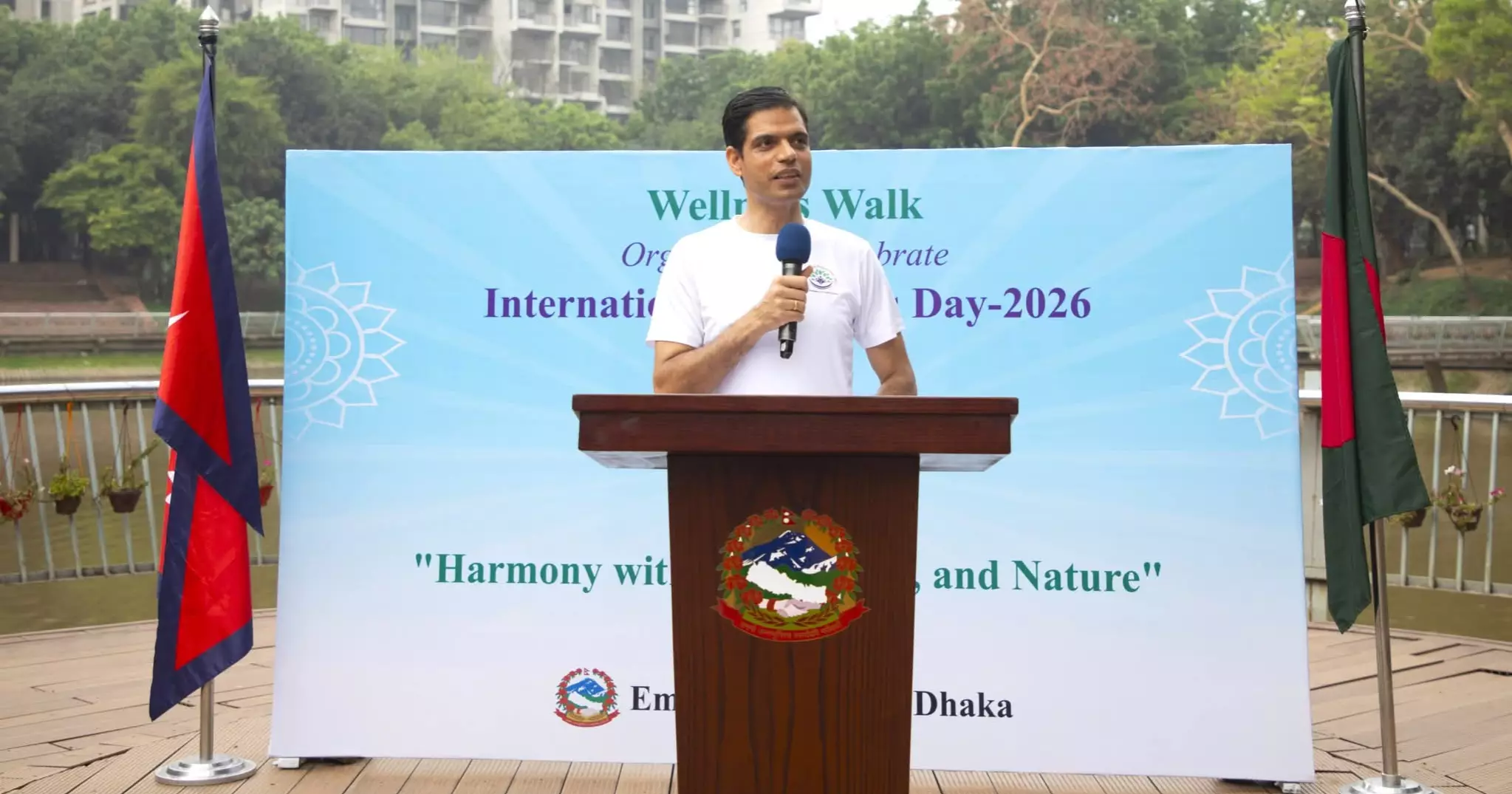
Nepalese Ambassador to Bangladesh Ghanshyam Bhandari on Wednesday underscored the relevance of wellness in today’s world, marked by multiple challenges, including wars and armed conflicts, economic inequality, social fragmentation, and the escalating climate crisis.
Highlighting wellness practices as living heritage deeply rooted in Nepal’s history and civilization, he shed light on centuries-old Hindu, Buddhist, yogic, and indigenous practices that embrace self-discipline, ethical living, and harmony with nature.
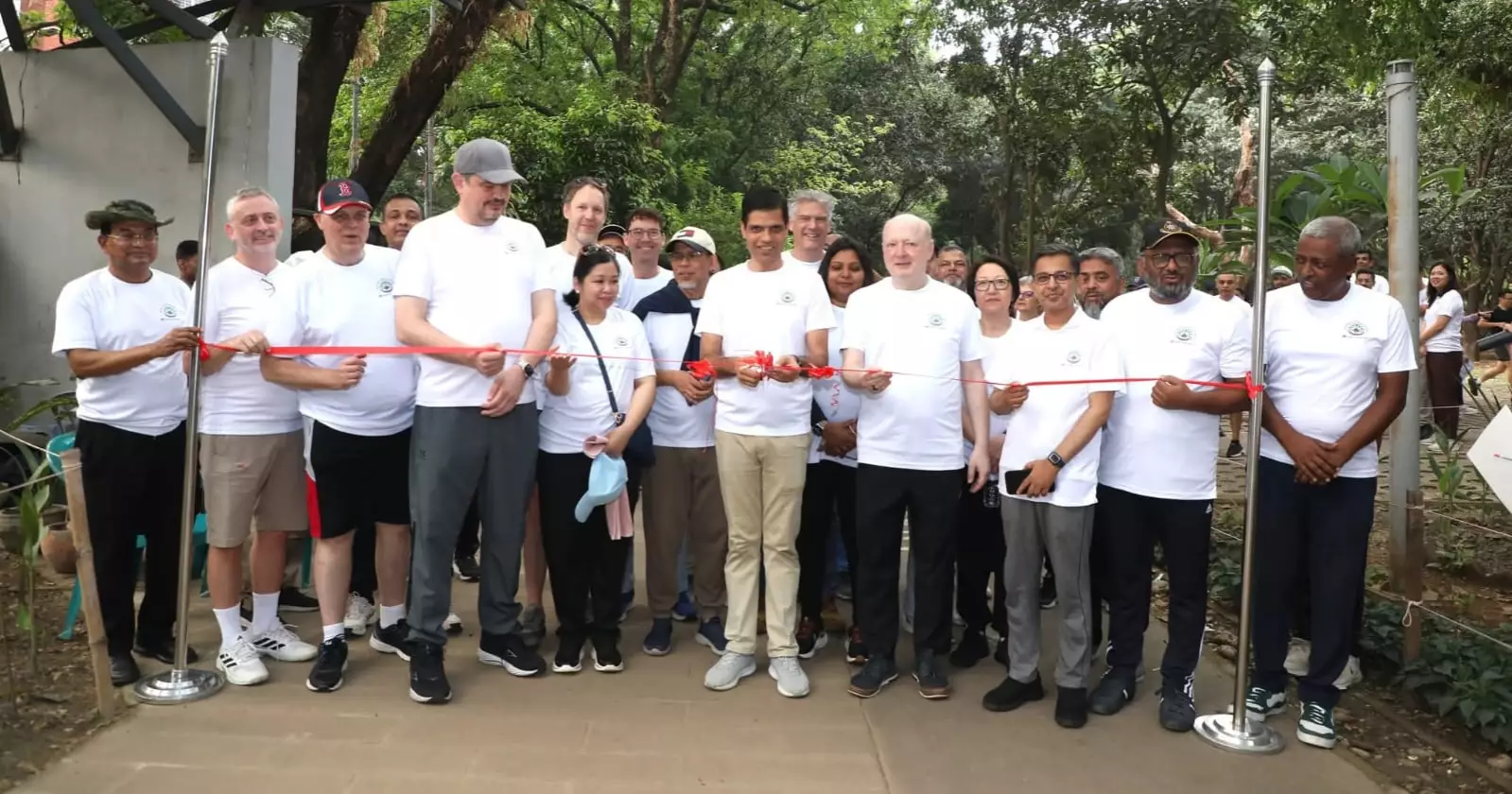
The Embassy organised a ‘Wellness Walk’ programme this morning in Dhaka to mark International Wellness Day-2026.
The event, aimed at raising awareness of the Wellness Day and promoting the importance of balance and harmony within ourselves and with nature, was held under the theme ‘Harmony with Mind, Body, and Nature’.
It featured a 45-minute walk, followed by a brief formal session and a Nepali ‘wellness breakfast’.
Speaking during the formal session, the Ambassador noted the plan of the Government of Nepal to observe 2027 as ‘Nepal Wellness Year’ as part of its broader vision to promote wellness tourism as a transformative driver of sustainable economic development.
He stressed Nepal’s aspiration to become a global hub for wellness and reiterated its firm commitment to advancing the wellness agenda.
The guests were served a selection of Nepali organic breakfast items, including millet pancakes, black lentil pancakes, buckwheat momos, and roasted grain flour smoothie (satuko sarbat), among others, reflecting Nepal’s tradition of wholesome and nourishing cuisine.
The United Nations General Assembly adopted a resolution, on 10 March 2026, proclaiming 15 April as International Wellness Day.
Nepal was the penholder of the resolution, co-sponsored by 40 and endorsed by 143 Member States.