International Chamber of Commerce (ICC) Bangladesh President Mahbubur Rahman on Thursday said Bangladesh must accelerate structural reforms, strengthen macroeconomic stability and enhance public-private collaboration to successfully navigate the post-LDC graduation era and sustain long-term economic growth.
He called for stronger public-private partnership to build a more resilient, competitive and sustainable economy, expressing confidence that Bangladesh can emerge as one of Asia's leading economic success stories through bold reforms, sound policies and continued collaboration among all stakeholders.
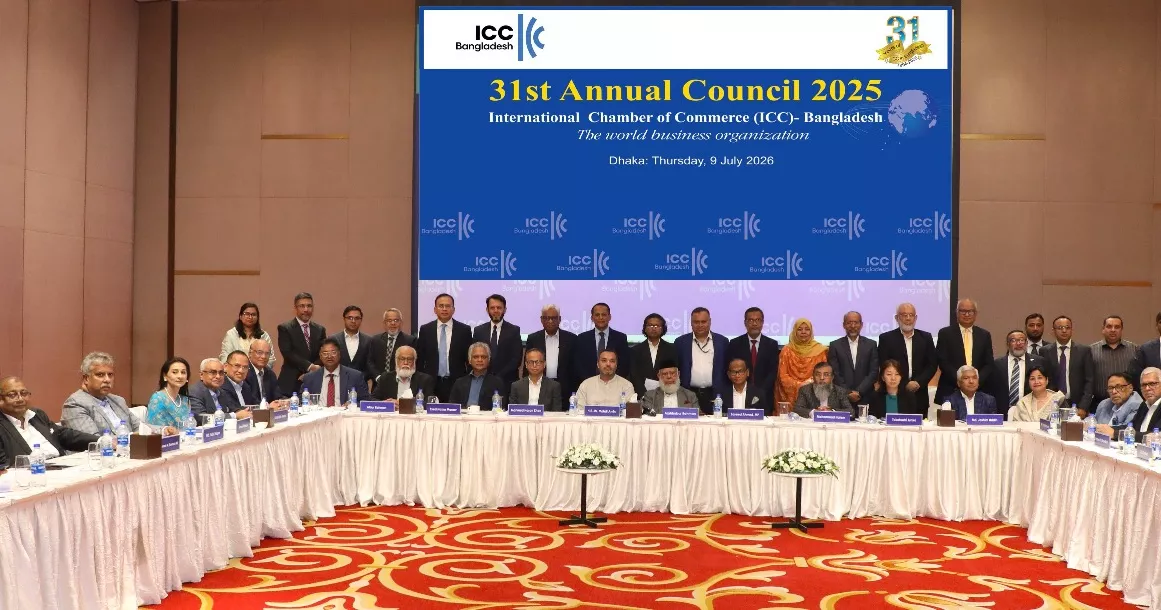
The ICC Bangladesh chief was addressing the 31st annual council of the chamber. On behalf of the Executive Board, he presented a comprehensive review of the global and Bangladesh economic outlook, highlighting the key challenges, emerging opportunities and policy priorities for sustaining the country's long-term growth and competitiveness.
Addressing business leaders, members of the diplomatic community and development partners, he said the country enters 2026 at a defining moment of its economic journey.
Although Bangladesh has demonstrated remarkable resilience through robust remittance inflows, steady export performance and continued infrastructure development, it also faces significant structural and external challenges that require bold and timely policy actions, Mahbubur Rahman said.
He noted that Bangladesh's economy expanded by around 3.7 percent in 2025, reflecting weaker industrial activity, tighter macroeconomic policies, energy shortages and subdued private investment.
Despite these headwinds, export performance remained resilient, while remittance inflows reached a record US$32.8 billion, strengthening the external sector and supporting domestic demand, the ICC Bangladesh chief said.
The agriculture and services sectors also continued to play an important role in maintaining economic stability, he said.
Looking ahead, Mahbubur Rahman expressed cautious optimism about Bangladesh's economic prospects, noting that the International Monetary Fund (IMF) projects growth of around 4.7 percent in 2026, with medium-term growth expected to recover further if macroeconomic stability is maintained and structural reforms continue.
He emphasised that Bangladesh's strategic location, large domestic market, expanding infrastructure and vibrant entrepreneurial community provide a strong foundation for future growth.
Emerging sectors such as the blue economy, renewable energy, green infrastructure, the digital economy and tourism also offer significant opportunities for diversification and investment, ICC Bangladesh president said.
However, he stressed that realising this potential will require decisive reforms. Controlling inflation, strengthening the banking and financial sector, ensuring long-term energy security, mobilising domestic revenue, improving debt management and restoring private-sector confidence must remain national priorities.
Mahbubur Rahman also underscored the importance of concluding Economic Partnership Agreements (EPAs) and Free Trade Agreements (FTAs) to preserve Bangladesh's export competitiveness following graduation from the Least Developed Country (LDC) category.
Highlighting infrastructure as a key driver of competitiveness, he proposed the construction of a modern elevated expressway between Dhaka and Chattogram, describing it as a transformational project that could substantially improve logistics efficiency, reduce transport costs, strengthen export competitiveness and attract greater domestic and foreign investment. He also encouraged the Asian Development Bank (ADB) to consider supporting the project through financing and technical assistance.
Referring to the global economic environment, the ICC Bangladesh president observed that geopolitical tensions, supply-chain disruptions, rising protectionism and policy uncertainty continue to weigh on global trade and investment.
These developments reinforce the need for Bangladesh to strengthen competitiveness, diversify exports and build greater resilience against external shocks, he said.
Mahbubur Rahman said Bangladesh has repeatedly demonstrated its resilience in overcoming adversity and expressed confidence that, with prudent macroeconomic management, improved governance, stronger institutions and closer collaboration between the Government and the private sector, the country can successfully transform today's challenges into tomorrow's opportunities.
The council meeting was attended, among others, by Prime Minister’s Adviser on Education, Primary and Mass Education, Expatriates’ Welfare and Overseas Employment, and Labour and Employment Mahdi Amin.