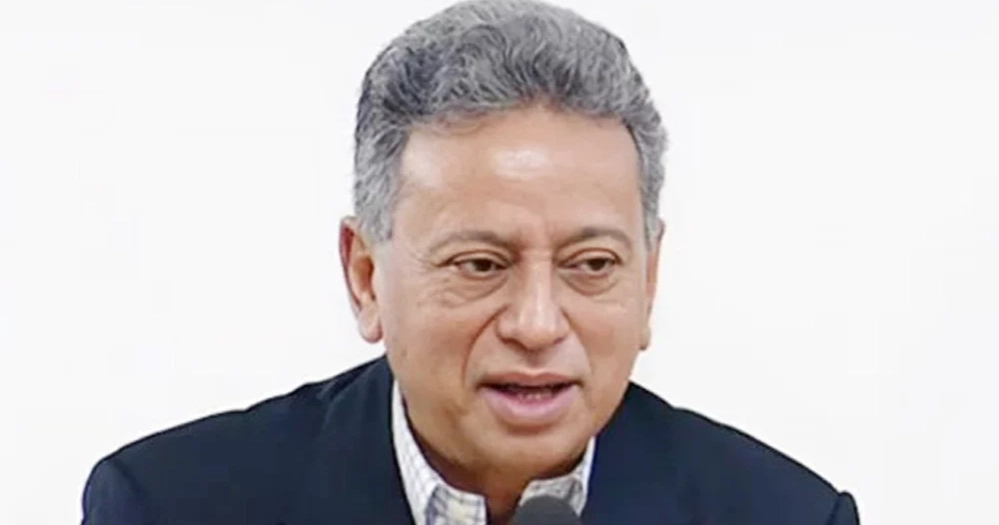
The government has incorporated a series of special measures in the national budget to address potential external pressures arising from global economic uncertainty, the conflict in the Middle East and other external risks, Finance Minister Amir Khosru Mahmud Chowdhury told Parliament on Wednesday.
Responding to a tabled question from ruling party lawmaker Md Jalal Uddin elected from Chandpur-2, the minister said the government has adopted a comprehensive strategy to safeguard macroeconomic stability and strengthen the country's resilience against external shocks.
He said the first priority is maintaining stability in the external sector through export diversification and export growth, expansion of remittance inflows and control of non-essential imports to preserve balance in external transactions.
The government is also placing emphasis on strengthening foreign exchange reserves to ensure greater stability in the exchange rate of the taka, he added.
Addressing concerns over the Middle East crisis, the finance minister said the budget includes measures to tackle potential increases in international prices of fuel, liquefied natural gas (LNG) and fertiliser.
These measures include diversifying energy sources, intensifying domestic gas exploration, improving power and energy supply systems and continuing subsidy support where necessary, he said.
The minister also highlighted the government's 3R Strategy—Recovery and Stabilisation, Restoration, and Reconstruction for Acceleration—to manage external risks.
Under the recovery phase, the focus is on maintaining macroeconomic stability; the restoration phase aims at export diversification and strengthening the external sector; while the reconstruction phase seeks to build a more productive and competitive economy, he said.
The finance minister noted that the Middle East remains the principal destination for Bangladeshi migrant workers as prolonged instability in the region could affect overseas employment opportunities and remittance inflows.
To mitigate such risks, the government is placing special emphasis on creating new overseas labour markets. Initiatives have already been taken to sign bilateral agreements with countries including Russia, Portugal, Romania, Brazil, Greece, Serbia and North Macedonia as alternative destinations for Bangladeshi workers.
In addition, efforts have begun to reopen labour markets in Malaysia, Oman, United Arab Emirates and Kuwait, which had remained largely closed for an extended period.
The minister further said the government will continue providing a 2.5 per cent incentive on remittances sent through legal channels and has adopted precautionary measures to address any emerging pressures on the external sector.