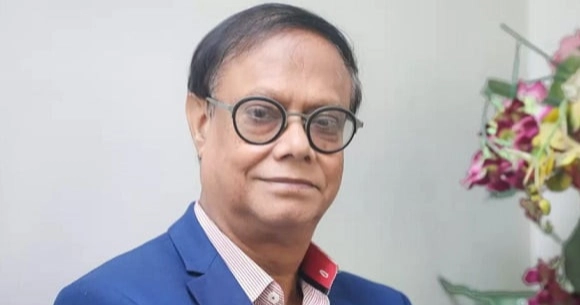
Former Bangladesh Bank Governor and Distinguished Fellow of the Policy Research Institute of Bangladesh (PRI) Ahsan H Mansur on Thursday underscored the need to accelerate Bangladesh's transition to a cashless economy through an Inclusive Instant Payment System (IIPS), saying the central bank spends around Tk 20,000 crore annually on cash management.
Speaking at the inception workshop on "Analysis of the Inclusive Instant Payment System (IIPS) in Bangladesh and Cross-Border Remittance as a Use Case" at PRI in Banani, he said financial inclusion, digital payments and the IIPS should be pursued as a single, integrated national strategy to reduce payment costs.
Mansur said reducing the cost of digital transactions is essential to boosting adoption, adding that temporary incentives or subsidies for digital payments could yield greater long-term benefits than continuing large-scale subsidies in other sectors.
He also called for making smartphones and internet services more affordable to bridge the digital divide and promote nationwide financial inclusion.
The former BB chief further observed that restoring public confidence in the banking system is critical to reducing cash dependency and encouraging wider use of formal financial channels.
Highlighting the untapped investment potential of the Bangladeshi diaspora, he said establishing dedicated mechanisms for Non-Resident Bangladeshis (NRBs) could help repatriate an estimated $2-3 billion in investments through formal channels.
Director General of the Bangladesh Institute of Bank Management (BIBM) Ezazul Islam said the IIPS has the potential to significantly cut digital payment costs, strengthen financial inclusion, and enhance the efficiency and competitiveness of Bangladesh's payment ecosystem.
He said wider adoption of digital payments and IIPS could encourage greater use of formal financial channels, improve transaction traceability, and contribute to higher tax compliance and a more transparent economy.
Ezazul stressed that the long-term success of IIPS hinges on a robust governance framework, appropriate commercial incentives, sustainable pricing, effective dispute resolution mechanisms, sound settlement risk management, and a comprehensive cost-benefit assessment.
Chairing the session and delivering the opening remarks, PRI Chairman Zaidi Sattar underscored the macroeconomic significance of remittances, which currently account for around 6 percent of Bangladesh's GDP, and called for policy measures to redirect these flows from consumption toward productive investment.
He also pointed to the digital divide within the country's financial sector, noting that many of the roughly 7 lakh Bangladeshi migrants in Oman, cited as an illustrative example, continue to prefer informal hundi channels over formal banking systems to send money home.
A panel discussion featured Mohammad Jahid Iqbal, additional director of the Payment Systems Department at Bangladesh Bank, and Sayed Shaikh Ibna Jilany, vice president (Remittance, Financial Services, Commercial) at bKash Limited.
Iqbal said Bangladesh Bank is developing the IIPS on the open-source Mojaloop platform to cut costs, enable local customisation, and connect banks, payment providers and eventually microfinance institutions through a more integrated digital infrastructure.
Launched in November 2025, he said, the system will support feature-phone access, simpler account opening, fewer failed transactions, and stronger fraud protection through the Tazama toolkit.
Jilany shared perspectives from Bangladesh's leading mobile financial services provider on the opportunities and challenges of integrating private-sector platforms into an interoperable instant payment ecosystem, touching on consumer protection, affordability and user trust.
Participants at the workshop, organised with support from the Gates Foundation, discussed broader opportunities and challenges in developing an inclusive instant payment ecosystem, including interoperability, regulatory readiness, consumer protection, affordability, and the potential to make remittance transfers faster and more accessible to underserved populations.