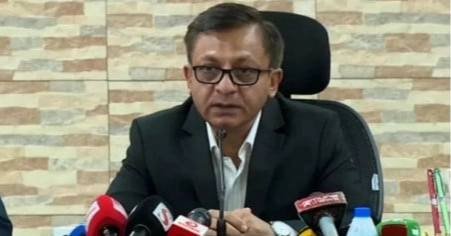
The government aims to transform Bangladesh's leather industry into a stronger, export-oriented sector by ensuring maximum utilisation of sacrificial animal hides from Eid-ul-Azha, Commerce Minister Khandakar Abdul Muktadir said on Friday.
Speaking to reporters after inspecting raw hide trading operations at Posta in Lalbagh, the minister said a comprehensive, long-term plan covering development, preservation, processing and export capacity of the leather sector would be placed before the nation by July.
“We believe that through the government's coordinated efforts, active participation of traders and depot owners, and mosque- and madrasa-based hide preservation drives, most of the sacrificial hides this year will be collected in usable condition,” he said.
The minister, who visited Aminbazar on Thursday and Posta and Hemayetpur in Savar on Friday, noted that large volumes of hides had already reached traders and salting was underway. “The full processing cycle normally takes two to three months as hides do not all arrive in Dhaka simultaneously.”
Muktadir stressed the importance of timely salting, warning that hides left untreated for more than four to six hours, especially at temperatures of 38 to 40 degrees Celsius, risk rapid deterioration. Properly salted hides, he said, can be preserved for three to four months.
He outlined the leather production chain from raw hide to wet blue, crust leather and finally finished leather, used to manufacture shoes, sandals, belts and other goods, underscoring why preservation quality directly determines industrial value.
On concerns over hide smuggling, the minister said the relevant authorities had been directed to maintain strict surveillance. “We do not want a single hide to be smuggled out of the country.”
Regarding the Savar leather industrial estate and its Central Effluent Treatment Plant (CETP), Muktadir acknowledged operational shortfalls. The CETP has a project capacity of 25,000 cubic metres per day but is currently functioning at only 14,000 to 18,000 cubic metres. “Reforms would be undertaken to address the gap and attract further investment.”
The minister also called for modernising and mechanising the slaughtering and skinning process to improve hide quality, noting that improper skinning significantly degrades the raw material.
He said Bangladesh's leather and leather goods market including exports is currently valued at approximately Tk 12,000 to 15,000 crore, with a substantial domestic market alongside. “The government has already distributed free salt through BSCIC and district administrations to madrasas and collection centres to ensure proper hide preservation.”
Industry Secretary Md Obaidur Rahman, Commerce Secretary (routine duty) Md Abdur Rahim Khan, BSCIC Director General Md Saiful Islam and leaders of the Bangladesh Tanners Association were present on the occasion.