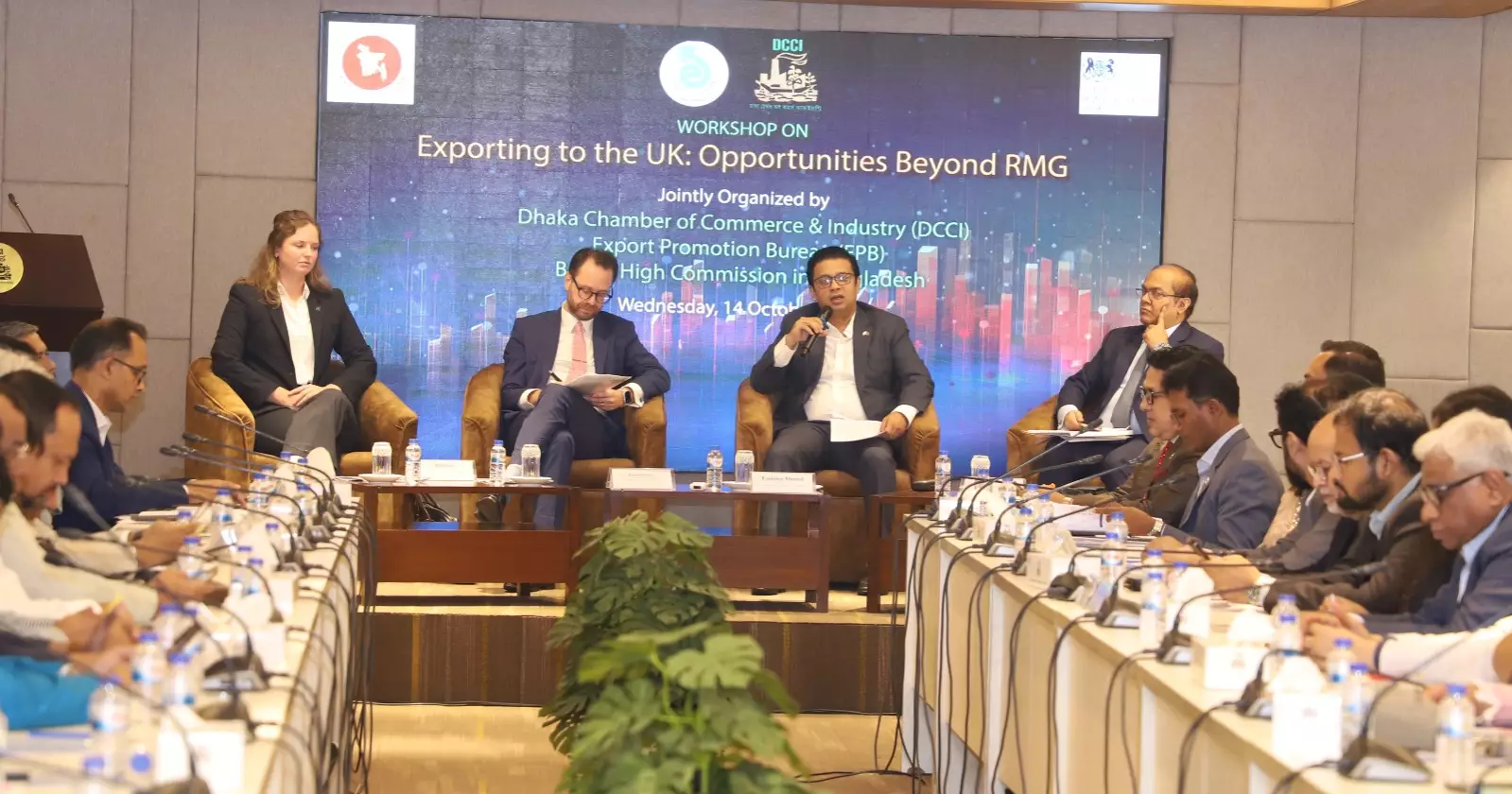
Bangladesh's exports to the United Kingdom could rise to USD 10 billion if its share of the UK import market increases from the current 0.49 percent to 1 percent, speakers said at a workshop today, urging exporters to diversify beyond ready-made garments (RMG), meet international standards and make better use of tariff preferences.
The Export Promotion Bureau (EPB) organised the workshop, titled "Exporting to the UK: Opportunities Beyond RMG," in association with the Dhaka Chamber of Commerce & Industry (DCCI) and the British High Commission in Bangladesh at the DCCI Auditorium.
Speakers said non-RMG products account for only about 6 percent of Bangladesh's merchandise exports to the UK, despite strong demand there for processed food, pharmaceuticals, footwear and furniture.
DCCI President Taskeen Ahmed stressed improving product quality, standards compliance, certification, traceability, branding and market intelligence.
He also highlighted the importance of utilising benefits under the UK's Developing Countries Trading Scheme (DCTS) and addressing tariff and non-tariff barriers to strengthen bilateral trade and investment.
Acting British High Commissioner James Goldman noted the longstanding UK-Bangladesh partnership and said continued UK market access after Bangladesh's graduation from the LDC category would give businesses the certainty to plan, grow and invest.
He encouraged more Bangladeshi firms to tap these opportunities.
EPB Vice Chairman and Chief Executive (Additional Secretary) Mohammad Hasan Arif presented the keynote paper on export proliferation, diversification and higher-value, non-RMG exports.
He called for addressing non-tariff barriers, meeting UK regulatory and product standards, and strengthening testing, certification and production capacity to boost competitiveness.
Ellie Parker, Regional Trade for Development Adviser for South Asia, Central Asia and the South Caucasus at the British High Commission, led a technical session on the DCTS. It covered market access before and after LDC graduation, practical guidance on claiming preferential tariffs, and key considerations for exporters.
An industry-government panel featuring representatives from customs, footwear and leather goods, seafood, agro-processing, packaging and other sectors discussed market opportunities, export preparation, use of DCTS preferences, export procedures, and common regulatory, technical and operational challenges. An interactive Q&A session followed.
Participants underscored the need for stronger collaboration among government agencies, the private sector and development partners to diversify the export basket, improve compliance with international standards and maximise preferential market access, especially as Bangladesh prepares to graduate from the LDC category.
DCCI Vice President Md. Salem Sulaiman, members of the DCCI Board of Directors, EPB officials, and representatives from the public and private sectors also attended the workshop.