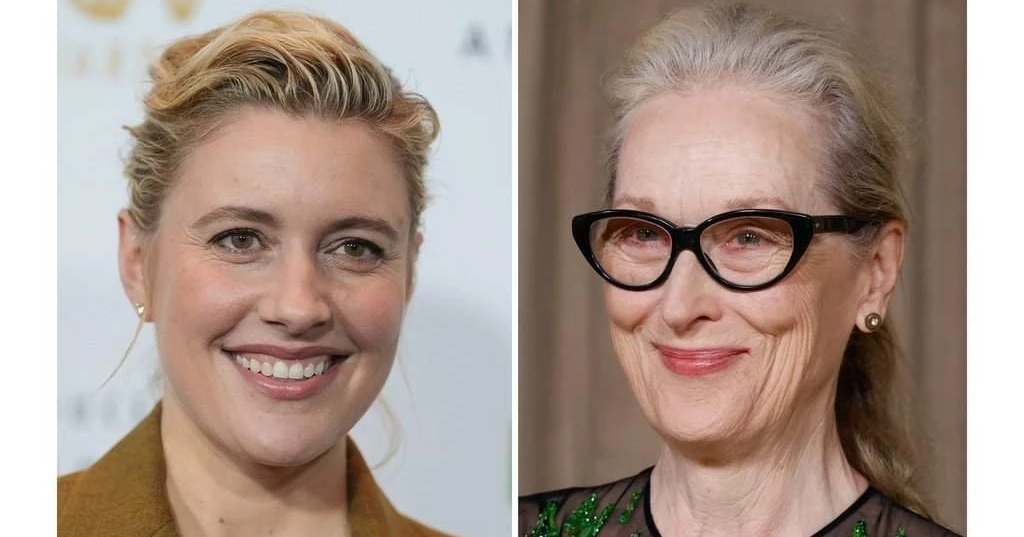
The casting of Oscar-winning actress Meryl Streep to voice Aslan the lion in Greta Gerwig's upcoming adaptation of The Chronicles of Narnia has sparked controversy among conservative Christian commentators, even though the public has yet to see a single frame of the film.
The critics have expressed concern over a female actor voicing Aslan, a central character in the seven-book fantasy series by British Christian author C.S. Lewis. Published in the 1950s, the books portray the lion as male, with a magnificent mane, and Aslan is widely regarded as a literary representation of Jesus Christ.
Filmmakers often make changes when adapting literary works for the screen. Gerwig, for instance, has moved the setting of The Magician's Nephew from around 1900 to the 1950s.
However, the decision to cast Streep does not necessarily mean Aslan will be portrayed as female. Conservative Christian critics argue that even the possibility of presenting a figure associated with Christ as anything other than male goes beyond artistic freedom.
They point to the Bible and ancient Christian creeds, which refer to God as the Father and Jesus as the Son of God.
Seth Udinsky, writing for the evangelical news website Christian Post, described the casting as an attempt to undermine Christian symbols. He also accused Gerwig of making Aslan transgender, citing a promotional image showing the lion with rainbow-coloured whiskers.
The casting has also drawn mixed reactions on social media, including numerous comments and counterarguments under Netflix's Instagram post announcing the decision.
Some scholars and admirers of Lewis's work have urged people to wait until the film is released before reaching a conclusion.
Kat Coffin, a New York-based writer and Lewis scholar, said she had questions about the casting but was more troubled by the intense hostility towards the possibility of a feminine portrayal of a figure representing God.
The film is scheduled for theatrical release in February.
Gerwig seeks a voice with wisdom and wonder
Gerwig has not directly addressed the controversy over Aslan's gender. However, she has explained the qualities she wanted in the actor voicing the character.
“I wanted someone who was profound but not pretentious, who had gravitas but not morose self-seriousness,” Gerwig said.
She said she wanted a voice capable of conveying emotional depth, sadness, joy and delight. She also sought someone older than 70 who could bring the wisdom of experience while retaining a child's sense of wonder.
Gerwig said she first read The Magician's Nephew as a child and fell in love with its story and magical world.
The director is known for bringing feminist perspectives to films such as Barbie and Little Women, the latter also based on a classic work of children's literature.
A report in film magazine Empire has added to the debate, saying Gerwig drew inspiration from pop artist David Bowie, known for his gender-fluid image, when developing Aslan's appearance, including the lion's differently coloured eyes and bold red-striped face.
Published in 1955, The Magician's Nephew follows two children, Digory and Polly, who travel between parallel worlds through magic. They eventually reach the newly created land of Narnia but inadvertently bring along the evil witch Jadis.
In this and later books in the series, Aslan guides young characters in their struggle against evil.
Critics question changes to Christian themes
Ted Baehr, founder and publisher of Movieguide, which advises Christian families on film and television content, said casting a woman to voice Aslan challenged Christian teachings about the nature of God.
He acknowledged Gerwig's directing abilities but questioned whether she fully understood the importance of the character to many Christians.
Although Lewis said his Narnia books were not allegories, they contain strong parallels with biblical stories and Christian beliefs, Baehr said.
He argued that the series could not be adapted in the same way as Greek mythology in Christopher Nolan's recent film The Odyssey.
“The Gospel is not a myth,” he said.
The controversy reflects the strong connection many Christians, particularly evangelicals, feel with Lewis, whose fiction and non-fiction works promoted Christian teachings.
The Narnia series has reportedly sold 120 million copies worldwide since the publication of its first volume 75 years ago this month. Many Christian readers feel a strong personal attachment to the stories because of their religious themes.
Author Christin Ditchfield Lazo, who has written books about Lewis, said the stories had deeply influenced millions of readers, particularly those who value their spiritual messages.
She encouraged Christians to wait until the film's release before judging the casting decision.
“There's a huge difference between a woman voicing a male character and the director changing the gender of the character,” she said, adding that the decision could raise concerns but its implications would not be clear until audiences watched the film.
She also noted that actors have long played or voiced characters of different genders, from Shakespearean theatre to modern animated productions.
Lewis family expresses support for Gerwig
Several evangelical Christians embraced the film adaptations of the first three Narnia books released in the early 2000s, in which actor Liam Neeson provided Aslan's deep, masculine voice.
Coffin noted that literary works have sometimes portrayed God through feminine characteristics. She pointed out that Aslan also appears as a lamb in the Narnia series, with a voice Lewis described as “sweet milky”.
A statement from the family of Lewis's late wife, Joy Davidman Gresham, praised Gerwig's enthusiasm for the books.
“We saw this enthusiasm during our visit to the set in London,” the statement, provided by Netflix, said. The family expressed excitement about working with the director and production team on the film and future projects.
The C.S. Lewis Company, which holds the rights to Lewis's intellectual property and is producing the film, also welcomed Gerwig's approach.
The company said it was deeply moved by the director's commitment to Lewis's fictional world and her efforts to bring joy, emotion and genuine affection for the story to The Magician's Nephew.