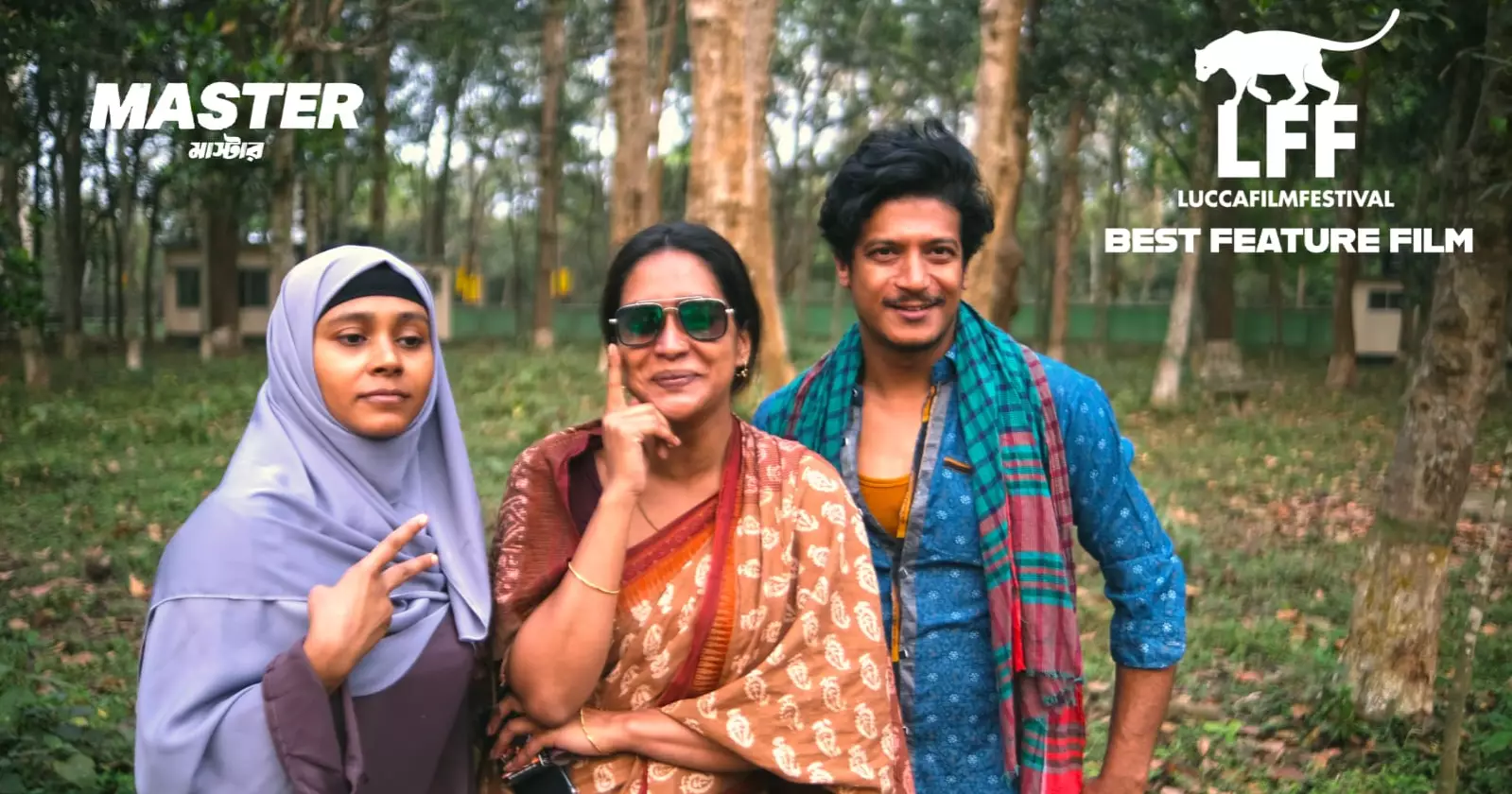
Bangladeshi filmmaker Rezwan Shahriar Sumit’s second feature film Master has won the Best Feature Film award at the 22nd Lucca Film Festival in Tuscany, Italy.
The award adds another major international recognition to the film, which earlier this year won the Big Screen Award at the International Film Festival Rotterdam and was subsequently screened at the 73rd Sydney Film Festival.
The Lucca Film Festival, held from September 26 to October 4, featured Master in its International Feature Film Competition. The film was selected alongside 11 other features from around the world.
The feature-film jury comprised Oscar-winning costume designer Franca Squarciapino, Lithuanian filmmaker Šarūnas Bartas and Italian actor, director and screenwriter Michele Riondino.
In its citation, the jury praised Master for using a seemingly local story to portray the crisis facing representative democracy around the world. It also highlighted the film’s subtle screenplay and its portrayal of an idealistic teacher whose commitment to social justice comes into conflict with a political system driven by individual interests.
The jury further noted the film’s agile storytelling and its depiction of the protagonist’s gradual confrontation with political contradictions and corruption.
Directed by Sumit, Master centres on Jahir, a respected teacher who enters local politics with sincere intentions but gradually becomes entangled in a system of power, pressure and compromise. The film explores how political influence can erode an individual’s ideals and moral principles.
The film stars Nasir Uddin Khan, Azmeri Haque Badhon, Zakia Bari Mamo, Fazlur Rahman Babu, Sharif Siraj and Tasnova Tamanna. Sumit co-wrote the screenplay with Sabbir Hossain Shovon, while Tuhin Tamijul handled cinematography and Kristan Sprague edited the film.
Master emerged from Sumit’s earlier experience working with climate-vulnerable communities in coastal Bangladesh during the making of his debut feature The Salt in Our Waters (Nonajoler Kabbo). His observations of displacement and local administration eventually informed the film’s exploration of power, governance and personal compromise.
The filmmaker, in a social media post announcing the latest award, expressed gratitude to the jury and his cast and crew, describing the recognition as another testament to the universality and urgency of Master.
The film’s international festival run has now raised a fresh question for Bangladeshi audiences: when will Master be allowed to reach cinemas in Bangladesh?