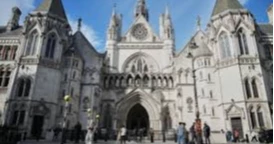
An unidentified celebrity on Tuesday lost a legal bid to prevent two British media organisations from publishing allegations of sexual misconduct against him.
Lawyers representing Independent Television News (ITN) and the publisher of The Guardian told the High Court last month that the allegations concerned the man's alleged abuse of power and influence, including attempts to approach several young women for inappropriate sexual activities.
The celebrity has denied any wrongdoing and repeatedly threatened to take his own life if the allegations were made public, according to the court's ruling.
His lawyer, Sara Mansoori, previously told the court that he attempted suicide after receiving letters from ITN and Guardian News and Media seeking his response to the allegations. She said he made another attempt later and was recently hospitalised for psychiatric treatment.
The case has attracted considerable attention across Britain, raising questions about the balance between the privacy rights of public figures and the media's responsibility to report matters of public interest.
Gavin Millar, representing the media organisations, said the allegations had emerged from an extensive and thorough investigation, arguing that their publication served a significant public interest.
According to a summary of Tuesday's judgment, the media organisations alleged that the celebrity had used his public profile and influence over several years to establish relationships with young women, some considerably younger than him, and had engaged in or attempted to engage in seriously inappropriate behaviour.
The judgment noted that some of the alleged actions, if established, could constitute criminal offences.
Justice Matthew Nicklin rejected the injunction application, ruling that granting it would constitute an exceptionally serious restriction on the media organisations' rights.
The judge acknowledged that the man had a serious and longstanding psychiatric vulnerability and that publishing the allegations would significantly increase his risk of suicide. However, he said the available evidence did not establish that suicide was inevitable.
He also observed that the man's statements could not reliably demonstrate that future medical treatment or intervention would be unable to reduce the risk.
The judge ruled that the celebrity's identity should remain undisclosed to give him an opportunity to appeal the decision.
Reporters Without Borders UK welcomed the court's ruling on Tuesday but called for the remaining reporting restrictions to be removed.
In a statement, the organisation said that although the potential risks of harm must be treated seriously, responsible journalism serving the public interest should be allowed to continue.
It warned that setting dangerous legal precedents could have consequences beyond individual cases, adding that neither wealth nor access to expensive legal representation should protect anyone from legitimate public scrutiny.