
China has announced millions of dollars in additional disaster relief funding after severe storms and a landslide killed dozens of people, damaged homes and forced thousands to flee.
The central government allocated 50 million yuan (about $7.4 million) to repair roads, schools and other public facilities in central China's Hubei province. Another 20 million yuan will be used to rebuild homes and help displaced residents return to normal life, according to state media.
Violent thunderstorms and rare tornadoes struck Hubei on Monday night, killing 11 people and injuring hundreds.
The government also approved 30 million yuan (about $4.4 million) for northwestern Gansu province, where a landslide killed 21 forestry workers.
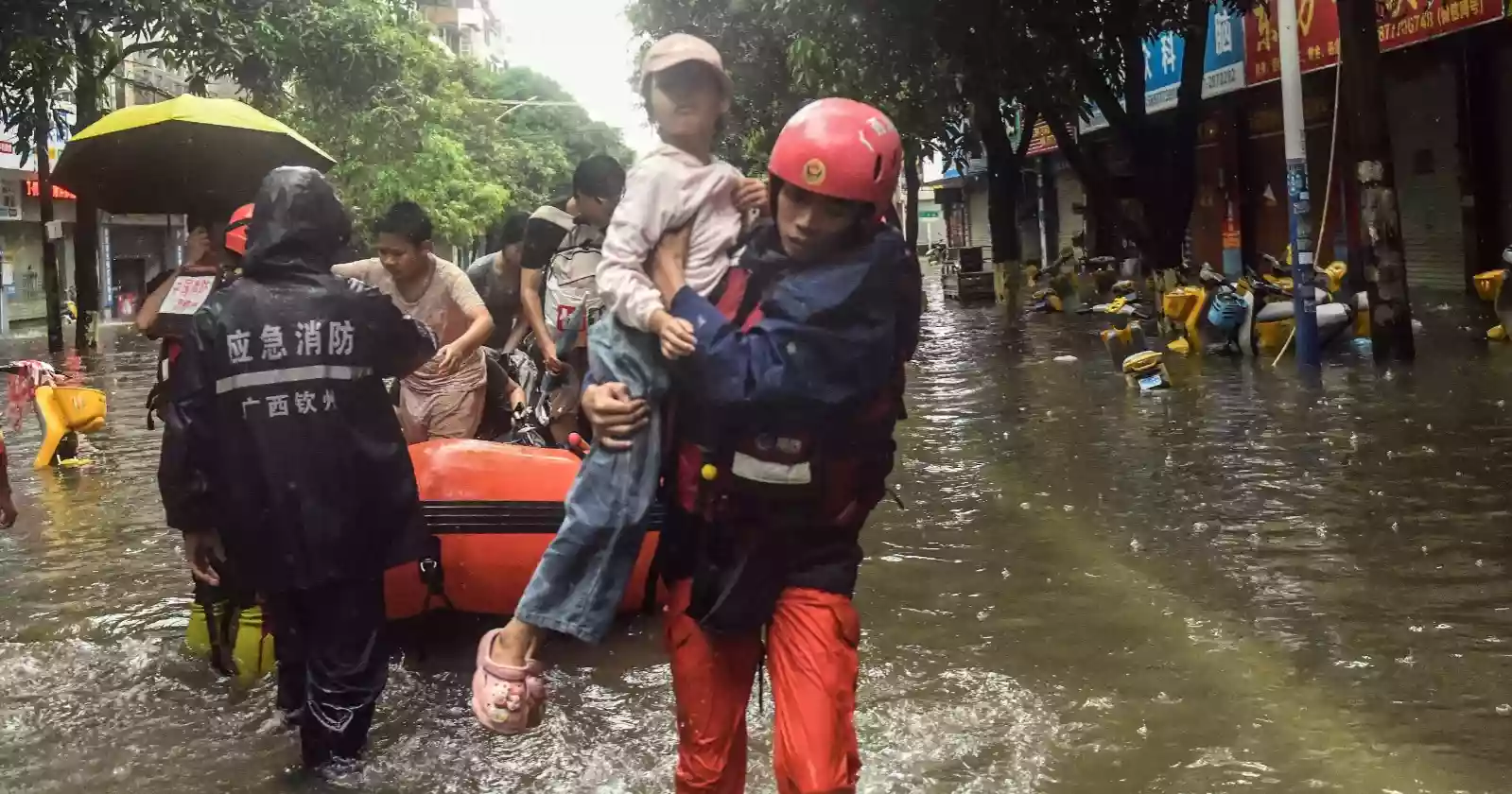
The latest funding comes after an earlier allocation of 100 million yuan (about $14.7 million) for rebuilding schools, hospitals, transport networks and other infrastructure in the southern Guangxi region, where severe flooding caused by a tropical storm submerged towns and cities.
Lu Xiaofei, who works in the southern technology hub of Shenzhen, said her brother and his family remained trapped inside their home in Lu village in Guangxi's Qintang district.
Speaking to The Associated Press by phone, Lu said her brother, his wife, their nine-month-old baby, parents and grandfather had taken shelter on the second floor after floodwaters rose above the height of an adult. Electricity had been cut since Tuesday morning, and they were also without running water.
She said her brother warned that their supply of drinking water was running low and that rescue teams had not yet reached them. Many neighbouring families were facing similar conditions.
People in other flooded areas also appealed for help on social media, posting videos showing rising floodwaters and shortages of food and other essential supplies.
Flooding worsened after Tropical Storm Maysak hit Guangxi, causing reservoirs to overflow or collapse and sending large volumes of water into nearby communities. Authorities said six people had died and around 130,000 residents had been evacuated.
More than 8,000 rescue workers and about 5,700 boats have been deployed for relief operations, according to the Guangxi regional propaganda office.
Local media, citing unconfirmed reports, said hundreds of snakes escaped from breeding farms after floodwaters swept through the area. Beijing News also reported that a woman in Yunbiao town died after being bitten by a snake.
The Associated Press could not independently verify those reports. However, Guangxi authorities said on Wednesday that snakes had been seen in floodwaters after several villages in the Hengzhou area were submerged. Officials did not say where the snakes had come from.
Authorities also said a local hospital had increased its supply of snake antivenom to meet expected treatment needs.
China's National Meteorological Center said parts of Guangxi had received between 10 and 40 centimetres of rain since last Saturday, while the hardest-hit areas recorded more than 90 centimetres.
Forecasters warned that another storm, Typhoon Bavi, is expected to hit southeastern China over the weekend. In Taiwan, some farmers have started harvesting rice early to reduce possible crop losses before the typhoon arrives.
Elsewhere in Asia, severe weather also claimed lives. In southeastern Bangladesh, landslides triggered by heavy monsoon rains killed several Rohingya refugees, including five children. In neighbouring India, heavy rainfall has left more than a dozen people dead over the past few days.