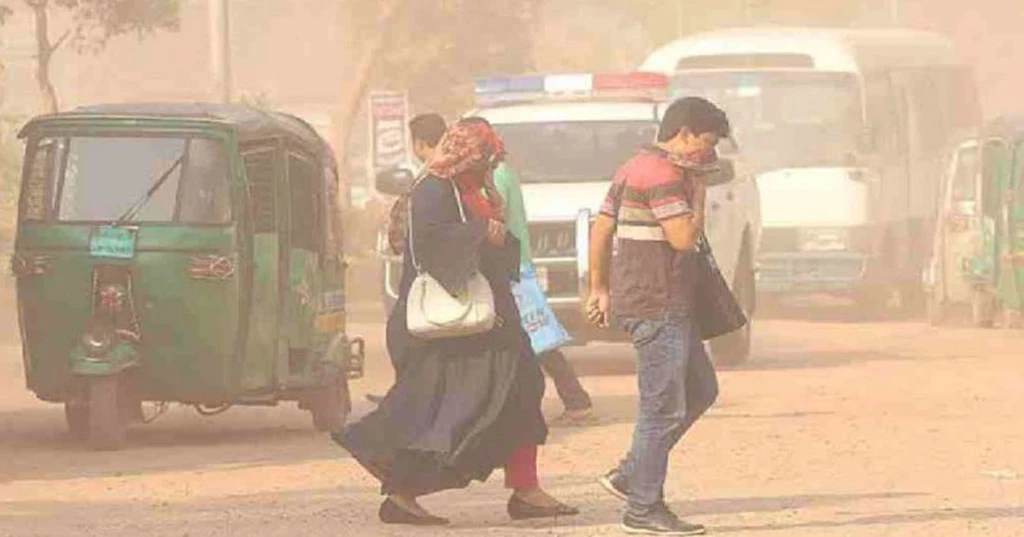
Dhaka ranked 12th among the world's most polluted cities on Wednesday morning, with an Air Quality Index (AQI) score of 144 at 10:10 am.
The city's air quality was classified as unhealthy for sensitive groups, meaning that while the general public may not be significantly affected, people who are more vulnerable to air pollution could experience adverse health effects.
Pakistan's Lahore topped the list with an AQI score of 358, followed by India's Delhi at 269 and Egypt's Cairo at 253.
According to the AQI scale, readings between 101 and 150 are considered unhealthy for sensitive groups, while scores ranging from 151 to 200 are classified as unhealthy. Readings between 201 and 300 are considered very unhealthy, and scores above 301 are classified as hazardous, posing serious health risks.
The AQI measures daily air quality, indicating the level of pollution and its potential impact on public health.
In Bangladesh, air quality is assessed based on five major pollutants: particulate matter (PM10 and PM2.5), nitrogen dioxide (NO2), carbon monoxide (CO), sulphur dioxide (SO2) and ozone.
The World Health Organization estimates that air pollution causes around seven million deaths worldwide each year, mainly from stroke, heart disease, chronic obstructive pulmonary disease, lung cancer and acute respiratory infections.