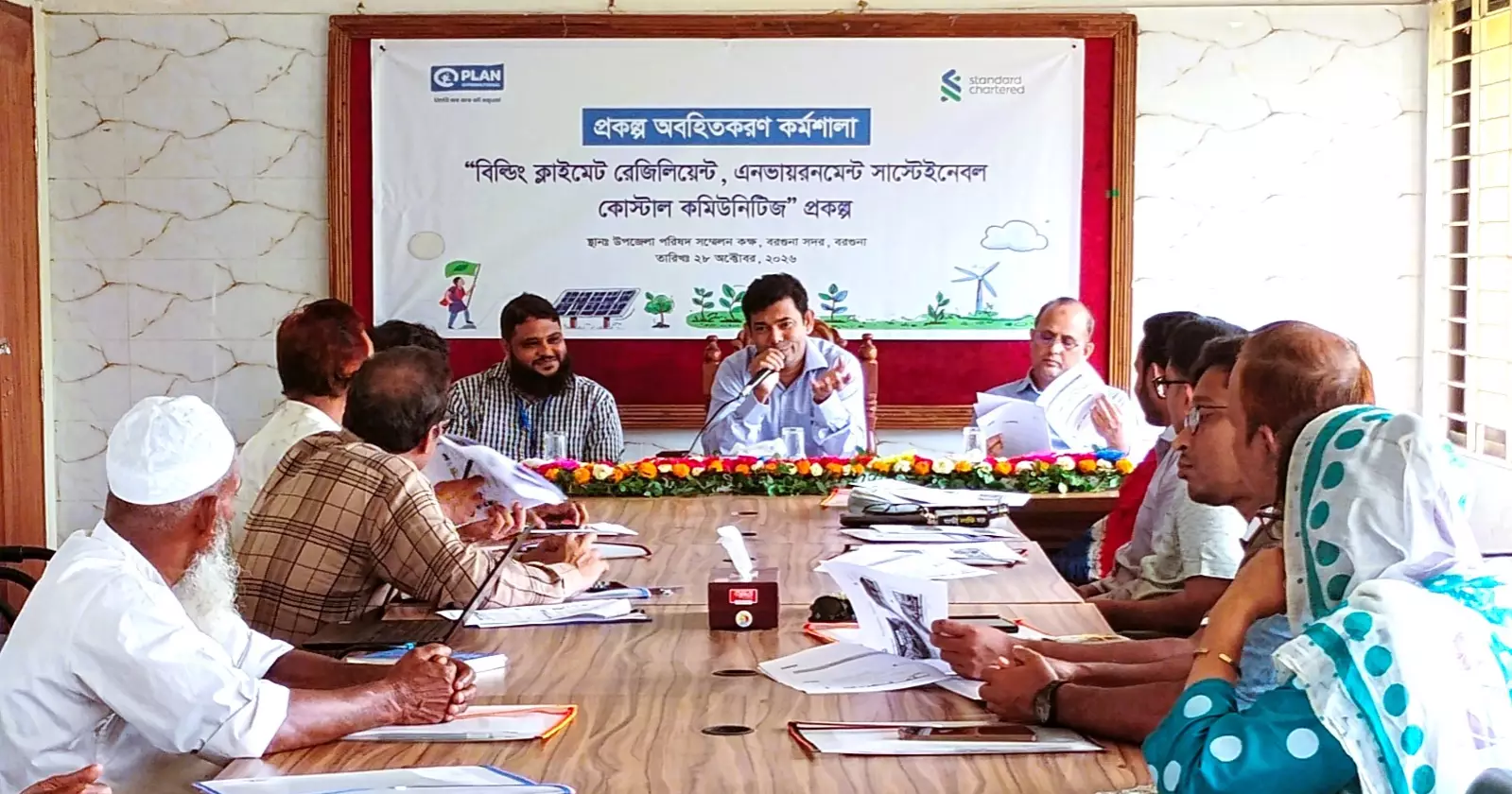
Plan International Bangladesh, in partnership with Standard Chartered Bank Bangladesh, has launched the Building Climate Resilient, Environment Sustainable Coastal Communities (ResCoast) project to strengthen climate resilience and promote sustainable livelihoods in Barguna.
An inception workshop for the project was held in Barguna Sadar upazila, bringing together government officials, local government representatives, development partners and community stakeholders to discuss the project’s objectives and identify areas for collaboration.
Funded by Standard Chartered Bank under its Agriculture Corporate Social Responsibility (CSR) initiative, the project aims to promote green livelihoods and environmental sustainability in vulnerable coastal communities.
The project will directly support 1,815 vulnerable coastal households across six climate-resilient villages, with a particular focus on young women and youths aged 18–24.
Md Shah Aziz, Upazila Nirbahi Officer (UNO) of Barguna Sadar, attended the workshop as the chief guest, while Md Anamul Hoque, director of the Resource Development Foundation (RDF), chaired the event.
Union chairpersons, NGO representatives, journalists, farmers’ representatives and other project stakeholders also attended the workshop.
Speaking at the event, Shah Aziz said building climate-resilient communities required strong collaboration among government institutions, development partners and local communities.
He said the project offered an opportunity to work together to promote sustainable livelihoods, protect the environment and strengthen long-term resilience in Barguna.
A presentation at the workshop outlined the project’s objectives, planned activities and implementation approach. Key areas include climate-smart agriculture, sustainable fisheries and livestock management, community-based climate resilience, youth leadership, gender equality and social inclusion.
The speakers stressed the importance of inclusive participation and coordination among government departments and community stakeholders.
The workshop also provided an opportunity to identify areas for institutional collaboration, discuss potential risks and mitigation measures, and review key implementation milestones.
Plan International Bangladesh will work with relevant government departments and local stakeholders to coordinate activities, strengthen community ownership and ensure the long-term sustainability of the project’s outcomes.
Through ResCoast, the organisation aims to help climate-vulnerable coastal communities adopt sustainable livelihood practices, improve their capacity to adapt to climate change, and promote the meaningful participation and leadership of women and youths in building a more resilient future.