Inspired by Bangladesh’s rickshaw painting tradition, the Buddy Bear at the German Embassy bridges two cultures through vibrant art, nature, and a shared message of unity.
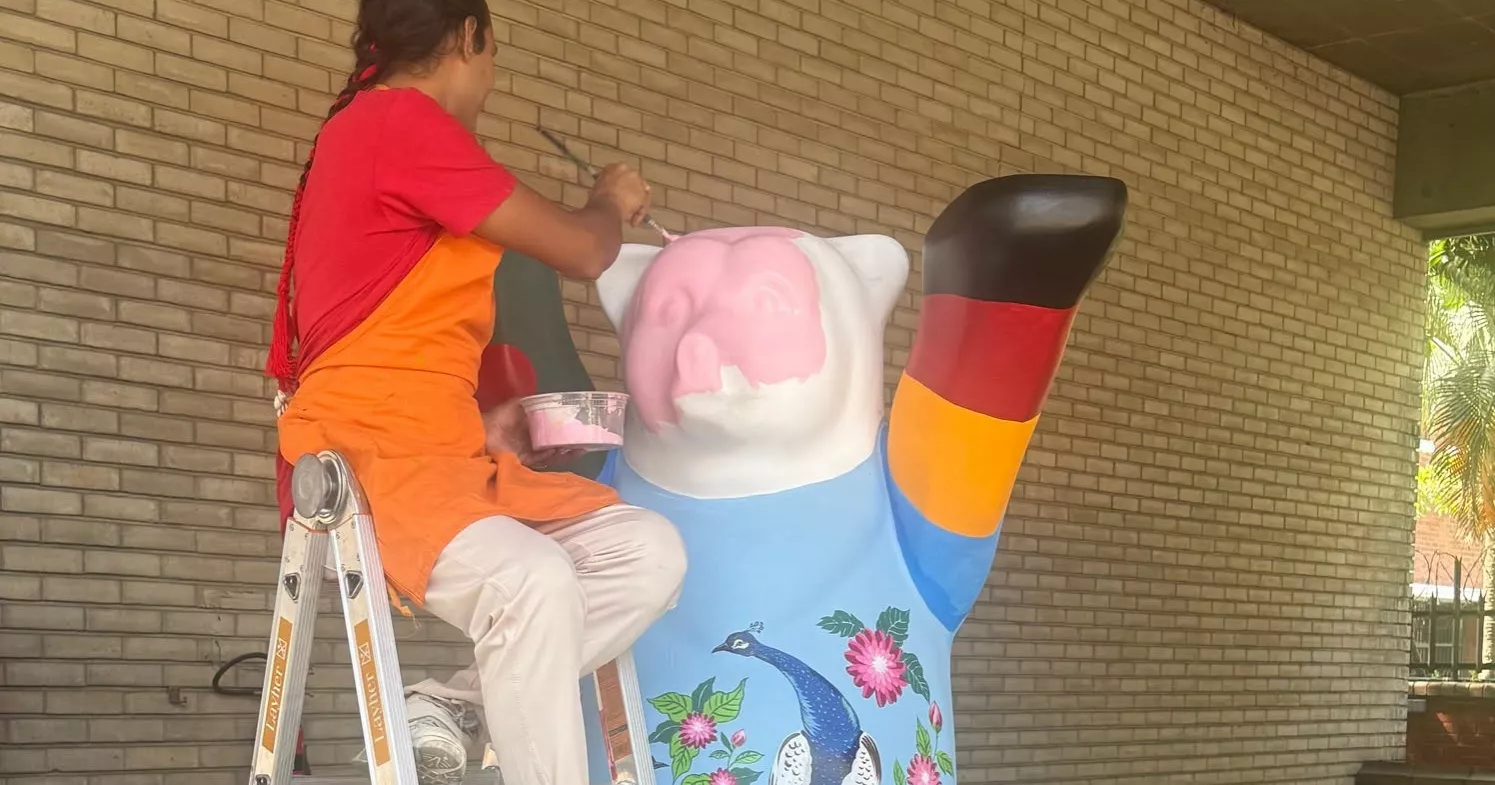
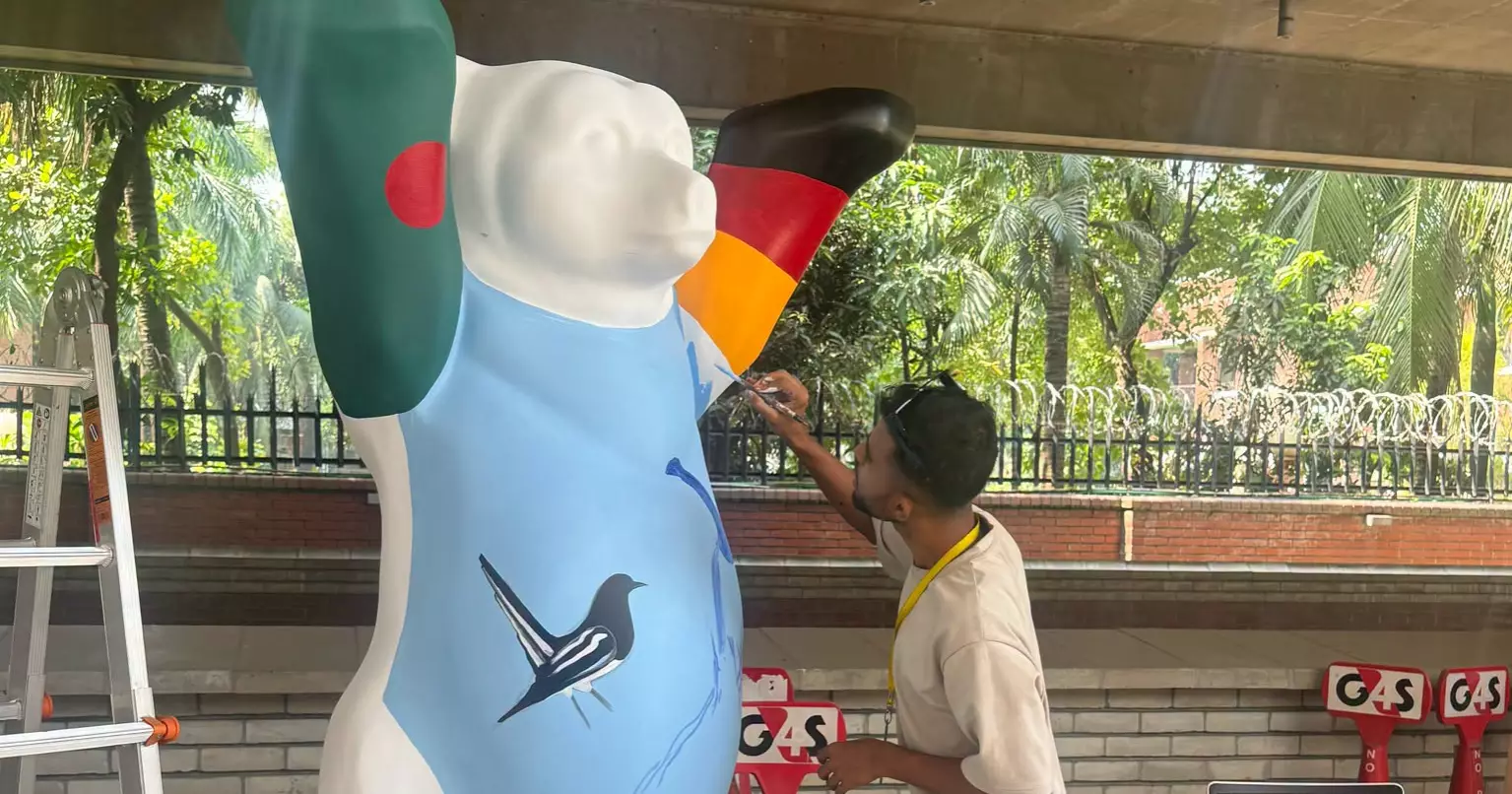
A German icon has found a distinctly Bengali voice in Dhaka. Standing on the grounds of the German Embassy, the familiar Buddy Bear sculpture has been transformed through the vivid colors and intricate motifs of Bangladesh’s celebrated folk-art tradition. Repainted by local artists Rasel Rana (known as Sajen) and Miraj Hossain ahead of the Day of German Unity, the sculpture offers a striking visual celebration of friendship between two nations.
Draped in light blue, vivid floral patterns, native birds, and rural landscapes, the bear draws directly from the visual language of rickshaw painting—an art form deeply woven into the fabric of everyday Bangladeshi life. The result goes far beyond a decorative makeover: it is a true synthesis of artistic traditions, reimagining a classic German symbol through a Bangladeshi lens.
A Symbol Reinterpreted
The Buddy Bear project originated in Berlin in 2001, conceived by Klaus and Eva Herlitz. With their upright posture and raised arms, the sculptures were created to champion peace, tolerance, and international understanding, becoming informal global ambassadors for Berlin in diplomatic spaces worldwide.
A core principle of the project is that each bear should reflect the cultural heritage of its host country. In Dhaka, this spirit comes alive through rickshaw painting—renowned for its bold palettes, decorative exuberance, and lively depictions of nature and daily life.
Earlier this year, the German Embassy hosted a design competition inviting local artists to propose a Bangladeshi interpretation of the sculpture. Artist Rafiur Suny submitted the winning concept, which provided the blueprint for lead artist Rasel Rana and co-artist Miraj Hossain to bring to life.
For Rana, the project offered a rare chance to bridge distinct creative identities. Describing the process, he noted that shaping a German form through an Asian artistic vision harmonizes diverse aesthetics and creative energies into a powerful symbol of unity.
That unity is visibly woven into the sculpture itself: the bear’s raised arms bear the national colors of both Germany and Bangladesh—a joint visual statement of mutual respect and enduring friendship.
Artistry and Endurance Behind the Canvas
Bringing the vision to life required both artists to venture beyond their usual domains of canvas painting and performance art. Transforming a three-dimensional, curved sculpture presented a new technical challenge.
The process began by stripping away the bear's old paint down to its raw fiberglass using acetone and chemical solvents.After applying fresh base coats, the artists hand-sketched the complex illustrations directly onto the curved surface before filling them with detail.
Bangladesh’s harsh tropical climate presented another hurdle. To guard against intense humidity, heat, ultraviolet exposure, and monsoon rains, the artists rigorously stress-tested acrylic paints in direct sunlight and rain. They concluded the process with a heavy-duty protective varnish to ensure the colors remain vibrant outdoors for years to come.
A Vibrant Tapestry of Bangladesh
The bear’s facade is an homage to Bangladesh’s rich natural landscape. Prominently featured on the front is a striking peacock—a traditional staple of rickshaw art—flanked by the Oriental magpie-robin (the national bird), blossoming boughs, and water lilies.
The reverse side tells a broader story of riverine life. A winding waterway bustles with traditional wooden boats and native fish, set against lush green fields, thatched rural homes, and fluttering kites beneath the national flag. Stylized urban elements and intricate floral scrollwork along the legs unify the entire narrative. Rather than relying on strict realism, the piece relies on bold contours and folk symbolism to evoke a deep sense of place.
The choice of medium carries international prestige: in 2023, UNESCO inscribed Dhaka’s traditional rickshaws and rickshaw painting onto the Representative List of the Intangible Cultural Heritage of Humanity. By hosting this art form on a Buddy Bear, the embassy gives a beloved street-art tradition a prominent international platform.