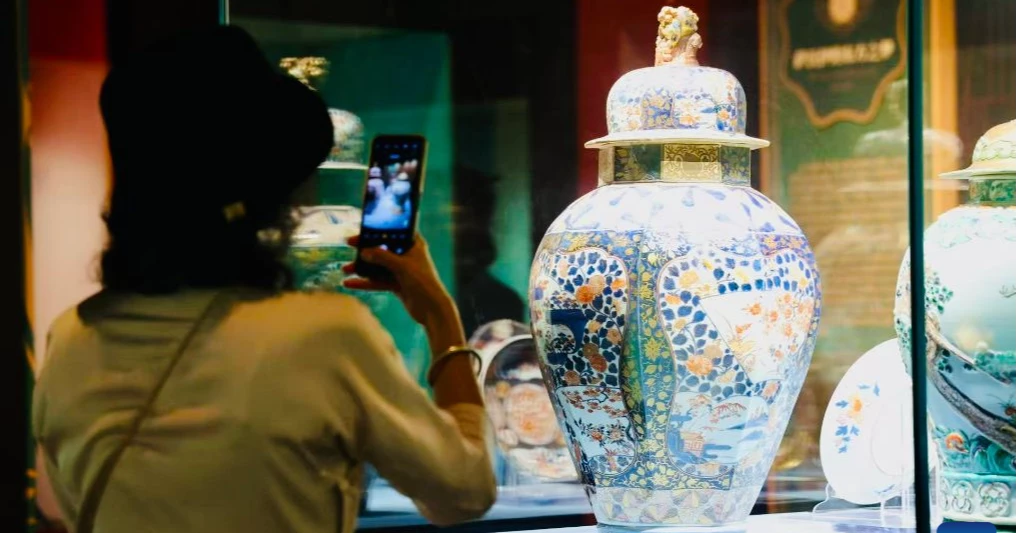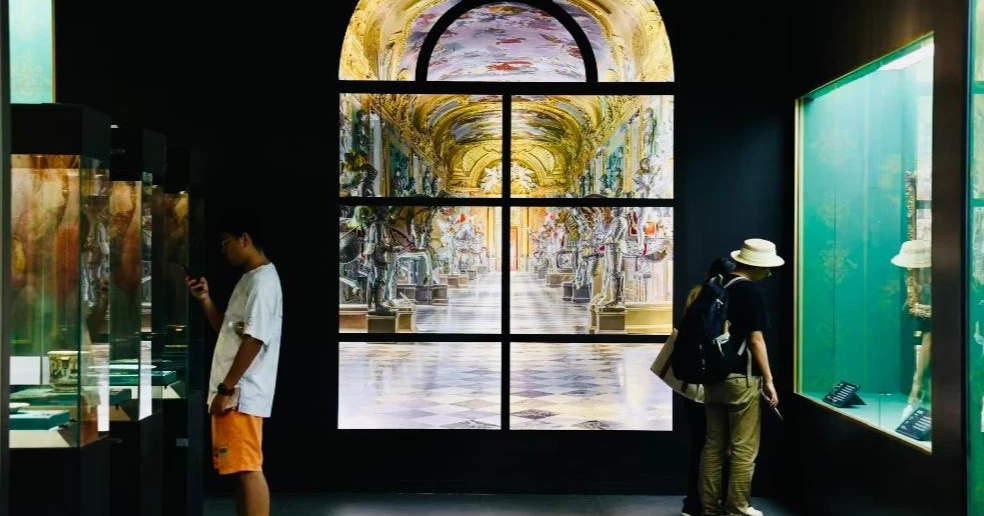
More than 150 Italian artifacts at an exhibition in Tianjin have highlighted centuries-old cultural exchanges between China and Italy, showing how Chinese silk, porcelain and decorative motifs influenced European art and tastes.
The exhibition, “Crown of Glory: 18th-Century Italian Court Treasures from the House of Savoy,” was jointly presented by the Tianjin Museum, Tianjin Digital Art Museum and Turin City Museum of Ancient Art in Palazzo Madama. It ran from Feb. 10 to Aug. 31.
Rather than focusing only on Italian royal splendor, the exhibition explored mutual influences between Chinese and European craftsmanship.
A French court gown featuring Chinese silk and embroidery reflects the popularity of “chinoiserie,” which became fashionable among European aristocrats and wealthy bourgeoisie by the mid-18th century. An ivory-colored men’s robe made with Chinese silk, weaving, block printing and hand painting also demonstrates the trend.
Chinese porcelain, silk and lacquerware became increasingly popular in Europe during the 17th and 18th centuries, influencing art, fashion and interior decoration.