China is planning to make archaeology more accessible to the public, with a new five-year strategy focusing on research, international cooperation, technological advancement and wider public engagement with archaeological discoveries.
The country currently has 65 national archaeological site parks, which are increasingly attracting visitors. Visits to these sites rose from 20.97 million in 2021 to 97.74 million in 2025, reaching a total of 303 million over the five-year period.
At the Dahecun National Archaeological Site Park in Zhengzhou, central China's Henan Province, an underground museum displays more than 1,500 artefacts showcasing the history of a Neolithic settlement dating back around 7,000 years.
In Luoyang, also in Henan, several archaeological sites from different historical periods have become important cultural landmarks within the modern city.
"Archaeological work is moving from a niche specialty toward broader public engagement," said Zhang Lei, head of the archaeology department of the National Cultural Heritage Administration (NCHA).
The administration has outlined its priorities for archaeological activities during China's 15th Five-Year Plan period (2026-2030), including further research into the origins and development of Chinese civilisation, expanded international partnerships and greater use of modern technology.
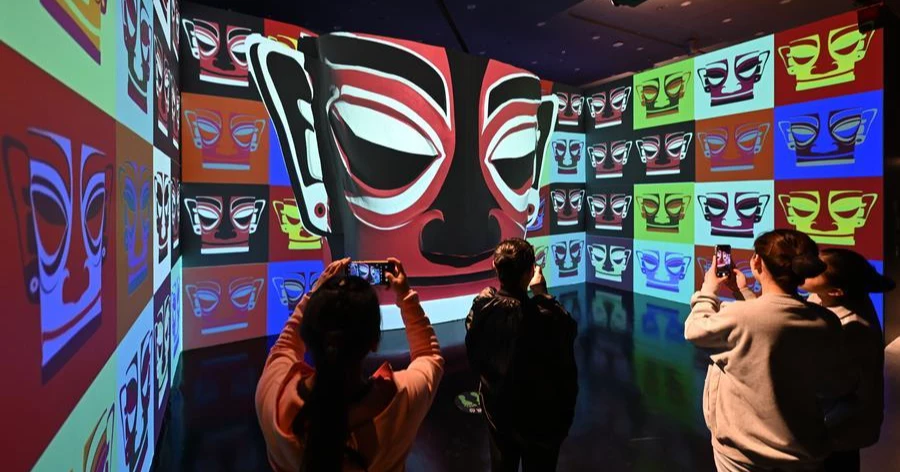
Under the plan, China will continue major research initiatives on the origins of its civilisation and the emergence of early states, while expanding archaeological studies at significant sites such as Erlitou, the Yin Ruins and Sanxingdui.
Research will also cover the development of civilisation along the Yangtze River, human origins and evolution in East Asia, and maritime cultural heritage in the South China Sea and East China Sea.
International cooperation will remain another priority, with joint archaeological projects planned with foreign partners, particularly countries participating in the Belt and Road Initiative. China aims to establish five to 10 model projects for international archaeological cooperation.
The plan also emphasises stronger links between archaeology and natural sciences, humanities and social sciences, alongside the development of laboratories and digital and intelligent archaeological technologies.
Training skilled researchers will also be a major focus. Shen Ruiwen, head of Peking University's School of Archaeology and Museology, said the institution would support the development of Chinese archaeology textbooks, establish standardised training bases and strengthen a training system combining classroom learning, fieldwork and laboratory research.
The university also plans to expand specialised training in less-developed academic fields.
Zhang Zhiguo, deputy director of the NCHA's National Center for Archaeology, said the centre would strengthen its laboratories and scientific research teams, promote interdisciplinary studies and expand international cooperation.
He said efforts would also be made to upgrade equipment, develop new technologies and improve management systems to support archaeological research.
Beyond academic research, the five-year plan seeks to improve how archaeological discoveries are documented, interpreted and shared with the public.
Authorities will promote the publication of major archaeological reports, improve the management of archaeological records and establish regular procedures for transferring excavated cultural relics.
The plan also calls for more educational activities at archaeological sites and public outreach programmes to help people better understand China's history and cultural heritage.