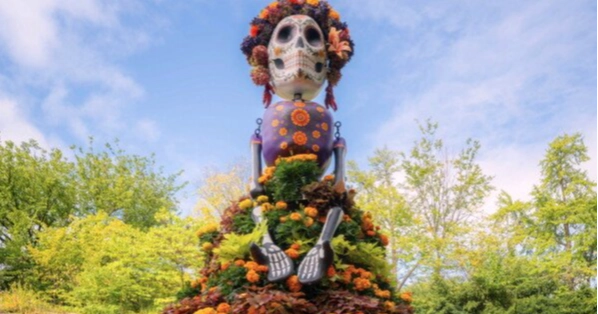
Flowers have held cultural and symbolic importance across the world for centuries. Lotus blossoms are sacred in Buddhist and Hindu traditions, cherry blossoms are celebrated in Japan, peonies are cherished in China, and roses are widely associated with love.
However, few flowers play such a significant role in remembering the dead as marigolds, particularly on Nov. 1 and 2, when Latino communities observe Día de los Muertos, or the Day of the Dead.
Known in Mexico as cempasúchil, the flower's name comes from the Aztec language Nahuatl and means "flower of 20 petals." Although commonly called African marigolds, the plants are native to Mexico.
Marigolds are central to the tradition of honouring deceased family members. During the celebration, families decorate altars and shrines with the flowers, candles, photographs, favourite foods and personal belongings of loved ones who have died. Their vivid orange and yellow colours, along with their distinctive fragrance, are believed to help guide the spirits of the departed back to their families.
According to Flora Daily, an online news platform serving the international horticulture and flower industry, Marvel gold, Marvel orange and Marvel lemon are among the most popular marigold varieties during the holiday season. Other species and hybrids are also used to meet demand.
Celebrations across the United States
Día de los Muertos is marked through public celebrations, cultural exhibitions, performances and community gatherings across the United States.
In San Francisco, the Mission District will honour ancestors and deceased loved ones on Nov. 2 through community altars, ritual dances and public processions.
San Antonio hosts a celebration lasting roughly a week and ending on Nov. 2. The programme includes altars, music, dance and the Dead River Parade along the city's River Walk.
The New York Botanical Garden is also hosting its annual celebration through Nov. 2, featuring live music, dance performances, interactive workshops, cultural activities, a parade and displays decorated with marigolds.
Meanwhile, the National Museum of Mexican Art in Chicago is presenting its annual exhibition through Nov. 29.
Tips for growing marigolds
Marigolds are low-maintenance annual plants that thrive in horticultural zones 2 through 11. They typically grow from summer into autumn, making them suitable for cultivation in the weeks leading up to Día de los Muertos.
In colder regions, the first frost of the season generally kills the plants. However, they can often survive into winter in warmer climates.
Marigolds grow quickly from seed and can be sown directly into garden soil in spring once the danger of frost has passed. They generally begin flowering about eight weeks after sowing. Gardeners who want earlier blooms can start seeds indoors six to eight weeks before planting them outside.
Whether grown from seeds or starter plants, marigolds need a sunny location and well-drained soil. They should be watered regularly during their first few weeks while becoming established, then watered when the soil dries out. Removing faded flowers encourages continued blooming and keeps the plants looking neat.
Although marigolds complement seasonal decorations such as pumpkins, chrysanthemums and ornamental cabbages, their significance extends beyond autumn gardening.
For those celebrating Día de los Muertos, the flowers represent an enduring connection between the living and the dead, helping families honour their ancestors and keep cherished memories alive.