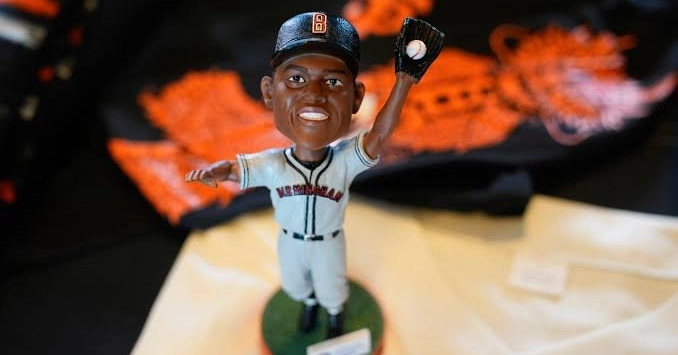
Give one a gentle tap, and its oversized head starts shaking, moving up and down or from side to side. That familiar movement has made bobblehead dolls one of America’s most popular and enduring collectibles.
From entertainers and athletes to politicians, animals and fictional characters, almost anyone can be turned into a bobblehead. Personalized versions featuring ordinary people are also popular.
Often handed out as promotional gifts at baseball games and other events, the quirky figurines have become a familiar part of American pop culture.
“I think they’re the ultimate Americana, sort of pop-culture icon,” said Phil Sklar, a longtime bobblehead enthusiast and founder of the National Bobblehead Hall of Fame and Museum in Milwaukee, Wisconsin.
The museum displays a large collection of the figurines, explores their history and also sells bobbleheads.
However, the dolls did not originate in the United States. According to Sklar, head-nodding figures existed in China hundreds of years ago. Europeans later brought similar versions back to Europe, where smaller models, particularly in Germany, became popular.
Bobbleheads gained widespread popularity in the United States during the 1960s, initially featuring sports stars and being distributed at baseball games. Their appeal later expanded to include famous figures such as members of The Beatles.
Although public interest in bobbleheads has risen and fallen over the decades, they have remained a popular collectible, with many of the biggest names in sports, entertainment and public life eventually getting their own version.
For many Americans, the simple, head-shaking figurines have become a lasting symbol of pop culture.