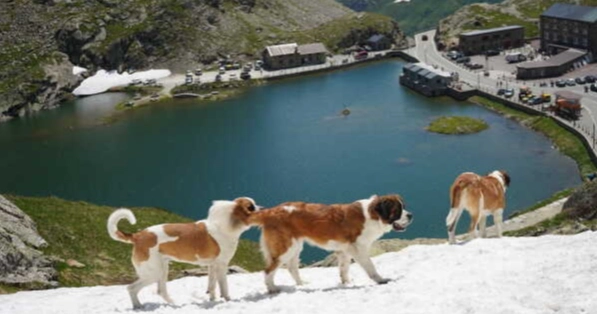
St. Bernard dogs continue to roam the famous Great St. Bernard Pass in the Swiss Alps, preserving a centuries-old tradition while a unique museum and breeding center works to protect the iconic breed for future generations.
Located in Martigny, Switzerland, Barryland, the world's only museum dedicated to St. Bernard dogs, has welcomed more than 130,000 visitors since opening last summer. The expanded facility replaced a much smaller center and offers visitors live grooming and physiotherapy demonstrations, interactive exhibits and augmented reality experiences showcasing the historic mountain pass.
Barryland Director Mélanie Glassey-Roth said strong public interest in the breed and its rich history prompted the creation of the larger facility.
"There is a lot of interest in these dogs and their heritage, so we decided to build a much bigger park," she said.
The Great St. Bernard Pass, standing 2,469 meters (8,100 feet) above sea level on the Swiss-Italian border, is one of Switzerland's highest and most challenging mountain crossings.
Large mountain dogs have lived there since the mid-1600s. Originally brought in as guard dogs, they later became famous for their remarkable ability to locate travelers trapped in snow and fog.
The breed takes its name from the Great St. Bernard Hospice, founded in 1050 by Bernard de Montjoux to provide shelter for pilgrims and merchants crossing the dangerous pass. The dogs became an essential part of the hospice's rescue work and earned worldwide recognition in the early 19th century after soldiers of Napoleon Bonaparte spread stories of their bravery across Europe.
Among them, Barry the First remains the breed's most celebrated hero. He is traditionally credited with rescuing more than 40 people between 1800 and 1812. To honor that legacy, the Barry Foundation always keeps one male dog named Barry.
Today, the Barry Foundation oversees the breed's preservation programme. Its 21 caretakers look after 32 dogs, while around 20 pedigree puppies are born each year.
Although St. Bernards no longer take part in mountain rescue missions because their large size makes helicopter transport difficult, smaller breeds such as Australian shepherds now perform those tasks. However, several St. Bernards still spend summers at the historic mountain pass to keep the long-standing tradition alive.
The foundation's dogs consume about 10 metric tons of dry food annually before returning each autumn to Barryland, about 40 kilometers away, after spending the summer in the mountains.
Caretaker Alexandra Piatti said watching the dogs grow throughout their lives is one of the most rewarding parts of her job.
"We see them from birth, watch them grow, become mothers, and support them through every stage of life," she said.
The dogs also continue to serve communities in new ways. In 2025, they carried out 609 visits to hospitals, nursing homes, schools and prisons across Switzerland, providing comfort and companionship.
Another caretaker, Déborah Dini, said preserving the breed's legacy remains central to their work.
"We continue the tradition. We care for them and we love them," she said.