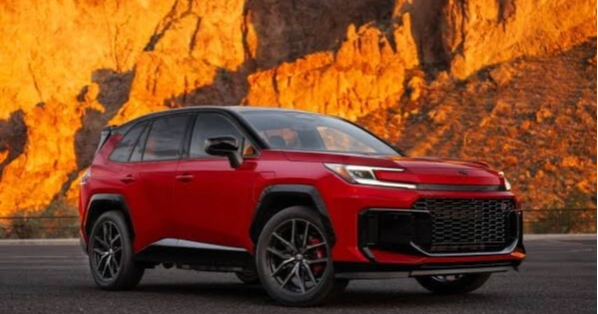
You want to cut fuel costs but are not ready to switch to a fully electric vehicle, the 2026 Hyundai Tucson Plug-in Hybrid and the 2026 Toyota RAV4 Plug-in Hybrid could be good options.
Both SUVs combine a conventional hybrid system with a rechargeable battery, allowing drivers to travel a certain distance using only electric power. Regular charging at home can help reduce petrol consumption. But which of these two popular compact SUVs offers better overall value? Edmunds tested both vehicles to find out.
Range and fuel economy
The Toyota RAV4 Plug-in Hybrid has a clear advantage in electric range and fuel efficiency.
Toyota estimates that most RAV4 Plug-in Hybrid trims can travel up to 54 miles using only electric power, while the sportier GR Sport is rated at 48 miles. In Edmunds' real-world test, however, the GR Sport managed an impressive 58 miles before the battery was depleted.
After the battery runs out, the RAV4 is estimated to deliver up to 40 mpg in combined city and highway driving, a figure that Edmunds also found realistic in its testing.
The Tucson Plug-in Hybrid trails behind, with an EPA-estimated electric range of 32 miles and fuel economy of 35 mpg after the battery is depleted. Although it performed slightly better than those estimates in Edmunds' testing, it could not match the RAV4's advantage.
Winner: Toyota RAV4 Plug-in Hybrid
Passenger comfort and cargo space
The two SUVs offer similar cargo capacity, although the RAV4 has a slight edge in the plug-in hybrid versions.
The RAV4 provides 33.6 cubic feet of cargo space behind the rear seats, compared with 31.9 cubic feet in the Tucson. Edmunds found both cargo areas spacious and practical, with their boxy shape making it easier to load luggage and other items.
However, the Tucson offers significantly more room for rear-seat passengers. It has 41.3 inches of rear legroom, compared with 37.8 inches in the RAV4. The difference is noticeable for adults, teenagers and families using child seats.
Edmunds' testers also found the Tucson's front seats softer and more supportive. Its ride quality over rough roads was also more comfortable than that of the RAV4.
Winner: Hyundai Tucson Plug-in Hybrid
Technology features
Both SUVs performed exceptionally well in Edmunds' infotainment testing, receiving scores of 9.7 out of 10 for usability and connectivity.
The RAV4 features a newer and improved infotainment system compared with other Toyota models. However, some important functions, including navigation and voice controls, depend on an internet connection and may require a paid subscription after the free trial ends.
The Tucson includes these functions directly in its system without requiring an internet connection, although its navigation search is not as capable.
Hyundai provides a standard 12.3-inch central touchscreen. Toyota offers either a 10.5-inch display on lower trims or a larger 12.9-inch screen on higher-end models.
Overall, the technology packages are closely matched.
Winner: Tie
Pricing and value
Both SUVs start at just over $42,000, including destination charges, and their prices rise to around $50,000.
At the top end of the price range, the Tucson comes with nearly all available features. A similarly equipped RAV4 XSE requires additional options, pushing its price above $52,000.
Edmunds also rated the Tucson's interior more highly, citing better-quality materials and a more premium look and feel. Hyundai also offers stronger basic and powertrain warranty coverage than Toyota.
Winner: Hyundai Tucson Plug-in Hybrid
Style and choice
Toyota offers buyers more options.
Besides the SE and XSE trims, the RAV4 Plug-in Hybrid is also available in the more adventure-focused Woodland version and the sportier GR Sport model. These choices give buyers more flexibility in terms of styling, capability and driving character.
The Tucson Plug-in Hybrid, meanwhile, is available only in SEL and Limited trims. Hyundai's more rugged-looking XRT version is not offered as a plug-in hybrid.
For buyers looking for more variety and distinctive styling, the RAV4 offers more choices.
Winner: Toyota RAV4 Plug-in Hybrid
Edmunds says
The competition is close, with the Tucson standing out for passenger comfort, interior quality, value and warranty coverage.
However, the RAV4 Plug-in Hybrid's biggest strengths are the features that matter most to many plug-in hybrid buyers: a longer all-electric driving range and better fuel economy.
For drivers mainly focused on reducing fuel use and making the most of electric driving, Edmunds says the Toyota RAV4 Plug-in Hybrid is the better overall choice, despite the Tucson's advantages in comfort and value.